Introduction
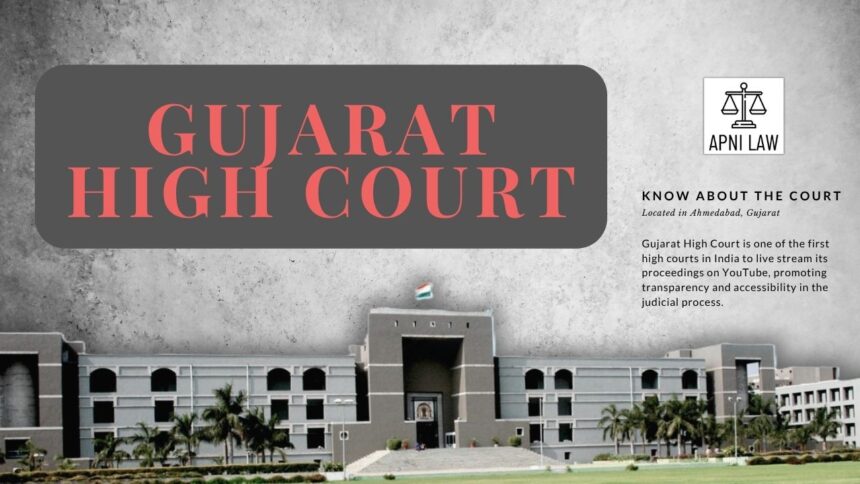
The Gujarat High Court dismissed a husband’s plea challenging a maintenance order granted to his wife. The Court held that claims of business loss or recession cannot justify denial of maintenance, especially when the wife is undergoing cancer treatment.
Case Title
Vasantbhai Premjibhai Vekariya v. State of Gujarat & Anr.
Legal Issue
The Court examined whether a husband can avoid paying maintenance under Section 125 CrPC by citing financial hardship, business closure, or loan liabilities.
Case Background
The wife filed a maintenance application due to the husband’s failure to provide regular financial support. The Family Court in 2021 directed the husband to pay ₹50,000 per month from March 12, 2019. The husband challenged this order, arguing that his business suffered after COVID-19 and that he lacked sufficient income to meet the maintenance amount. He also claimed that he had been contributing to household and educational expenses.
The wife opposed the appeal and stated that the husband continued his business as a distributor of Canon products. She alleged that he suppressed his real income and took loans even after claiming financial distress. She further highlighted her medical condition and the expenses required for cancer treatment. The Court also noted that the husband failed to produce convincing evidence to prove that his business had shut down or that his income had drastically reduced.
Court’s Ruling
Justice upheld the Family Court’s order and dismissed the appeal. The Court held that an able-bodied husband is presumed capable of earning and cannot avoid maintenance obligations merely by claiming financial difficulty. It observed that closure of business or recession without supporting evidence is not a valid ground to deny maintenance. The Court further clarified that liabilities such as loans do not reduce the legal duty to maintain one’s spouse.
Findings
The Court found that the husband failed to disclose his actual income and did not provide material evidence to support his claims of financial hardship. It observed that documents on record indicated ongoing business activity and financial capacity. The Court also rejected the argument that the wife could maintain herself due to her educational qualifications, noting that there was no proof of her employment or independent income. It emphasized that maintenance must ensure that the wife can live with dignity and maintain a lifestyle similar to that of her matrimonial home, especially considering her serious medical condition.
Final Outcome
The High Court upheld the order directing the husband to pay ₹50,000 per month as maintenance and dismissed the appeal.
Implications
This judgment reinforces that maintenance is both a legal and moral obligation of the husband. It makes clear that unsupported claims of financial hardship cannot be used to avoid responsibility. The ruling also highlights that courts give significant weight to the health condition and financial needs of the wife while determining maintenance.
Conclusion
The decision underscores that courts prioritize the dignity, health, and financial security of dependent spouses. It sends a strong message that maintenance obligations cannot be avoided through unsubstantiated claims of reduced income or business loss.