


Court dismisses CRPF officer’s plea, holds that quitting employment is often used to evade maintenance obligations and does not absolve financial responsibility.
Court, Bench & Date of Judgment
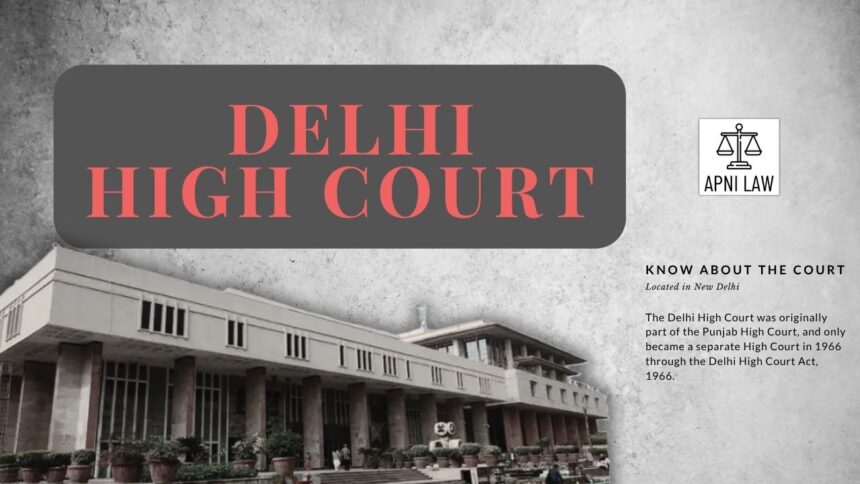
The Delhi High Court, in a judgment delivered on March 16, 2026, by a Single Bench of Justice Amit Mahajan, dismissed a revision petition filed by a CRPF officer challenging a maintenance order.
Case Title
Vinod Kumar v. Seema Devi & Anr.
Legal Issue
Whether a husband can reduce or avoid maintenance liability under Section 125 CrPC by voluntarily retiring from a stable job and claiming limited income.
Case Background
The petitioner, a CRPF officer, took voluntary retirement in July 2022 at around 47 years of age. He challenged a Family Court order directing him to pay maintenance to his estranged wife and children. The Family Court had assessed his income at approximately ₹50,000 per month and ordered payment of maintenance. Initially, ₹8,300 per month was awarded to each dependent, later increased to ₹10,000 for the wife and daughter after the son attained majority, along with periodic increments. The parties had been living separately since 2013, with the wife caring for the children and claiming no independent source of income.
Petitioner’s Stance
The husband argued that:
- He had retired from service and now depended only on pension and minimal agricultural income.
- The Family Court overestimated his earning capacity.
- His wife was not entitled to maintenance as she was living separately and allegedly had access to rental income.
Court’s Reasoning
The High Court rejected these arguments and upheld the maintenance order, emphasizing the following principles:
1. Voluntary retirement is not a defence
The Court found it implausible that a person would leave a stable, well-paying job without securing alternative income. It observed that voluntary retirement cannot be used as a strategy to reduce maintenance liability.
2. Earning capacity matters, not actual income
The Bench held that an able-bodied and qualified individual has a continuing obligation to earn and support dependents. The husband’s claim of limited income post-retirement was not accepted.
3. Pattern of income suppression in matrimonial disputes
The Court noted that parties often understate income in maintenance cases and that courts are entitled to make reasonable estimations of earning capacity.
4. Maintenance aims to prevent destitution
Reaffirming the purpose of Section 125 CrPC, the Court stated that maintenance is intended to prevent vagrancy and ensure financial support for dependents who cannot sustain themselves.
5. Separation does not negate maintenance rights
The wife’s separate residence since 2013, coupled with allegations of cruelty, did not disentitle her from claiming maintenance.
Final Ruling
The Delhi High Court dismissed the husband’s revision petition and upheld the Family Court’s maintenance order. It found no grounds to interfere with the assessment of income or the quantum of maintenance.
Practical Implications
- Voluntary retirement is not a shield: Individuals cannot evade maintenance obligations by deliberately reducing their income.
- Focus on earning capacity: Courts may assess what a person is capable of earning rather than what they claim to earn.
- Judicial scrutiny of income claims: Courts may rely on reasonable estimation where income disclosure appears unreliable.
- Reinforcement of maintenance law: The ruling strengthens the protective intent of Section 125 CrPC in safeguarding dependents.
The judgment adds clarity on the principle that maintenance obligations depend on a person’s earning capacity and cannot be avoided through voluntary reduction of income, including early retirement.




