Introduction
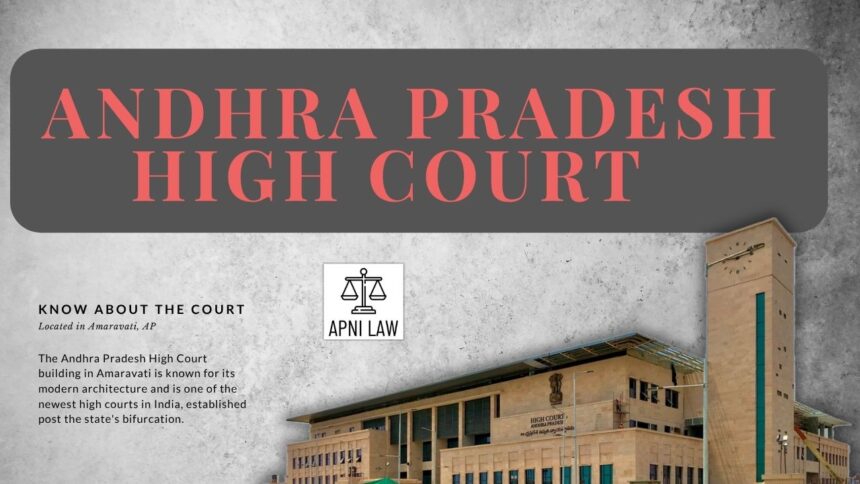
The Andhra Pradesh High Court has ruled that the legal heirs of a deceased driver are entitled to compensation under the Motor Vehicles Act even if the driver himself was negligent in causing the accident. The Court held that claims under Section 163-A of the Motor Vehicles Act are part of a beneficial welfare legislation where proving negligence is not a prerequisite. Setting aside the Motor Accidents Claims Tribunal’s award, the High Court enhanced the compensation payable to the deceased driver’s widow and minor son from ₹50,000 to ₹5 lakh.
Case Background
The case arose from the death of a tractor driver in 2012 after the vehicle overturned in an accident.
The deceased’s wife and minor son filed a compensation claim, stating that he was employed as a tractor driver by the owner of the vehicle and earned ₹10,000 per month.
However, the Motor Accidents Claims Tribunal concluded that the accident occurred due to the deceased driver’s own negligence. It also held that there was no documentary evidence proving his employment and awarded only ₹50,000 under Section 140 of the Motor Vehicles Act.
Aggrieved by the decision, the claimants approached the Andhra Pradesh High Court.
Appellants’ Stand
The appellants argued that the deceased was employed as a tractor driver and was earning a regular monthly income. They contended that the Tribunal wrongly rejected the widow’s unrebutted testimony merely because salary records were unavailable.
They also maintained that compensation under the Motor Vehicles Act should not be denied solely because the deceased was allegedly negligent.
High Court’s Ruling
The High Court held that the Tribunal had erred in rejecting the widow’s oral evidence regarding the deceased’s employment. It observed that workers in the agricultural sector are often paid through informal arrangements and documentary proof of wages may not always be available.
The Court also noted that the insurance company failed to produce any evidence showing that the deceased did not possess a valid driving licence.
Emphasising the welfare objective of the Motor Vehicles Act, the Court held that a claim under Section 163-A remains maintainable even if the deceased contributed to the accident. The Court further observed that although the accident occurred before the 2019 amendment introducing Section 164, the claimants were entitled to the enhanced statutory compensation of ₹5 lakh at the time of final adjudication to ensure just and reasonable compensation.
Final Verdict
Allowing the appeal, the Andhra Pradesh High Court enhanced the compensation from ₹50,000 to ₹5 lakh. The Court also directed payment of interest at the rate of 9% per annum from the date of filing the claim petition until the amount is realised. The judgment reaffirmed that the Motor Vehicles Act is a beneficial legislation intended to protect victims and their families, and that the negligence of a deceased driver does not automatically deprive his legal heirs of statutory compensation.
Case Title: Veerapaneni Venkata Subhashini & Anr. v. Arikatla Venkata Rathnam & Anr.