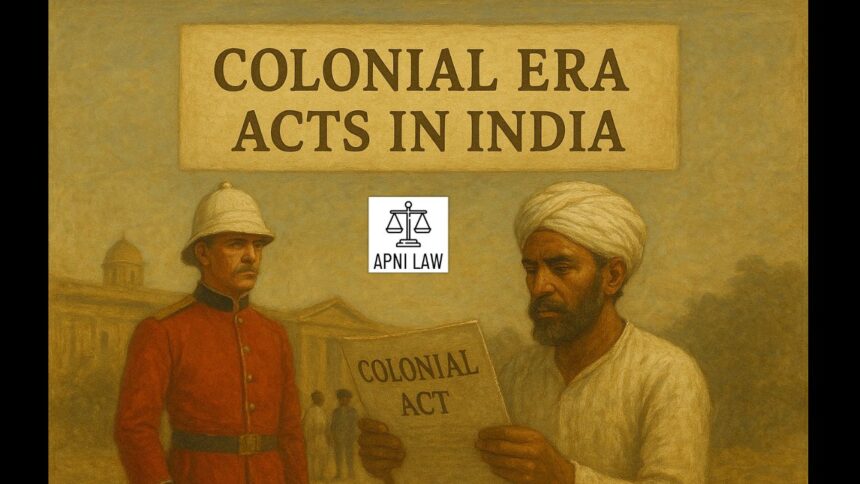
Introduction
The Charter Act of 1813 revolutionized the history of India in several senses. The East India Company had had a tight hold on India’s trade and administration for more than two centuries. It was no longer a mere trading company, it governed lands and possessed resources with little interference from the British Parliament. But the beginning of the 19th century saw winds of change blowing. Britain’s Industrial Revolution was at its peak, and private traders yearned to gain entry into India’s market. Pressure was mounting on Parliament to end the Company’s monopoly. The outcome was the Charter Act of 1813, a piece of legislation that extended the Company’s charter for another 20 years but took away its right to exclusive trade, apart from tea and trade with China. This step was not business-oriented alone; it marked the onset of a new economic and cultural age in India.
Why Was the Act Introduced?
Let us travel back to the early 1800s to comprehend the significance of this Act. The East India Company had established itself as the largest power in India, gaining control over administration, revenue, and trade. However, in Britain, much change was happening rapidly. Factories were churning out goods on a large scale, and manufacturers required new markets. Indian markets, being large and diverse, appeared to be the ideal destination. The Company, however, was criticized for corruption, mismanagement, and exploitation. British merchants were irked as they were unable to trade freely with India. Parliament had to intervene, and after much debate, the Charter Act of 1813 came to be. It was a compromise, maintaining the political power of the Company but allowing private players to enter trade.
What Did the Charter Act of 1813 Do?
The most dramatic transformation that the Act initiated was the demise of the Company monopoly in trade in India. The East India Company had been the sole portal for trade between India and Britain for centuries. But from 1813 on, British private merchants were free to trade in India. The Company retained China and tea trade, but the days of sole control were gone.
The Act also brought something new, state intervention in education. The British government made a provision of one lakh rupees every year to encourage education in India. Although the amount was modest, the concept was large. This was the seed that germinated later to become the English education system of India.
The second significant transformation was the arrival of Christian missionaries. The Act enabled them to spread their religion and establish schools in India. The move created social and religious controversies, as it introduced Western philosophy and cultural impact into Indian culture.
On the fiscal front, the Act rendered it obligatory for the Company to have exclusive accounts of its commercial and administrative activities. This introduced greater transparency and management of income, indicating that Parliament desired closer monitoring of Indian matters.
Impact on India’s Economy and Society
The Act might have broken a monopoly, but for India, it was the beginning of a new economic regime. The opening up of trade enabled private British merchants to inundate Indian markets with cheap British merchandise. Whereas it opened up opportunities for British traders, it was disaster for indigenous Indian industry, particularly the textile industry. Handloom weavers were no match for goods produced in factories, and many found themselves out of jobs. It was the beginning of India’s economic dependency on Britain.
Socially, the Act led to openings for cultural exchange. Missionaries established schools and brought in Western education, which, in the long run, produced a class of Indians schooled in English. These events later contributed to social reform movements, but then they produced mixed reactions, some embraced modern education, others were afraid of cultural erosion.
Why Is the Charter Act of 1813 Important?
This Act was more than a commercial legislation; it was a change of British policy toward India. It indicated that Parliament was willing to become more deeply involved in Indian affairs. By curtailing the Company’s commercial monopolies, Britain opened the doors to increased economic exploitation and increased political domination. The Act began legal measures toward initiating education reforms and cultural policies. In brief, it was a law that reached into trade, government, education, and even religion.
Long-Term Effects
The Charter Act of 1813 set the stage for upcoming reforms. It demonstrated that the East India Company was no longer impenetrable. In the next decades, its power continued to dwindle as Parliament asserted firmer control over Indian administration. Economically, India increasingly became a part of the world economy, but on terms favorable to Britain. This act thus marked the first giant stride towards a new era of colonial rule, one where government and overt economic exploitation went together.
FAQs
What was the Charter Act of 1813?
It was a British act which extended the charter of the East India Company for 20 years but terminated its monopoly of trade in India except tea and China trade.
Why was it important?
Because it opened Indian trade to private merchants and began education reforms and missionary work.
Did the Act influence Indian industries?
Yes. Cheap British imports destroyed industries such as handloom weaving.
How much was invested in education?
One lakh rupees a year was invested in the promotion of education in India.
Did the Act permit Christian missionaries to enter India?
Yes. They were permitted to propagate their religion and establish schools.
Conclusion
The Charter Act of 1813 revolutionized the British perspective on India. It was no longer a trading land for a single company; it became a British merchant market and a Western cultural frontier. While opening up trade and implementing education reforms, the Act also further entrenched India’s economic dependence on Britain. The history of this Act is the history of a transition, from monopoly to open exploitation, from trade to rule. Learning this law teaches us to how little legislative adjustments influenced India’s colonial history and, by extension, its contemporary future.
For any specific query call at +91 – 8569843472