Introduction
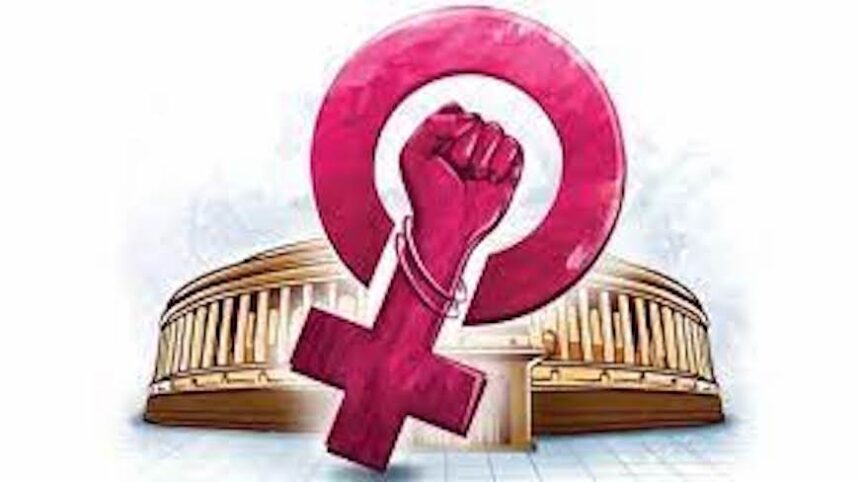
The constitution (106th Amendment Act), 2023, popularly known as the Women’s Reservation Bill or Nari Shakti Vandan Adhiniyam, is a landmark constitutional amendment that provides 33% reservation for women in the Lok Sabha and all State Legislative Assemblies. The objective of this law is to increase women’s participation in politics and ensure gender equality in governance. It amends the Constitution to introduce reservation in elected bodies, marking a significant reform in India’s democratic framework.
What Does The Women’s Reservation Law Provide?
The law mandates that one-third of the total seats in the Lok Sabha and State Assemblies must be reserved for women. This reservation applies only to directly elected seats, while the remaining seats continue to remain open for all candidates. It also ensures that within the seats already reserved for Scheduled Caste and Scheduled Tribes, one-third will be reserved for women belonging to these categories. Additionally, the reserved constituencies will be rotated periodically, meaning no seat will remain permanently reserved.
When Will The Reservation Come Into Effect?
The implementation of this law is not immediate. It will come into force only after the next national census is conducted and a delimitation exercise is completed. Delimitation refers to the process of redrawing constituency boundaries based on updated population data. Once this process is finished, the reservation will be applied. The Act also specifies that the reservation will remain in force for 15 years, although Parliament has the power to extend it through further legislation.
Why Is This Law Considered Historic?
This amendment is seen as a major step toward gender-inclusive governance. Currently, women represent a relatively small percentage of elected representatives in India. By introducing a 33% quota, the law aims to significantly increase women’s presence in legislative bodies. This is expected to lead to more balanced policymaking, especially in areas such as health, education, safety, and social welfare, where women’s perspectives are crucial.
What Are The Constitutional Provisions Introduced?
The Act inserts new provisions in the Constitution, including Articles 330A and 332A, which provide for reservation of seats for women in the Lok Sabha and State Assemblies. It also introduces provisions for rotation of reserved seats and extends similar benefits to women within SC and ST categories. These constitutional changes ensure that the reservation is legally enforceable and forms part of India’s fundamental governance structure.
What Are The Major Criticisms And Concerns?
Despite widespread support, the law has raised several debates. One major concern relates to the delay in implementation, as it depends on future census and delimitation processes. Critics argue that this could postpone the actual benefits of the law. Another issue is the rotation of constituencies, which may disrupt political continuity and affect local representation. Some groups have also demanded separate reservation for women from Other Backward Classes (OBCs), which is not specifically addressed in the current law.
What Is The Overall Impact Of The Women’s Reservation Bill?
The Women’s Reservation Bill is expected to transform India’s political landscape by ensuring greater representation of women in decision-making bodies. It strengthens democratic values by making governance more inclusive and representative. While implementation challenges remain, the law is widely regarded as a progressive step toward gender equality in Indian politics.
Conclusion
The Constitution (106th Amendment) Act, 2023 represents a milestone in India’s constitutional journey. By reserving seats for women, it addresses long-standing gender disparities in political representation. Once implemented, it has the potential to reshape governance and create a more equitable and participatory democracy in India.