

Introduction
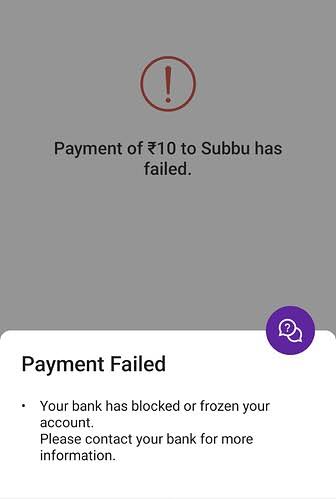
A bank account can be frozen or placed under a lien when a transaction is suspected to be connected with an online financial fraud. Such action helps investigating agencies prevent suspected proceeds of cybercrime from being transferred or withdrawn. However, these restrictions can also affect individuals and businesses whose accounts receive money without their knowledge of its alleged connection with a cybercrime.
To address grievances arising from such actions, the Indian Cyber Crime Coordination Centre (I4C), under the Ministry of Home Affairs, has introduced the Grievance Redressal Module (GRM) as part of the National Cybercrime Reporting Portal (NCRP) and the Citizen Financial Cyber Fraud Reporting and Management System (CFCFRMS).
The mechanism provides a structured process through which affected account holders can request a review of account freezes, lien markings and restrictions on digital banking services.
What Is the GRM Portal?
The Grievance Redressal Module is an online mechanism designed to address complaints from individuals whose bank accounts or funds have been placed on hold or seized during cybercrime investigations.
The mechanism forms part of the Standard Operating Procedure (SOP) issued by the Ministry of Home Affairs for the NCRP-CFCFRMS system on 10 April 2026. The SOP establishes a standard procedure for processing cybercrime complaints, coordinating with banks, addressing grievances and restoring money to eligible victims.
The GRM became functional in April 2026. It allows affected account holders to explain the source and nature of disputed transactions and seek a review of restrictions imposed on their accounts.
Why Was the Grievance Redressal Mechanism Introduced?
Cyber financial fraud often involves multiple bank accounts through which money moves before reaching its final destination. When a victim reports a fraudulent transaction, investigating agencies may trace the money through several accounts and direct banks to place the suspected amount on hold.
In some situations, an account may receive money connected with a reported fraud even though its holder claims to have no knowledge of the transaction or the alleged offence.
Such restrictions can affect ordinary banking activities, including withdrawals, transfers and access to digital banking facilities. They may also affect individuals who depend on their accounts for salaries, business transactions and daily expenses.
The SOP recognises the need to balance cybercrime investigations with the protection of genuine account holders from unnecessary hardship. It therefore establishes a time-bound grievance process and provides opportunities for review and appeal.
Who Can Raise a Grievance Through the GRM?
A person whose bank account has been affected by a hold, lien marking, seizure or suspension of digital banking services can approach the concerned bank to initiate the grievance process.
The mechanism covers grievances relating to:
- An amount placed on hold following a cybercrime complaint.
- Seizure or freezing of a bank account.
- Suspension of digital banking services.
- Restrictions imposed on accounts based on information available through the NCRP-CFCFRMS.
The SOP also permits certain individuals to raise grievances through another person acting on their behalf. This includes senior citizens who cannot physically visit a bank branch, persons with disabilities who are unable to visit the branch and individuals suffering from terminal illnesses that prevent them from doing so.
How Can an Account Holder Raise a GRM Complaint?
The process begins with the concerned bank rather than a direct application by the account holder to the investigating officer.
The affected person must approach the bank branch where the account is maintained or another designated branch or office. The bank will verify the customer’s identity and examine the relevant Know Your Customer (KYC) details, transaction records and explanation provided by the account holder.
The bank will also conduct Customer Due Diligence (CDD) and Enhanced Due Diligence (EDD) to examine the genuineness of the account and the disputed transactions.
The account holder may provide supporting documents such as identity proof, bank statements, invoices, payment records and documents explaining the source of funds.
If the bank is satisfied with the explanation and supporting information, it will submit the grievance through the GRM module of CFCFRMS. The bank is expected to submit the grievance at the earliest and within seven calendar days from the date the affected person approaches it.
Once registered, the grievance is assigned to the concerned investigating officer or police officer, with information provided to the District Grievance Officer.
What Happens After the Grievance Is Registered?
The investigating officer examines the grievance and verifies the transactions that resulted in the account restriction.
The officer may seek additional information from the account holder and examine the relevant transaction history. The SOP encourages verification through video conferencing wherever possible. The account holder should not ordinarily be required to appear physically before the investigating officer unless such appearance becomes unavoidable during the investigation and an FIR or e-FIR has been issued.
If the investigating officer is satisfied with the explanation and verification, the officer may direct the bank to remove the hold on the reported amount or release the seized account or restore digital banking services, as applicable.
For grievances concerning an amount placed on hold, the investigating officer is expected to address the matter within 15 calendar days of receiving the grievance through the bank. If the explanation is not accepted, the officer must record the reasons and communicate the decision to the account holder through SMS or email.
The decision depends on the transaction records, the explanation provided and the findings of the investigation. Filing a grievance does not automatically result in the removal of the restriction.
What Can an Account Holder Do If the Grievance Is Rejected?
The SOP provides further review and appeal mechanisms if the account holder is dissatisfied with the decision.
If the investigating officer rejects the grievance, the account holder may submit a review request within 15 calendar days of receiving the decision by approaching the designated bank branch.
The District Grievance Officer will examine the grievance, the investigating officer’s reasons and any additional information obtained from the bank. The District Grievance Officer is expected to communicate the decision through the GRM module within 15 calendar days of being notified.
If the investigating officer fails to address the grievance within the prescribed 15-day period, the matter is automatically notified to the District Grievance Officer.
Where the District Grievance Officer decides to continue the seizure or suspension of digital banking services, the affected account holder may appeal to the State Grievance Officer within 15 calendar days.
The State Grievance Officer will review the matter and may seek additional information before issuing a decision. The decision is expected within 15 calendar days of notification.
The SOP also preserves the account holder’s right to approach the jurisdictional court at any stage if aggrieved by the decision of a Grievance Officer.
Does the GRM Guarantee the Removal of a Bank Account Freeze?
The GRM does not guarantee that every frozen account or lien marking will be removed. Its purpose is to provide an opportunity for the affected person to explain the disputed transactions and obtain a review of the action taken.
The investigating officer may decide that the restriction needs to continue if the transaction records or other material justify it. Similarly, a bank’s verification may not establish that the account holder’s explanation is sufficient to remove the restriction.
However, the SOP provides a specific safeguard for amounts that remain on hold. Where a grievance has been raised and no lawful direction regarding the continuation or discontinuation of the hold is received within 90 calendar days from the date the bank submits the grievance, the bank must notify the concerned law enforcement agency before the expiry of that period.
The bank must give at least 15 calendar days’ prior intimation to the concerned Station House Officer (SHO) before the 90-day period expires.
Subject to the conditions specified in the SOP, the bank may remove the hold after Enhanced Due Diligence if the amount is not required in another case, no court petition seeking its release is pending and the investigating agency has not requested an extension. The account holder must also request the release of the amount.
Where continued retention is necessary, the investigating officer may seek an extension of up to 90 additional calendar days.
Therefore, the 90-day provision is not an automatic or unconditional right to unfreeze an account. The release remains subject to the safeguards and conditions prescribed under the SOP.
What Is the Difference Between GRM and the Money Restoration Module?
The GRM and the Money Restoration Module (MRM) serve different purposes under the CFCFRMS framework.
The GRM addresses grievances raised by account holders whose accounts, funds or digital banking services have been restricted during cybercrime investigations.
The MRM, on the other hand, facilitates the restoration of money placed on hold or under seizure to eligible victims of cyber financial fraud.
While GRM focuses on reviewing restrictions imposed on affected accounts, MRM deals with the process of returning recovered or held money to the rightful victims in accordance with the prescribed procedure.
What Have Courts Said About Bank Account Freezes Linked to Cybercrime?
In Kunal Yadav v. M.V.C. Co-operative Bank Limited, decided on 12 October 2026, the Court emphasised the responsibility of banks under the SOP dated 10 April 2026.
The Court observed that banks act as the first point of contact and primary facilitators for account holders whose accounts are placed on hold through the NCRP-CFCFRMS mechanism. Therefore, banks cannot simply direct customers to approach investigating agencies without assisting them in initiating the prescribed grievance process.
The Court also emphasised proportionality in freezing bank accounts. Where the disputed amount can be protected through a lien or partial debit freeze, freezing the entire account should be avoided unless exceptional circumstances justify such action. Reasons for imposing a complete freeze must be recorded.
This approach seeks to protect the investigation while preventing unnecessary disruption to the legitimate financial activities of account holders.
Conclusion
The Grievance Redressal Module provides a structured mechanism for individuals affected by bank account freezes, lien markings and restrictions on digital banking services during cybercrime investigations.
By introducing bank-level verification, review by investigating officers and escalation to district and state-level grievance authorities, the I4C SOP seeks to make the process more transparent and time-bound.
The mechanism also recognises that account restrictions can affect people who may not have knowingly participated in cyber financial fraud. However, the final decision depends on verification, the transaction trail and the requirements of the ongoing investigation.
The GRM therefore offers an important procedural avenue for affected account holders while allowing investigating agencies to continue protecting suspected proceeds of cybercrime.