By using this site, you agree to the Privacy Policy and Terms of Use.
Accept
ApniLawApniLawApniLaw
  • Home
  • Find a Lawyer
  • Our Services
  • Law Forum
  • Legal News
  • Judgments
  • Knowledge Hub
    • Bare Acts
      • BNS
      • BNSS
      • BSA
      • CrPC
      • CPC
      • DPDP
      • Hindu Marriage Act
      • Hindu Succession Act
      • The Hindu Adoptions And Maintenance Act
      • The Hindu Minority and Guardianship Act
      • IPC
      • Juvenile Justice Act
      • POCSO
      • Special Marriage Act
      • The Specific Relief Act
    • Supreme Court
    • High Court
    • Legal Articles
    • UPSC
    • Job Updates
    • Marriage and Divorce
    • Land Dispute & Will
    • Civil
    • Criminal
  • About Us
Reading: Drunk Driving in India: Legal Limits and Penalties (Section 185 Explained)
Share
Notification Show More
Font ResizerAa
ApniLawApniLaw
Font ResizerAa
  • Home
  • Find a Lawyer
  • Our Services
  • Law Forum
  • Legal News
  • Judgments
  • Knowledge Hub
  • About Us
  • Home
  • Find a Lawyer
  • Our Services
  • Law Forum
  • Legal News
  • Judgments
  • Knowledge Hub
    • Bare Acts
    • Supreme Court
    • High Court
    • Legal Articles
    • UPSC
    • Job Updates
    • Marriage and Divorce
    • Land Dispute & Will
    • Civil
    • Criminal
  • About Us
Have an existing account? Sign In
Follow US
  • Advertise
© 2022 Foxiz News Network. Ruby Design Company. All Rights Reserved.
ApniLaw > Blog > Legal Articles > Acts > Drunk Driving in India: Legal Limits and Penalties (Section 185 Explained)
Acts

Drunk Driving in India: Legal Limits and Penalties (Section 185 Explained)

Amna Kabeer
Last updated: July 5, 2025 1:06 pm
Amna Kabeer
1 year ago
Share
Supreme Court Clarifies: Overtaking Alone Doesn't Constitute Rash Or Negligent Driving
SHARE


Drunk driving under the influence is a serious traffic offence in India. Whether it’s alcohol or drugs, impaired driving poses a major threat to public safety. Indian law strictly prohibits driving a motor vehicle while intoxicated and imposes harsh penalties on offenders. The law aims to prevent road accidents, protect innocent lives, and promote responsible behavior on the roads.

Contents
What Are The Penalties For Drunk Driving In India?Recent CaseConclusion


What Are The Penalties For Drunk Driving In India?


If a person is caught driving or attempting to drive with blood alcohol content (BAC) over 30 mg per 100 ml, they are considered legally drunk. This can be detected using a breathalyzer or any approved test, including a laboratory report. The law also punishes individuals who are under the influence of drugs to such a degree that they lose control over the vehicle. In such cases, the driver is seen as incapable of operating the vehicle safely.


For a first-time offence, the punishment can include imprisonment of up to six months, or a fine of ₹10,000, or both. For a second or repeated offence, the penalty increases to imprisonment of up to two years, or a fine of ₹15,000, or both. These penalties serve as a strong deterrent against impaired driving.
The term “drug” in this context includes any intoxicating substance, natural, synthetic, or chemical, excluding alcohol. It also covers narcotic drugs and psychotropic substances as defined under the NDPS Act, 1985. The Central Government has the power to notify additional substances as “drugs” under this provision.

ApniLaw AI

Need the case law behind this point?

Ask ApniLaw AI in plain words. Every point of the answer shows the judgment paragraph or Act section behind it, with its page and paragraph number.

Explore ApniLaw AI


Recent Case


In a significant ruling dated March 18, 2025, the Kerala High Court in Benny Mon v. State of Kerala quashed proceedings under Section 185 of the Motor Vehicles Act, 1988, due to procedural lapses by law enforcement. The accused was found driving with a blood alcohol level of 121 mg/100 ml, based on an alcometer test. However, the court held for a valid prosecution under Section 185 MVA. It is mandatory to follow the procedures laid out in Sections 202 and 204. This include a medical examination by a registered practitioner and a confirmed laboratory test within two hours of alleged offense. Since these critical steps were not followed, the court ruled that the prosecution under Section 185 was not legally sustainable.

Importantly, the court clarified that the offense of rash and negligent driving under Section 279 of the IPC could proceed independently, as it does not rely on proof of intoxication. This ruling reinforces the need for strict compliance with procedural safeguards in drunk driving cases and serves as a precedent emphasizing that merely relying on a roadside breathalyzer is not enough for conviction under Section 185. It highlights the judiciary’s insistence on due process in motor vehicle offense prosecutions.

Conclusion


Drunk and drugged driving is not just a violation of traffic rules, it’s a criminal act with life-threatening consequences. Indian law treats it with utmost seriousness, punishing offenders to prevent harm and encourage safer roads. Avoid driving after drinking or consuming drugs. Stay safe, protect others, and respect the law. Responsible driving saves lives.

Join Telegram Channel Join WhatsApp Channel

You Might Also Like

Section 66E of the IT Act Explained: Online Privacy & Obscene Image Cases

Section 2 Of Senior Citizens Act: Key Definitions Every Family Must Know

Section 70 Of The IT Act, 2000: All About Critical Infrastructure Protection

Difference Between E-Cigarettes and Regular Tobacco Under Indian Law

Section 101 of the IEA vs Section 104 of the Bharatiya Sakshya Adhiniyam: Burden of Proof Explained

TAGGED:Alcohol InfluenceDrivingDriving DrunkDrunk DrivingMotor vehicleMotor Vehicles ActMV Actrash drivingSection 185
Share This Article
Facebook Whatsapp Whatsapp Telegram Print
Previous Article International Students in India What Are The Legal Rights and Responsibilities of International Students in India
Next Article Divorce Under The Hindu Marriage Act, 1955 Mental Illness Grounds Under Hindu Marriage Act Requires Strong Proof: Jharkhand High Court
1 Comment
  • Pingback: Mental Illness Grounds Under Hindu Marriage Act Requires Strong Proof: Jharkhand High Court - ApniLaw

Leave a Reply Cancel reply

You must be logged in to post a comment.

Follow US

Find US on Social Medias
FacebookLike
XFollow
InstagramFollow
YoutubeSubscribe
TelegramFollow
WhatsAppFollow

Weekly Newsletter

Subscribe to our newsletter to get our newest articles instantly!
Popular News
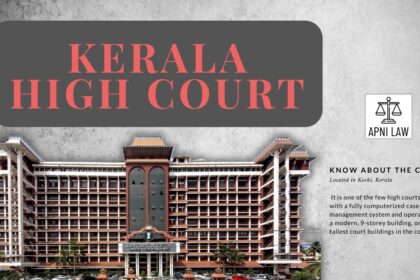
Kerala High Court
Kerala High CourtPOCSO & Sexual Crimes

Kerala High Court: Placing Penis On Minor’s Vagina Amounts To Penetrative Sexual Assault Under POCSO Act

Amna Kabeer
By Amna Kabeer
1 month ago
No Offence Under Section 138 NI Act If Cheque Presented for Full Amount Without Endorsing Part Payment: SC
Retirement Benefits Can Be Attached for Maintenance Despite Section 60(1)(g) CPC: Kerala High Court
What Is The Procedure For Obtaining A Divorce Decree
Bigamous Marriage Before Appointment Not Misconduct Under Service Rules, But Affects Eligibility: Allahabad HC
- Advertisement -
Ad imageAd image

Your one-stop destination for legal news, articles, queries, and a directory of lawyers in India – all under one roof at ApniLaw.

Stay Updated

  • BNSS
  • News
  • Documentation
  • Acts
  • Supreme Court
  • High Court
  • Judgments

Information

  • ApniLaw Services
  • About Us
  • Contact Us
  • Disclaimer
  • Privacy Policy
  • Terms of Service

Advertise

  • Advertise with us
  • Newsletters
  • Deal

Find Us on Socials

ApniLawApniLaw
Follow US
© ApniLaw 2026. All Rights Reserved.
login
Welcome Back!

Sign in to your account

Or
Username or Email Address
Password

Lost your password?