By using this site, you agree to the Privacy Policy and Terms of Use.
Accept
ApniLawApniLawApniLaw
  • Home
  • Find a Lawyer
  • Our Services
  • Law Forum
  • Legal News
  • Judgments
  • Knowledge Hub
    • Bare Acts
      • BNS
      • BNSS
      • BSA
      • CrPC
      • CPC
      • DPDP
      • Hindu Marriage Act
      • Hindu Succession Act
      • The Hindu Adoptions And Maintenance Act
      • The Hindu Minority and Guardianship Act
      • IPC
      • Juvenile Justice Act
      • POCSO
      • Special Marriage Act
      • The Specific Relief Act
    • Supreme Court
    • High Court
    • Legal Articles
    • UPSC
    • Job Updates
    • Marriage and Divorce
    • Land Dispute & Will
    • Civil
    • Criminal
  • About Us
Reading: Section 2 Of Senior Citizens Act: Key Definitions Every Family Must Know
Share
Notification Show More
Font ResizerAa
ApniLawApniLaw
Font ResizerAa
  • Home
  • Find a Lawyer
  • Our Services
  • Law Forum
  • Legal News
  • Judgments
  • Knowledge Hub
  • About Us
  • Home
  • Find a Lawyer
  • Our Services
  • Law Forum
  • Legal News
  • Judgments
  • Knowledge Hub
    • Bare Acts
    • Supreme Court
    • High Court
    • Legal Articles
    • UPSC
    • Job Updates
    • Marriage and Divorce
    • Land Dispute & Will
    • Civil
    • Criminal
  • About Us
Have an existing account? Sign In
Follow US
  • Advertise
© 2022 Foxiz News Network. Ruby Design Company. All Rights Reserved.
ApniLaw > Blog > Legal Articles > Acts > Section 2 Of Senior Citizens Act: Key Definitions Every Family Must Know
Acts

Section 2 Of Senior Citizens Act: Key Definitions Every Family Must Know

Amna Kabeer
Last updated: May 15, 2025 7:06 pm
Amna Kabeer
2 years ago
Share
How To Apply For A Senior Citizen Pension
SHARE

This article is written by Atishay Jain, a former UPSC aspirant and a core member of the ApniLaw team. With a deep interest in public welfare laws and senior citizen rights, the article presents clear and practical insights on complex legal provisions like the Maintenance and Welfare of Parents and Senior Citizens Act. For any personal queries or suggestions, feel free to reach out to us through our official channel.

Contents
IntroductionWhat Are The Definitions Under Section 2 Of The Senior Citizens Act?Case Laws Relevant to Section 2 DefinitionsConclusion


Introduction


Understanding legal terms is crucial when interpreting any law. The Maintenance and Welfare of Parents and Senior Citizens Act defines several important terms that shape how the law protects senior citizens. This section breaks down the definitions using simple language for better clarity. These terms help in identifying who qualifies for benefits and who holds responsibilities under the Act.


What Are The Definitions Under Section 2 Of The Senior Citizens Act?


This section explains important terms used in the Act:
(a) Children
The term “children” includes a son, daughter, grandson, and granddaughter. It does not include a minor.


(b) Maintenance
“Maintenance” means providing food, clothing, housing, and medical care, including treatment.


(c) Minor
A “minor” refers to a person who has not reached the age of majority under the Indian Majority Act, 1875.


(d) Parent
“Parent” includes biological, adoptive, or step-parents, both father and mother. This applies whether they are senior citizens or not.


(e) Prescribed
“Prescribed” means anything defined by the rules made by the State Government under this Act.

ApniLaw AI

Need the case law behind this point?

Ask ApniLaw AI in plain words. Every point of the answer shows the judgment paragraph or Act section behind it, with its page and paragraph number.

Explore ApniLaw AI


(f) Property
“Property” covers all types, movable or immovable, ancestral or self-acquired, tangible or intangible. It also includes rights or interests in such property.


(g) Relative
A “relative” is any legal heir of a childless senior citizen. The person must not be a minor and should either possess or be eligible to inherit the citizen’s property after death.


(h) Senior Citizen
A “senior citizen” is an Indian citizen aged 60 years or above.


(i) State Government
For Union Territories, “State Government” refers to the Administrator appointed under Article 239 of the Constitution.


(j) Tribunal
“Tribunal” refers to the Maintenance Tribunal set up under Section 7 of the Act.


(k) Welfare
“Welfare” includes services like food, healthcare, recreational facilities, and other essentials for senior citizens.


Case Laws Relevant to Section 2 Definitions

  1. Interpretation of “Children” and Maintenance Obligations.
    In GS Manju vs. KS Gopi, the Kerala High Court emphasized that tribunals under the Act. They must adopt an inquisitorial approach to ascertain the truth. The case involved the revocation of a gift deed, highlighting that if a child fails to maintain the parent. The parent has the right to revoke such a deed.
  2. Scope of “Property” and Eviction Rights.
    The Punjab and Haryana High Court ruled that senior citizens can evict their children from their property if the children fail to care for them. This underscores the definition of “property” and the rights associated with it.
  3. Understanding “Relative” in Context of Inheritance.
    In Debashish Mukherjee vs. Sanjib Mukherjee, the court ruled that a gift deed executed by parents cannot be declared null and void by the tribunal unless it includes a clause requiring the child to maintain the parents. This case sheds light on the obligations of a “relative” in possession of or set to inherit property.
  4. Clarifying “Maintenance” and Legal Representation.
    The Supreme Court in Paramjit Kumar Saroya vs. Union of India addressed the issue of legal representation in tribunals under the Act. It was held that Section 30 of the Advocates Act, 1961, allowing for legal representation in all tribunals, supersedes Section 17 of the MWPSC Act. Therefore, advocates can represent elderly persons in tribunal proceedings, ensuring their right to “maintenance” is effectively advocated.

Conclusion


Clear definitions form the backbone of effective legal implementation. By understanding who counts as a senior citizen, what qualifies as maintenance, and who is considered a relative or parent, individuals and authorities can better enforce the rights and duties under this law. Knowing these terms ensures proper support for the welfare and dignity of India’s elderly population.

Join Telegram Channel Join WhatsApp Channel

You Might Also Like

Time Limits to Get a Response to Your RTI Application (Section 7)

What Is the SARFAESI Act, 2002? – Simple Explanation for Borrowers

Why Bharatiya Vayayun Adhiniyam Matters for Indian Travelers & Airlines

What Is Supply under GST Act And Why It Matters (Section 7)

Unlawful Agreements Under Indian Law (Section 23 Explained)

TAGGED:DefinitionLegal DefinitionSection 2Senior citizenSenior citizen rightSenior citizens
Share This Article
Facebook Whatsapp Whatsapp Telegram Print
Previous Article The Maintenance And Welfare Of Parents And Senior Citizens Act, 2007 What is the Maximum Maintenance Amount Under Section 9 Of Senior Citizens Act?
Next Article High Court of Patna Isolated Lapses By Wife Do Not Disqualify Her From Claiming Maintenance: Patna HC
1 Comment
  • Pingback: President’s Rule in Indian States: Grounds, Process, and Criticism (Article 356 Explained) - ApniLaw

Leave a Reply Cancel reply

You must be logged in to post a comment.

Follow US

Find US on Social Medias
FacebookLike
XFollow
InstagramFollow
YoutubeSubscribe
TelegramFollow
WhatsAppFollow

Weekly Newsletter

Subscribe to our newsletter to get our newest articles instantly!
Popular News
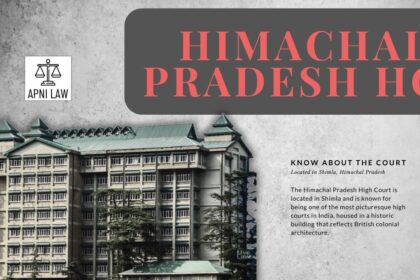
Himachal Pradesh High Court
Himachal Pradesh High CourtNews

Himachal Pradesh HC: Person Born In India Between 1950 And 1987 Is Citizen By Birth Under Section 3 Of Citizenship Act

Amna Kabeer
By Amna Kabeer
2 weeks ago
Meghalaya High Court Allows Quashing of POCSO Cases in Consensual Adolescent Relationships
Medical Negligence: Understanding Legal Consequences
Supreme Court Issues Notice On Petition Against Cancellation Of NEET-SS 2024
Suicide Threats by Spouse Amount to Cruelty for Divorce: Bombay HC
- Advertisement -
Ad imageAd image

Your one-stop destination for legal news, articles, queries, and a directory of lawyers in India – all under one roof at ApniLaw.

Stay Updated

  • BNSS
  • News
  • Documentation
  • Acts
  • Supreme Court
  • High Court
  • Judgments

Information

  • ApniLaw Services
  • About Us
  • Contact Us
  • Disclaimer
  • Privacy Policy
  • Terms of Service

Advertise

  • Advertise with us
  • Newsletters
  • Deal

Find Us on Socials

ApniLawApniLaw
Follow US
© ApniLaw 2026. All Rights Reserved.
login
Welcome Back!

Sign in to your account

Or
Username or Email Address
Password

Lost your password?