Introduction
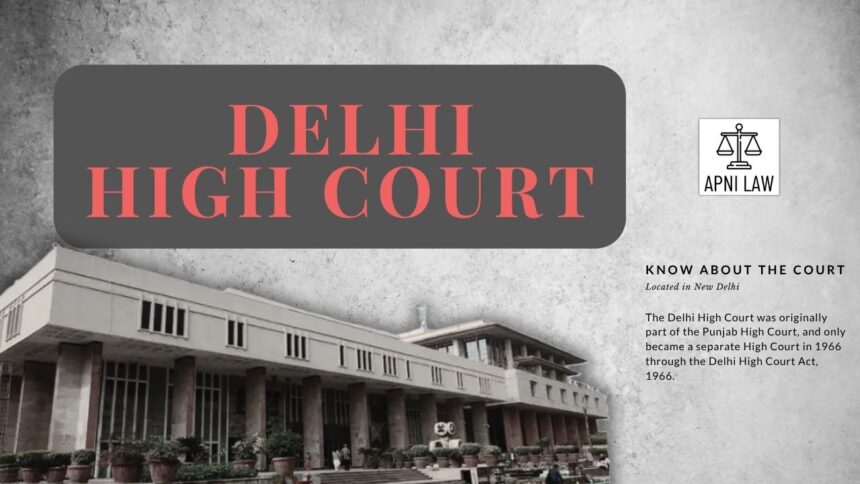
The Delhi High Court has delivered an important judgment on mutual consent divorce under the Hindu Marriage Act, 1955. The court held that completing one year of separation after marriage is not always mandatory before filing the first motion for divorce by mutual consent. This ruling brings clarity to a long-standing legal debate and gives courts greater discretion in matrimonial matters. The judgment recognizes that rigid timelines may cause hardship to couples whose marriage has irretrievably broken down. It strengthens the principle that family law must balance statutory requirements with practical realities and individual dignity.
Facts of the Case
The issue arose due to conflicting interpretations of Section 13B(1) of the Hindu Marriage Act. This provision states that spouses must live separately for at least one year before filing a petition for divorce by mutual consent. Several courts had treated this requirement as mandatory, rejecting petitions filed before the completion of one year. The matter was referred to a full bench of the Delhi High Court to settle the legal position. The bench examined whether courts have the power to waive this one-year separation period, especially when parties demonstrate exceptional hardship or circumstances. The judges also considered the proviso to Section 14(1) of the Act, which allows courts to grant relief from the statutory waiting period in certain situations.
What the Court Says
The Delhi High Court ruled that the one-year separation period under Section 13B(1) is directory and not mandatory. The court clarified that judges can waive this requirement if the facts of the case justify such relief. The bench held that the power to waive timelines already exists under the proviso to Section 14(1) and applies equally to mutual consent divorces. The court emphasized that exceptional hardship to the petitioner or exceptional depravity by the respondent can justify an early filing. The judges also addressed the six-month cooling-off period under Section 13B(2). They clarified that both periods operate independently and can be waived simultaneously. Courts are not required to wait for statutory timelines if the marriage is clearly beyond repair and consent is genuine. However, the bench cautioned that waivers are not automatic and must be granted after careful judicial scrutiny.
For any specific query call at +91 – 8569843472
Implications
This judgment has wide-ranging implications for matrimonial litigation in India. It offers relief to couples who decide to separate soon after marriage and cannot reasonably wait for one year to seek divorce. The ruling reduces unnecessary procedural delays in mutual consent divorce cases. It reinforces judicial discretion and focuses on substantive justice rather than rigid technicalities. Family courts can now address cases with greater flexibility, especially where continuing the marriage causes mental or emotional suffering. The decision may also reduce prolonged litigation and encourage amicable settlements. Overall, the judgment aligns family law with modern realities and ensures that legal processes support personal freedom and human dignity rather than prolong failed marriages.