Introduction
A recent incident in Delhi has brought an issue into focus. A man alleged that he was recorded without his consent at a café in Khan Market using Ray-Ban Meta smart glasses and later found the footage being used in an Instagram Reel. He reportedly issued a legal notice seeking removal of the content, an apology and compensation of ₹2.05 crore. The dispute raises an important question. Can someone legally record another person without their knowledge using smart glasses in India?
Is There A Specific Law Against Smart-Glass Recording?
India does not currently have a separate offence specifically called “unauthorised smart-glass recording.” The fact that a camera is built into smart glasses does not, by itself, make every recording illegal. The legality depends on the circumstances of the recording, the place where it occurred, what was captured, whether the person had a reasonable expectation of privacy, and what happened to the footage afterward. This distinction is important because recording a person in a public place is not automatically the same as committing a criminal offence. However, covert recording can raise serious privacy and criminal-law issues when it involves a private act, intimate material, intrusion into privacy, or publication without consent.
What Does The Right To Privacy Say?
The Supreme Court recognised privacy as a fundamental right under Article 21 of the Constitution in K.S. Puttaswamy v. Union of India. The judgment recognised privacy as an intrinsic part of life and personal liberty, although the right is not absolute.
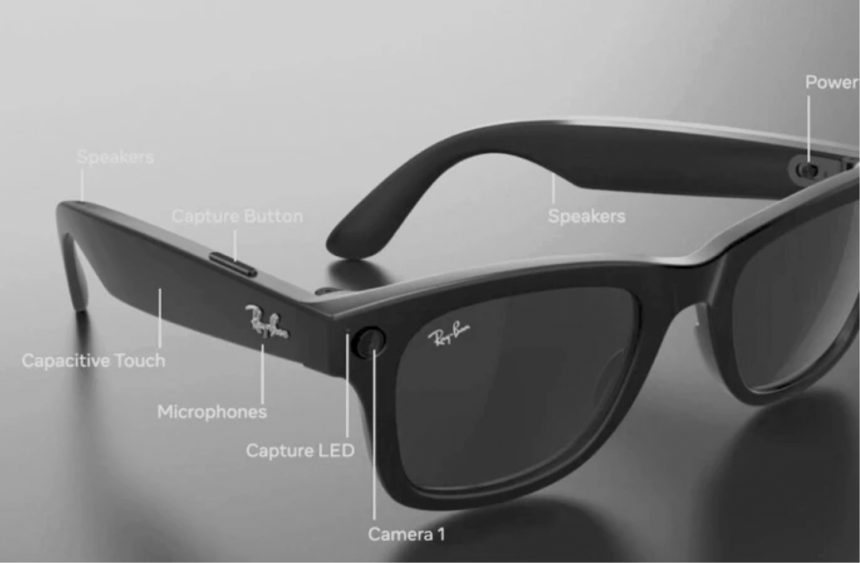
Smart glasses create a new difficulty because they can look like ordinary eyewear while also containing cameras and microphones. A person interacting with the wearer may therefore not realise that an image or video is being captured.
However, the existence of a privacy right does not mean that every photograph or video taken in a public setting automatically becomes unlawful. The circumstances and nature of the recording remain important.
Can Section 66E Of The IT Act Apply?
Section 66E of the Information Technology Act, 2000 deals with violation of privacy. It applies when a person intentionally or knowingly captures, publishes or transmits the image of another person’s private area without consent in circumstances violating that person’s privacy.
For example, if someone uses a smart-glass camera to secretly capture an intimate or private image and later transmits it electronically, Section 66E can become relevant. But Section 66E cannot be described as a general offence covering every secret recording of every person. Its statutory language specifically concerns the image of a private area.
What About Voyeurism Under Section 77 Of The BNS?
Section 77 of the Bharatiya Nyaya Sanhita, 2023 (BNS) deals with voyeurism. It covers watching or capturing the image of a woman engaging in a private act in circumstances where she would ordinarily expect not to be observed, as well as dissemination of such an image. This can become particularly relevant where smart glasses are used to secretly capture a woman’s private activity.
The provision also makes an important distinction concerning consent. Consent to the capture of an image does not automatically amount to consent to its dissemination to other persons. Therefore, consent to being recorded and consent to having that recording published are not necessarily the same thing.
At the same time, Section 77 has specific statutory ingredients. A person cannot be accused of voyeurism merely because another person happened to record them in an ordinary public interaction.
Can Section 79 Of The BNS Be Relevant?
Section 79 of the BNS concerns words, gestures or acts intended to insult the modesty of a woman and includes conduct involving intrusion upon her privacy.
Therefore, depending on the circumstances, covert recording of a woman can potentially raise an issue under this provision where the conduct amounts to an intrusion into her privacy. The provision is therefore relevant to the broader privacy discussion, but it does not create a blanket rule that every secret photograph or video is automatically an offence.
What If The Recording Is Uploaded On Instagram?
The legal situation can become more serious when the recording is not merely captured but published or transmitted online. A person who records someone and then uploads the footage to Instagram can face a different set of legal questions from someone who merely possesses a recording. The content of the video, the circumstances in which it was captured, whether it contains intimate or private material, and the manner in which it is published can all become relevant.
For example, a person secretly recording a stranger in a café and later uploading the footage with mocking captions can raise privacy, reputational and other legal concerns even though the original interaction took place in a public setting.
The recent Delhi dispute involving Meta smart glasses illustrates precisely why this distinction matters. The allegation was not simply that the man had been recorded, but that the footage was subsequently used in an Instagram Reel without his knowledge or approval.
Does Wearing Smart Glasses Give Someone Permission To Record?
Owning or wearing a device with a camera does not itself create a legal right to record anyone in every situation. At the same time, Indian law does not currently impose a universal rule requiring a person’s express consent before every photograph or video can be taken in a public place. The more relevant questions are what was recorded, where it was recorded, whether the person had an expectation of privacy, whether the recording involved intimate or private material, and whether it was subsequently shared or misused.
Why Smart Glasses Create A New Privacy Problem
Traditional cameras and smartphones are generally visible when someone is using them to record. Smart glasses can make the act much less obvious because the camera is integrated into an ordinary-looking accessory. This has already generated privacy concerns internationally, particularly because some smart glasses use small recording indicators that may not be obvious to people nearby.
The technology therefore creates a difficult legal question: How meaningful is consent when the person being recorded does not even know that recording is taking place?
Indian law already provides several privacy-related protections, but there is currently no standalone statutory framework specifically designed around covert recording through consumer smart glasses.
What Does This Mean For Users?
Smart glasses are not automatically illegal, and recording someone in a public place is not automatically a criminal offence.
However, technology does not remove existing legal restrictions on privacy, intimate recordings or their unlawful publication.
If smart glasses are used to secretly capture a person’s private activity, intimate images or other material in circumstances where privacy is reasonably expected, provisions such as Section 66E of the IT Act and Section 77 of the BNS can become relevant depending on the facts.