Introduction
Section 33 of the Indian Evidence Act, 1872 deals with the admissibility of evidence recorded in previous judicial proceedings. It applies when the same evidence is sought to be used in a later proceeding. The law recognises that circumstances may prevent a witness from appearing again before the court. In such situations, justice should not fail merely because the witness is unavailable.
This provision allows prior testimony to be read as evidence if the witness has died, cannot be found, has become incapable of giving evidence, or has been deliberately kept away by the adverse party. It also applies when securing the witness’s presence would cause unreasonable delay or expense. However, the law does not permit unrestricted use of such evidence. It imposes strict safeguards to protect fairness and the right to cross-examination.
How Does Section 27 of the Bharatiya Sakshya Adhiniyam Replace Section 33?
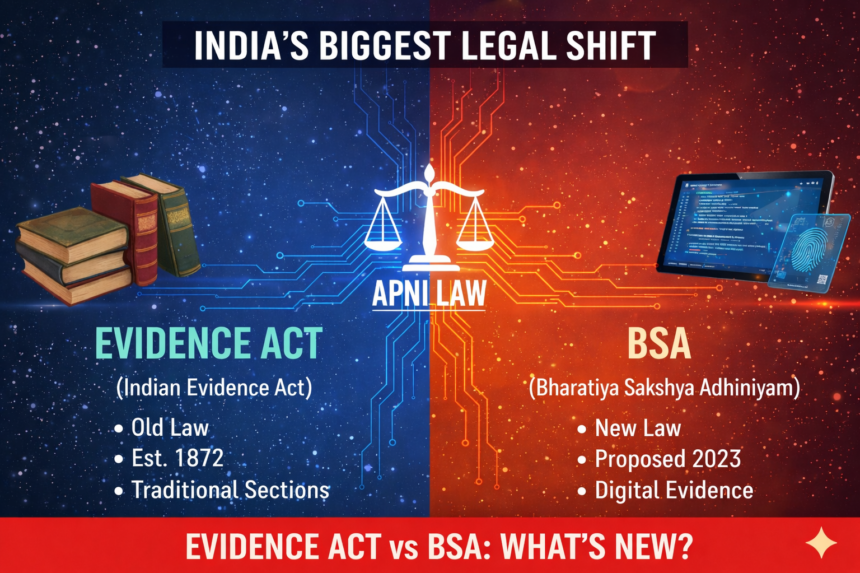
Section 27 of the Bharatiya Sakshya Adhiniyam, 2023 replaces Section 33 of the Indian Evidence Act with effect from 1 July 2024. The new provision retains the same legal framework and conditions. The legislature intentionally preserved the substance of the earlier law to maintain continuity and certainty in judicial practice.
The Bharatiya Sakshya Adhiniyam does not dilute or expand the core rule. Instead, it reinforces the same principles that governed admissibility under the old Act. This continuity ensures that decades of judicial interpretation under Section 33 remain relevant and applicable under Section 27.
What Conditions Must Be Satisfied for Using Prior Evidence?
Both Section 33 of the Indian Evidence Act and Section 27 of the Bharatiya Sakshya Adhiniyam require strict compliance with three essential conditions. First, the earlier and subsequent proceedings must involve the same parties or their legal representatives. Second, the adverse party in the earlier proceeding must have had a full right and opportunity to cross-examine the witness. Third, the issues in both proceedings must be substantially the same.
These conditions ensure that the evidence does not amount to hearsay. The law treats cross-examination as the most reliable test of truth. If any one of these requirements is not fulfilled, the court must reject the evidence. The rule therefore balances necessity with fairness.
When Is a Witness Considered Unavailable Under the Law?
The law recognises several situations where a witness becomes unavailable. Death of the witness is the most obvious case. Unavailability also includes situations where the witness cannot be found despite reasonable efforts. Physical or mental incapacity that prevents the witness from testifying also qualifies.
The law further covers cases where the adverse party deliberately keeps the witness away. It also applies when bringing the witness to court would cause unreasonable delay or expense. Courts interpret these grounds strictly. Mere inconvenience or minor difficulty does not justify the use of previous testimony.
What Clarification Does the Explanation in Section 27 BSA Add?
Section 27 of the Bharatiya Sakshya Adhiniyam introduces an Explanation that was not expressly stated in Section 33 of the Indian Evidence Act. The Explanation clarifies that a criminal trial or inquiry is deemed to be a proceeding between the prosecutor and the accused.
This clarification codifies what courts had already recognised through judicial interpretation. Earlier judgments of the Privy Council and the Supreme Court treated the prosecution and the accused as parties for the purpose of Section 33. The Explanation now removes any ambiguity. It ensures that evidence recorded in earlier criminal proceedings can be used in later stages, provided all statutory conditions are met.
Does Section 27 BSA Change the Law on Criminal Proceedings?
Section 27 of the Bharatiya Sakshya Adhiniyam does not change the law relating to criminal proceedings. It merely affirms the existing legal position. The Explanation strengthens clarity and consistency. Prosecutors and defence counsel now have express statutory guidance instead of relying only on precedents.
This change improves certainty in criminal trials, especially in cases involving prolonged litigation, multiple trials, or retrials. Courts can confidently rely on earlier recorded evidence without reopening settled questions of interpretation.
How Do These Provisions Protect the Right to Fair Trial?
Both provisions safeguard the right to a fair trial by insisting on prior cross-examination. The law does not allow evidence recorded behind the back of a party to be used against them later. The opportunity to test the witness through cross-examination remains central.
Courts consistently hold that these provisions are exceptions to the general rule against hearsay. As exceptions, they require strict construction. Any doubt regarding compliance operates against admissibility. This approach ensures that necessity does not override fairness.
What Is the Practical Impact of Section 27 BSA on Courts?
The practical impact of Section 27 of the Bharatiya Sakshya Adhiniyam lies in continuity rather than change. Judges, lawyers, and investigators can rely on established principles without adjusting to a new legal standard. Previous rulings under Section 33 of the Indian Evidence Act remain persuasive and relevant.
The addition of the Explanation improves efficiency in criminal adjudication. It reduces procedural objections and avoids unnecessary litigation on technical grounds. Courts can focus on substantive justice rather than interpretative disputes.
Conclusion
Section 27 of the Bharatiya Sakshya Adhiniyam represents a faithful continuation of Section 33 of the Indian Evidence Act. It preserves the balance between evidentiary necessity and procedural fairness. The law continues to respect the importance of cross-examination and identity of issues.
By retaining the core structure and adding limited clarification, the Bharatiya Sakshya Adhiniyam ensures stability while modernising the statutory framework. The provision reflects legislative confidence in a time-tested rule that serves the interests of justice.