
By using this site, you agree to the Privacy Policy and Terms of Use.
Accept
ApniLawApniLawApniLaw
  • Home
  • Find a Lawyer
  • Our Services
  • Law Forum
  • Legal News
  • Judgments
  • Knowledge Hub
    • Bare Acts
      • BNS
      • BNSS
      • BSA
      • CrPC
      • CPC
      • DPDP
      • Hindu Marriage Act
      • Hindu Succession Act
      • The Hindu Adoptions And Maintenance Act
      • The Hindu Minority and Guardianship Act
      • IPC
      • Juvenile Justice Act
      • POCSO
      • Special Marriage Act
      • The Specific Relief Act
    • Supreme Court
    • High Court
    • Legal Articles
    • UPSC
    • Job Updates
    • Marriage and Divorce
    • Land Dispute & Will
    • Civil
    • Criminal
  • About Us
Reading: Hindu Wife Can Enforce Maintenance Claim Even on Property Sold by Husband: Kerala HC
Share
Notification Show More
Font ResizerAa
ApniLawApniLaw
Font ResizerAa
  • Home
  • Find a Lawyer
  • Our Services
  • Law Forum
  • Legal News
  • Judgments
  • Knowledge Hub
  • About Us
  • Home
  • Find a Lawyer
  • Our Services
  • Law Forum
  • Legal News
  • Judgments
  • Knowledge Hub
    • Bare Acts
    • Supreme Court
    • High Court
    • Legal Articles
    • UPSC
    • Job Updates
    • Marriage and Divorce
    • Land Dispute & Will
    • Civil
    • Criminal
  • About Us
Have an existing account? Sign In
Follow US
  • Advertise
© 2022 Foxiz News Network. Ruby Design Company. All Rights Reserved.
ApniLaw > Blog > News > Family > Alimony & Maintenance > Hindu Wife Can Enforce Maintenance Claim Even on Property Sold by Husband: Kerala HC
Alimony & MaintenanceKerala High CourtMarriage and Divorce

Hindu Wife Can Enforce Maintenance Claim Even on Property Sold by Husband: Kerala HC

Amna Kabeer
Last updated: January 18, 2026 6:33 pm
Amna Kabeer
10 months ago
Share
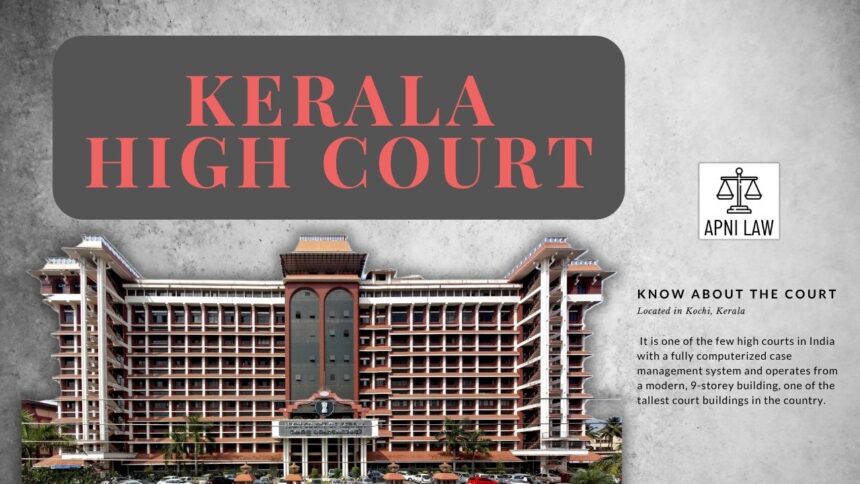
Kerala High Court
Kerala High Court
SHARE

Introduction

In Sulochana v. Anitha & Ors., the Kerala High Court Full Bench has delivered a significant judgment strengthening the maintenance rights of Hindu wives. The Court held that a Hindu wife can enforce her maintenance claim against her husband’s immovable property even after he has sold it, provided the buyer had notice of the claim or the sale took place after maintenance proceedings began.

Contents
IntroductionFacts of the CaseWhat the Kerala High Court HeldLegal and Social ImplicationsConclusion

The ruling clarifies long-standing legal confusion and prevents husbands from avoiding maintenance obligations by transferring property to third parties.

Facts of the Case

In this case, the wife initiated maintenance proceedings against her husband before the Family Court. During the pendency of the case, the husband sold his immovable property to a third party. The wife sought to enforce her maintenance right against the property despite the transfer.

The purchaser argued that he was a bona fide buyer and could not be made liable for the husband’s personal obligation to maintain his wife. He also claimed that the Hindu Adoptions and Maintenance Act, 1956 did not allow enforcement of maintenance rights against transferred property.

The Family Court rejected this argument and held that the wife’s maintenance right created a charge on the property. The buyer challenged this finding before the High Court. Due to conflicting earlier judgments, the matter was referred to a Full Bench.

What the Kerala High Court Held

The Full Bench held that a Hindu wife’s right to maintenance is a statutory right that arises from marriage itself. The Court explained that this right exists in a dormant form from the date of marriage. Once the wife asserts her claim through legal proceedings, the right becomes inchoate. After a court determines the maintenance amount, the right crystallises into an enforceable claim against the husband’s property.

The Court clarified that Section 28 of the Hindu Adoptions and Maintenance Act and Section 39 of the Transfer of Property Act protect a wife’s maintenance claim even after property transfer. Although these provisions do not automatically create a charge, they grant a right similar to a charge when the transferee has notice of the maintenance claim.

ApniLaw AI

Need the case law behind this point?

Ask ApniLaw AI in plain words. Every point of the answer shows the judgment paragraph or Act section behind it, with its page and paragraph number.

Explore ApniLaw AI

The Bench emphasised that notice can be actual or constructive. If maintenance proceedings are already pending, or if the buyer knew that the husband had denied maintenance to his wife, the buyer cannot claim immunity. In such cases, the property remains subject to the wife’s maintenance claim.

The Court also overruled the earlier decision in Vijayan v. Sobhana, holding that it did not lay down the correct law.

Legal and Social Implications

This judgment has wide implications for family law and property transactions. It strengthens the enforcement of maintenance rights and ensures that wives are not left remediless due to strategic property transfers by husbands. The ruling sends a clear message that maintenance obligations cannot be defeated through asset alienation.

For property buyers, the decision underscores the importance of due diligence. Buyers must verify whether the seller faces pending maintenance claims. Purchasing property with notice of such claims can expose buyers to legal liability.

For courts and legal practitioners, the verdict brings much-needed clarity and uniformity in applying maintenance laws. It aligns statutory interpretation with the welfare objective of the Hindu Adoptions and Maintenance Act.

Conclusion

The Kerala High Court Full Bench has reaffirmed that a Hindu wife’s right to maintenance is a substantive and enforceable right. The Court has ensured that justice prevails over technicalities and that statutory protections cannot be diluted by property transfers. This judgment marks a decisive step toward safeguarding the financial security and dignity of married women under Indian law.
Join Telegram Channel Join WhatsApp Channel

You Might Also Like

Recording and Circulating Court Proceedings via Video Conferencing is Prohibited: Kerala HC

No Need for Equivalency Certificate for IGNOU Degree: Kerala HC

No Strict Proof Needed for Brides Claiming Gold Entrusted To In-Laws: Kerala HC

Non-appearance Of One Party Does Not Justify Automatic Granting Of Divorce: Bombay HC

Legal Considerations For NRI Inter-Caste Marriages

TAGGED:Hindu WivesKerala High CourtMaintenance ClaimProperty ClaimSold Porperty
Share This Article
Facebook Whatsapp Whatsapp Telegram Print
Previous Article CrPC vs BNSS India’s New Criminal Procedure Reform Section 313 CrPC vs Section 351 BNSS: Examination of Accused Without Oath
Next Article CrPC vs BNSS India’s New Criminal Procedure Reform Section 320 CrPC vs Section 359 BNSS: Compounding of Criminal Offences
4 Comments
  • Pingback: SC/ST Act Insult Offence Requires Humiliation on Account of Caste: SC - ApniLaw
  • Pingback: Section 202 BNS and Section 228 IPC: Intentional Insult to a Public Servant - ApniLaw
  • Pingback: IPC Section 141 vs BNS Section 189: Unlawful Assembly Explained Under New Law - ApniLaw
  • Pingback: Section 3 of the Indian Evidence Act vs Section 2 of BSA Act: Definition of Evidence and Expanded Scope - ApniLaw

Leave a Reply Cancel reply

You must be logged in to post a comment.

Follow US

Find US on Social Medias
FacebookLike
XFollow
InstagramFollow
YoutubeSubscribe
TelegramFollow
WhatsAppFollow

Weekly Newsletter

Subscribe to our newsletter to get our newest articles instantly!
Popular News
Grounds For Divorce
Alimony & MaintenanceDocumentationMuslim Law

Desertion as a Ground for Divorce: A Comparison of Hindu and Muslim Matrimonial Laws in India

Amna Kabeer
By Amna Kabeer
3 weeks ago
Supreme Court Rules Against High Enrollment Fees By State Bar Councils
Rajasthan High Court: Child Marriage Alone Does Not Prove Human Trafficking, Suspends Sentence Of Two Convicts
Karnataka High Court: Should There Be ‘Blanket Freeze’ of Jar Gold Bank Accounts?
Jharkhand HC: Mother Has Preferential Custody Right Over Minor Daughter Under Hanafi Law, Subject to Child’s Welfare
- Advertisement -
Ad imageAd image

Your one-stop destination for legal news, articles, queries, and a directory of lawyers in India – all under one roof at ApniLaw.

Stay Updated

  • BNSS
  • News
  • Documentation
  • Acts
  • Supreme Court
  • High Court
  • Judgments

Information

  • ApniLaw Services
  • About Us
  • Contact Us
  • Disclaimer
  • Privacy Policy
  • Terms of Service

Advertise

  • Advertise with us
  • Newsletters
  • Deal

Find Us on Socials

ApniLawApniLaw
Follow US
© ApniLaw 2026. All Rights Reserved.
login
Welcome Back!

Sign in to your account

Or
Username or Email Address
Password

Lost your password?

