By using this site, you agree to the Privacy Policy and Terms of Use.
Accept
ApniLawApniLawApniLaw
  • Home
  • Find a Lawyer
  • Our Services
  • Law Forum
  • Legal News
  • Judgments
  • Knowledge Hub
    • Bare Acts
      • BNS
      • BNSS
      • BSA
      • CrPC
      • CPC
      • DPDP
      • Hindu Marriage Act
      • Hindu Succession Act
      • The Hindu Adoptions And Maintenance Act
      • The Hindu Minority and Guardianship Act
      • IPC
      • Juvenile Justice Act
      • POCSO
      • Special Marriage Act
      • The Specific Relief Act
    • Supreme Court
    • High Court
    • Legal Articles
    • UPSC
    • Job Updates
    • Marriage and Divorce
    • Land Dispute & Will
    • Civil
    • Criminal
  • About Us
Reading: Delhi High Court Waives One-Year Divorce Waiting Period Under Special Marriage Act in Exceptional Hardship Case
Share
Notification Show More
Font ResizerAa
ApniLawApniLaw
Font ResizerAa
  • Home
  • Find a Lawyer
  • Our Services
  • Law Forum
  • Legal News
  • Judgments
  • Knowledge Hub
  • About Us
  • Home
  • Find a Lawyer
  • Our Services
  • Law Forum
  • Legal News
  • Judgments
  • Knowledge Hub
    • Bare Acts
    • Supreme Court
    • High Court
    • Legal Articles
    • UPSC
    • Job Updates
    • Marriage and Divorce
    • Land Dispute & Will
    • Civil
    • Criminal
  • About Us
Have an existing account? Sign In
Follow US
  • Advertise
© 2022 Foxiz News Network. Ruby Design Company. All Rights Reserved.
ApniLaw > Blog > High Court > Delhi High Court > Delhi High Court Waives One-Year Divorce Waiting Period Under Special Marriage Act in Exceptional Hardship Case
Delhi High CourtMarriage and Divorce

Delhi High Court Waives One-Year Divorce Waiting Period Under Special Marriage Act in Exceptional Hardship Case

Amna Kabeer
Last updated: June 3, 2026 2:05 am
Amna Kabeer
6 months ago
Share
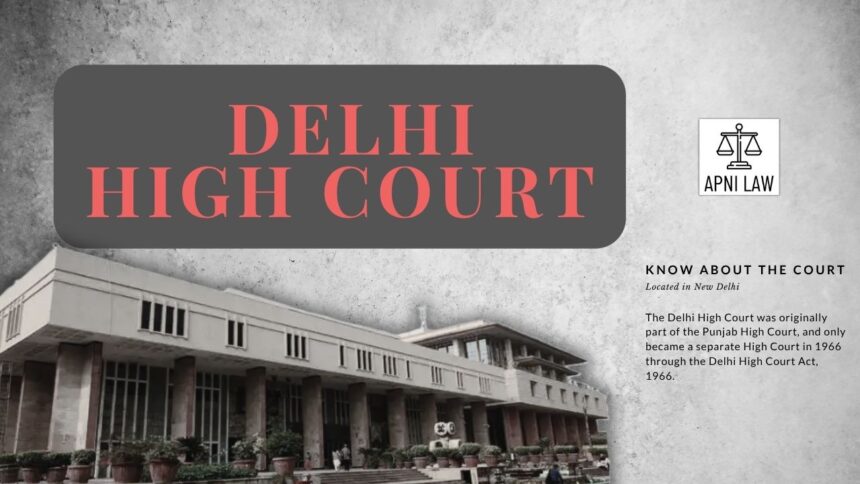
Delhi High Court
Delhi High Court
SHARE

Introduction

The Delhi High Court has held that the statutory one-year waiting period for filing a divorce petition under the Special Marriage Act, 1954, can be waived in exceptional cases where continuing the marriage would only prolong the parties hardship. The Court observed that when a marriage exists merely on paper, has never been consummated, and lacks social or familial acceptance, strict adherence to the waiting period may serve no useful purpose.

Contents
IntroductionLegal IssueBackgroundCourt’s DecisionConclusionCase Name

Legal Issue

The issue before the Court was whether the mandatory one-year bar under Section 29 of the Special Marriage Act and the related waiting period for mutual consent divorce could be waived in a case involving exceptional hardship and mutual agreement between the spouses to dissolve the marriage.

Background

The parties, belonging to different faiths, married under the Special Marriage Act on August 25, 2025. According to them, disclosure of the marriage resulted in serious family difficulties. The husband stated that his father suffered a medical emergency and was later diagnosed with liver failure after learning about the marriage. The wife also feared adverse consequences from her family and therefore kept the marriage concealed.

The couple never lived together, did not consummate the marriage, and had no children. They jointly sought dissolution of the marriage and requested waiver of the statutory one-year waiting period. However, the Family Court rejected the request, holding that there was no exceptional hardship and that adequate efforts had not been made to preserve the marriage.

Court’s Decision

The Delhi High Court set aside the Family Court’s order and held that the Special Marriage Act grants courts the discretion to relax statutory timelines in appropriate cases. The Court found that the facts of the case clearly established exceptional hardship.

ApniLaw AI

Need the case law behind this point?

Ask ApniLaw AI in plain words. Every point of the answer shows the judgment paragraph or Act section behind it, with its page and paragraph number.

Explore ApniLaw AI

The Bench noted that the marriage was purely notional, with no cohabitation, consummation, or social recognition. It also took into account the serious family consequences faced by the parties and observed that both spouses had mutually agreed to dissolve the marriage.

The Court held that compelling the parties to wait for another year would only extend their suffering and would be contrary to the object and purpose of the legislation. It further observed that the Family Court had adopted an unduly restrictive and technical interpretation of the law.

Accordingly, the High Court allowed the waiver application and directed the Family Court to entertain the mutual consent divorce petition without insisting on the statutory one-year waiting period.

Conclusion

The Delhi High Court reaffirmed that while statutory waiting periods under the Special Marriage Act are intended to protect the institution of marriage, courts may waive such requirements where exceptional hardship is demonstrated. The judgment highlights that procedural safeguards should not be applied rigidly when a marriage has effectively ceased to exist and both parties seek an amicable dissolution.

Case Name

SK v. KS

Join Telegram Channel Join WhatsApp Channel

You Might Also Like

Accusation of Wife’s Extra-Marital Affair Itself Can Be Mental Cruelty, Denies Husband’s Divorce on Desertion Ground: Karnataka HC

CrPC Section 426: When Does a Sentence on an Escaped Convict Take Effect?

Earning Men Can’t Claim ‘No Resources’ to Avoid Maintenance: Kerala HC

How To File A Case Under The Indian Boilers Act

CrPC Section 13: Powers and Functions of Special Judicial Magistrates

TAGGED:Delhi High CourtDivorceHardshipLegalNewsSpecial Marriage ActWaiting Period
Share This Article
Facebook Whatsapp Whatsapp Telegram Print
Previous Article Understanding Legal Consequences Of Medical Negligence How To Get A Copy Of The Indian Medical Council Act Format
Next Article scammer-scam-digital-identity-theft-600nw-2505777005 The Business of Cybercrime: How Digital Platforms Are Being Exploited for Fraud and Online Abuse
4 Comments
  • Pingback: Supreme Court Seeks Effective Implementation of Menstrual Hygiene Directions, Warns Against Laxity - ApniLaw
  • Pingback: What Is The Growing Link Between Cyber Crime And Money Laundering In India? - ApniLaw
  • Pingback: When Virtual Gifts Become Real Losses: The Growing Scrutiny Of Tango - ApniLaw
  • Pingback: The Business of Cybercrime: How Digital Platforms Are Being Exploited for Fraud and Online Abuse - ApniLaw

Leave a Reply Cancel reply

You must be logged in to post a comment.

Follow US

Find US on Social Medias
FacebookLike
XFollow
InstagramFollow
YoutubeSubscribe
TelegramFollow
WhatsAppFollow

Weekly Newsletter

Subscribe to our newsletter to get our newest articles instantly!
Popular News
CJI Chandrachud Calls For Inclusive Policies For Persons With Disabilities
News

CJI Chandrachud Calls For Inclusive Policies For Persons With Disabilities

Amna Kabeer
By Amna Kabeer
2 years ago
Neglect Or Abandonment Of Elderly Parents Violate Right To Dignity Under Article 21: Allahabad HC
What Are The Rights Of Women In India
Recording and Circulating Court Proceedings via Video Conferencing is Prohibited: Kerala HC
All You Need to Know about Transfer of Property
- Advertisement -
Ad imageAd image

Your one-stop destination for legal news, articles, queries, and a directory of lawyers in India – all under one roof at ApniLaw.

Stay Updated

  • BNSS
  • News
  • Documentation
  • Acts
  • Supreme Court
  • High Court
  • Judgments

Information

  • ApniLaw Services
  • About Us
  • Contact Us
  • Disclaimer
  • Privacy Policy
  • Terms of Service

Advertise

  • Advertise with us
  • Newsletters
  • Deal

Find Us on Socials

ApniLawApniLaw
Follow US
© ApniLaw 2026. All Rights Reserved.
login
Welcome Back!

Sign in to your account

Or
Username or Email Address
Password

Lost your password?