Court dismisses power utility’s appeal against compensation order, applying principles of strict liability for death caused by hazardous electrical infrastructure.
Introduction
The Gujarat High Court recently dismissed an appeal filed by a state power utility challenging a compensation award for the family of a man who died after coming into contact with a loose live electric wire. The Court held that the electricity company cannot attribute negligence to the deceased when its own live wires were hanging dangerously low. The judgment reinforces the principle that entities handling hazardous infrastructure such as electricity are strictly liable for harm caused by their operations.
Case Title, Bench and Date
Case: Paschim Gujarat Vij Co. Ltd. v. Hasam Mamad Sama & Anr.
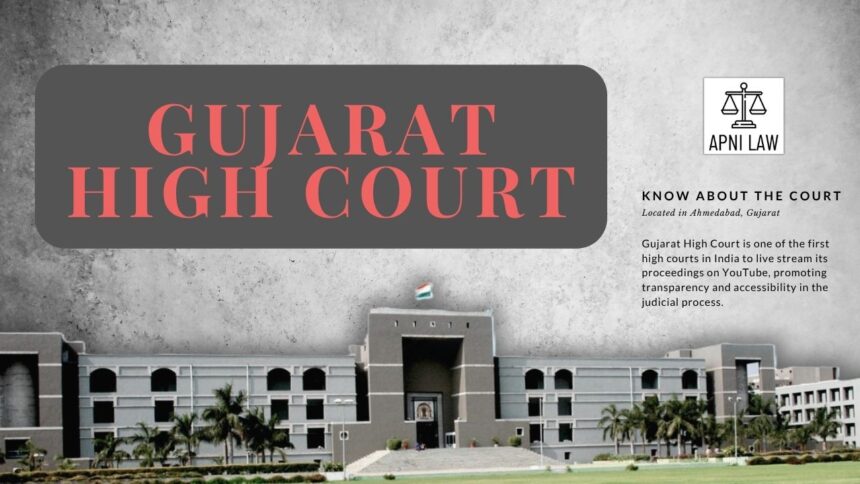
Court: Gujarat High Court
Bench: Justice J.C. Doshi
Date of Judgment: March 2026
Case Type: First Appeal No. 3505 of 2007
Legal Issue
The main legal issue before the Court was whether an electricity distribution company could avoid liability by alleging negligence on the part of the deceased in a case where death occurred due to contact with a low-hanging live electric wire. The company argued that the accident could have been avoided if the victim had exercised greater care while walking in the area.
Case Background
The incident occurred on 6 December 2001 at Bharasar village. The deceased, Abdul Hasam, was walking along the embankment of Khaliya Lake when he came into contact with a live wire belonging to the electricity distribution company. He died on the spot due to electrocution. The victim’s parents filed a civil suit seeking compensation, alleging negligence on the part of the power utility for failing to properly maintain the electrical line. They claimed that the wire was hanging loose at a dangerously low height, making contact with passers-by possible. A trial court later directed the electricity company to pay ₹3,38,000 with interest at 9% per annum from the date of the suit until realization. The company subsequently filed an appeal challenging this order.
Appellant’s Arguments
The electricity company argued that the trial court had erred in holding it liable for the accident. According to the company, the deceased had failed to exercise proper caution while passing through the area. It contended that if reasonable care had been taken, the mishap could have been avoided and therefore the responsibility should not rest solely on the power utility.
Court’s Reasoning
Justice J.C. Doshi rejected the company’s arguments and upheld the trial court’s decision. The Court observed that the evidence clearly showed that the live wire was hanging loosely at a low height, making it possible for a person walking along the lake embankment to come into contact with it. The Court relied on the principle of absolute liability developed by the Supreme Court in the landmark case M.C. Mehta v. Union of India (1987). Under this doctrine, enterprises engaged in hazardous activities are responsible for harm resulting from such activities regardless of negligence. Applying this principle, the Court stated that electricity distribution involves inherently dangerous operations and utilities must ensure that their infrastructure does not endanger public safety. The Bench further held that when a live electric wire is negligently maintained and left hanging in a public area, the electricity company cannot later shift blame onto the victim for the resulting accident.
Final Ruling
The Gujarat High Court dismissed the appeal filed by the power company and upheld the compensation granted by the trial court to the deceased’s family. The Court concluded that the electricity utility could not claim negligence by the deceased when the accident was caused by its own improperly maintained electrical line.
Practical Implications
The ruling highlights several important legal principles:
- Strict liability for hazardous activities: Electricity utilities are responsible for ensuring safe maintenance of power infrastructure.
- Limited scope for contributory negligence defence: Where infrastructure is inherently dangerous and poorly maintained, blaming the victim may not be accepted by courts.
- Public safety obligations: Utilities must maintain electrical lines at safe heights and conditions to prevent accidental electrocution.
The judgment adds clarity on the application of strict and absolute liability principles to electricity distribution companies in cases of death caused by poorly maintained live wires.