
By using this site, you agree to the Privacy Policy and Terms of Use.
Accept
ApniLawApniLawApniLaw
  • Home
  • Find a Lawyer
  • Our Services
  • Law Forum
  • Legal News
  • Judgments
  • Knowledge Hub
    • Bare Acts
      • BNS
      • BNSS
      • BSA
      • CrPC
      • CPC
      • DPDP
      • Hindu Marriage Act
      • Hindu Succession Act
      • The Hindu Adoptions And Maintenance Act
      • The Hindu Minority and Guardianship Act
      • IPC
      • Juvenile Justice Act
      • POCSO
      • Special Marriage Act
      • The Specific Relief Act
    • Supreme Court
    • High Court
    • Legal Articles
    • UPSC
    • Job Updates
    • Marriage and Divorce
    • Land Dispute & Will
    • Civil
    • Criminal
  • About Us
Reading: Aadhaar, Voter ID Not Conclusive Proof of Date of Birth in Service Matters: Madhya Pradesh HC
Share
Notification Show More
Font ResizerAa
ApniLawApniLaw
Font ResizerAa
  • Home
  • Find a Lawyer
  • Our Services
  • Law Forum
  • Legal News
  • Judgments
  • Knowledge Hub
  • About Us
  • Home
  • Find a Lawyer
  • Our Services
  • Law Forum
  • Legal News
  • Judgments
  • Knowledge Hub
    • Bare Acts
    • Supreme Court
    • High Court
    • Legal Articles
    • UPSC
    • Job Updates
    • Marriage and Divorce
    • Land Dispute & Will
    • Civil
    • Criminal
  • About Us
Have an existing account? Sign In
Follow US
  • Advertise
© 2022 Foxiz News Network. Ruby Design Company. All Rights Reserved.
ApniLaw > Blog > High Court > Madhya Pradesh High Court > Aadhaar, Voter ID Not Conclusive Proof of Date of Birth in Service Matters: Madhya Pradesh HC
Madhya Pradesh High CourtNews

Aadhaar, Voter ID Not Conclusive Proof of Date of Birth in Service Matters: Madhya Pradesh HC

Amna Kabeer
Last updated: January 14, 2026 12:18 pm
Amna Kabeer
10 months ago
Share
Madhya Pradesh High Court
SHARE

Bench emphasises primacy of contemporaneous service records and procedural fairness, quashes reinstatement based on identity documents alone.

Contents
Court & BenchCase Title and BackgroundLegal IssueFinal RulingReasoning of the CourtPractical Implications

Indore, January 14, 2026: The Madhya Pradesh High Court has held that Aadhaar and Voter Identity Cards cannot be treated as conclusive proof of a person’s date of birth in service-related disputes, particularly where such documents are relied upon to disturb settled employment records.

Court & Bench

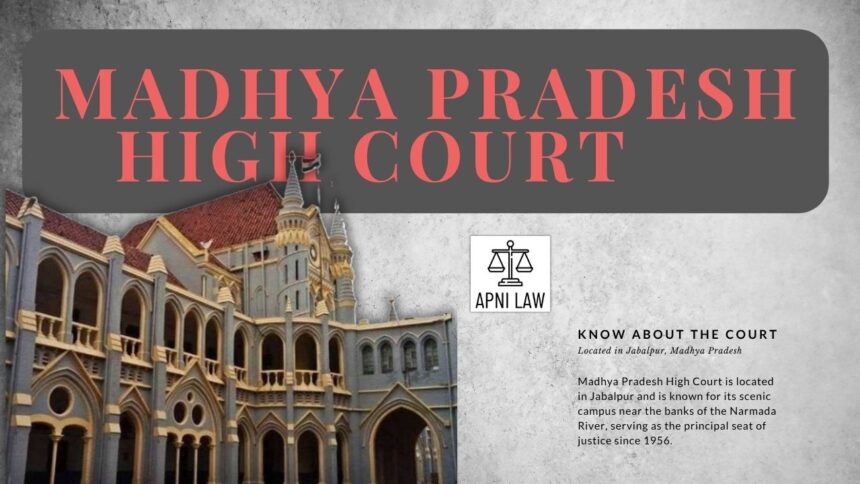
The judgment was delivered on January 13, 2026, by a Single Judge Bench of Justice Jai Kumar Pillai of the Madhya Pradesh High Court, Indore Bench.

Case Title and Background

The petition titled Pramila v. State of Madhya Pradesh & Ors. arose out of a service dispute involving the appointment and subsequent termination of an Anganwadi Sahayika (helper). The matter concerned conflicting records of age and date of birth of a retired Anganwadi worker, whose successor was appointed based on retirement.

The retired worker, claimed that her date of birth had been incorrectly recorded in formal service records. She sought correction of her birth date to an entry shown in her Aadhaar card and Voter ID, which reflected a later birth year, and after many years, successfully obtained an appellate order reinstating her in service. As a consequence, the petitioner, who had been lawfully appointed to the post after Hirlibai’s retirement, was summarily terminated.

ApniLaw AI

Need the case law behind this point?

Ask ApniLaw AI in plain words. Every point of the answer shows the judgment paragraph or Act section behind it, with its page and paragraph number.

Explore ApniLaw AI

The petitioner challenged these orders before the High Court on multiple grounds, including alleged violation of natural justice, delay in filing the appeal, and improper reliance on identity documents for determining date of birth.

Legal Issue

The principal legal issue before the High Court was whether identity documents such as Aadhaar Cards and Voter Identity Cards, which are based on self-declaration and prepared years after initial service entry, can override contemporaneous official service records to determine a person’s date of birth in service matters.

Final Ruling

The High Court allowed the writ petition, quashing both the appellate order that reinstated Hirlibai and the consequent termination of Pramila’s appointment. The Court directed the respondents to reinstate the petitioner to the Anganwadi Sahayika post with continuity of service and full benefits, and to recover salaries and benefits paid to Hirlibai after her retirement.

Reasoning of the Court

In its reasoning, the High Court observed:

  • Service records prepared at the time of entry into employment and relied upon throughout the entire career enjoy a presumption of correctness in determining tenure, seniority, and superannuation.
  • Aadhaar and Voter ID documents, created much later and based on self-declaration, are primarily meant for identification purposes and lack statutory force as primary evidence of age in service disputes.
  • The appellate authority had ignored the doctrine of delay and laches, since the retired worker had accepted the earlier date of birth throughout her service and did not challenge it at the appropriate time, causing prejudice to the successor employee.
  • There were procedural infirmities and violations of natural justice in the appellate process, including failure to give the petitioner notice or an opportunity to be heard before terminating her services.
  • The Court also noted inconsistencies in the claimed date of birth, such as the dates of birth of the retired employee’s children preceding her own claimed date, further undermining reliance on the identity documents.

Practical Implications

  • Evidentiary Hierarchy in Service Disputes: The ruling reinforces that official service records prepared contemporaneously carry greater evidentiary weight in age determination than later-issued identity documents like Aadhaar and Voter ID.
  • Finality of Service Records: Challenges to age or service-related entries must be raised promptly and cannot be used opportunistically years after retirement to unsettle settled administrative actions.
  • Procedural Fairness: The judgment underscores adherence to natural justice principles in appellate proceedings affecting employment status, especially where third parties are impacted by corrective orders.
  • Administrative Stability: For public employment frameworks, particularly in schemes with single incumbents, reopening retirement records without compelling primary evidence can cause administrative instability, affecting successors and service continuity.

The judgment adds clarity on the limited evidentiary value of Aadhaar and Voter ID cards as proof of date of birth in service law, reinforcing the primacy of contemporaneous official records and procedural safeguards in employment disputes.
Join Telegram Channel Join WhatsApp Channel

You Might Also Like

Arresting Accused Under New Charge After Granting Bail In Same FIR Violates Fundamental Rights: Jammu and Kashmir High Court

Chief Justice Of India DY Chandrachud Reflects On Legacy In Address At Bhutan’s JSW Law School Convocation

All You Need to Know about Transfer of Property

– Person Arrested Not To Be Detained More Than Twenty-Four Hours.

Why Are Innocent People’s Bank Accounts Being Frozen in Cyber Crime Investigations?

TAGGED:AadhaarDate of BirthEvidence LawMadhya Pradesh High CourtNatural JusticeService LawVoter ID
Share This Article
Facebook Whatsapp Whatsapp Telegram Print
Previous Article Evidence Act vs BSA – India’s New Evidence Law Section 45 of the Indian Evidence Act vs Section 39 of the Bharatiya Sakshya Adhiniyam: Expert Evidence and Opinions of Experts Explained
Next Article Evidence Act vs BSA – India’s New Evidence Law Section 25 of the Evidence Act vs Section 23 of the Bharatiya Sakshya Adhiniyam: Confession to Police, Legal Position Compared
15 Comments
  • Pingback: Section 10 of Indian Evidence Act vs Section 8 of Bharatiya Sakshya Adhiniyam: Conspiracy and Acts of Conspirators Compared - ApniLaw
  • Pingback: Section 9 of the Indian Evidence Act vs Section 7 of the Bharatiya Sakshya Adhiniyam, 2023: Facts Necessary to Explain or Introduce Relevant Facts - ApniLaw
  • Pingback: Section 9 of the Indian Evidence Act vs Section 8 of Bharatiya Sakshya Adhiniyam: Facts Necessary to Introduce Relevant Facts - ApniLaw
  • Pingback: Section 24 Evidence Act vs Section 22 Bharatiya Sakshya Adhiniyam: Confession Caused by Inducement, Threat or Promise - ApniLaw
  • Pingback: Section 18 of the Indian Evidence Act, 1872 vs Section 16 of the Bharatiya Sakshya Adhiniyam: Admissions by Parties and Agents - ApniLaw
  • Pingback: Section 17 of the Indian Evidence Act vs Section 15 of the Bharatiya Sakshya Adhiniyam: Admissions and their Evidentiary Value - ApniLaw
  • Pingback: Section 27 of the Indian Evidence Act vs Section 25 of the BSA: Discovery of Facts and Recoveries Compared - ApniLaw
  • Pingback: Section 27 of the Indian Evidence Act vs Section 25 of the BSA: Discovery of Facts Conpared - ApniLaw
  • Pingback: Section 25 of the Evidence Act vs Section 23 of the Bharatiya Sakshya Adhiniyam: What Is the Legal Position on Confession to Police? - ApniLaw
  • Pingback: Section 26 of the Indian Evidence Act vs Section 24 of the Bharatiya Sakshya Adhiniyam: Confession While in Police Custody - ApniLaw

Comments pagination

1 2 Newer Comments →

Leave a Reply Cancel reply

You must be logged in to post a comment.

Follow US

Find US on Social Medias
FacebookLike
XFollow
InstagramFollow
YoutubeSubscribe
TelegramFollow
WhatsAppFollow

Weekly Newsletter

Subscribe to our newsletter to get our newest articles instantly!
Popular News
Supreme Court To Hear Petition Against Demolition Of Mangolpuri Mosque On August 1
News

NGOs Receiving Foreign Contributions Cannot Be Suspected Without Evidence of Misuse: Madras High Court

Amna Kabeer
By Amna Kabeer
1 year ago
How To Apply For A Birth Certificate?
Holding a Child’s Hand and Offering Money for Sex Qualifies as Sexual Assault under POCSO: Bombay HC
The Role of Consumer Courts in India: A Complete Guide for NRIs
Excluding Legal Heir Without Reasons Can Be Overturned: Jammu and Kashmir High Court
- Advertisement -
Ad imageAd image

Your one-stop destination for legal news, articles, queries, and a directory of lawyers in India – all under one roof at ApniLaw.

Stay Updated

  • BNSS
  • News
  • Documentation
  • Acts
  • Supreme Court
  • High Court
  • Judgments

Information

  • ApniLaw Services
  • About Us
  • Contact Us
  • Disclaimer
  • Privacy Policy
  • Terms of Service

Advertise

  • Advertise with us
  • Newsletters
  • Deal

Find Us on Socials

ApniLawApniLaw
Follow US
© ApniLaw 2026. All Rights Reserved.
login
Welcome Back!

Sign in to your account

Or
Username or Email Address
Password

Lost your password?

