Introduction
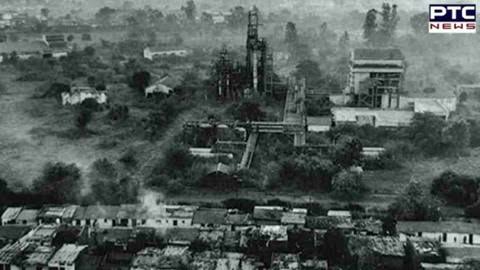
The Bhopal Gas Tragedy is widely regarded as one of the worst industrial disasters in Indian history. On the night of December 2–3, 1984, toxic gas escaped from the Union Carbide India Limited (UCIL) pesticide plant in Bhopal, Madhya Pradesh. The incident claimed thousands of lives and left many others with lasting health problems.
The tragedy raised important questions about human rights, corporate responsibility, compensation, and environmental protection. Even though a compensation settlement was reached in 1989, concerns about justice for the victims persisted. This article reviews the legal proceedings and asks whether the response adequately addressed the suffering of the victims.
Background and Legal Proceedings
Methyl isocyanate (MIC), a highly toxic chemical, escaped from a storage tank at the pesticide plant, causing long-term health problems, breathing difficulties, and eye irritation for many people. Families also faced financial hardship after losing their earning members.
In 1985, Parliament passed the Bhopal Gas Leak Disaster (Processing of Claims) Act, which authorized the Central Government to represent the victims in legal proceedings.
In February 1989, the Supreme Court approved a settlement of US$470 million between Union Carbide Corporation and the Union of India. The settlement was intended to provide compensation and relief to the victims.
The original order also ended the criminal proceedings, which made the settlement controversial. In 1991, the Supreme Court upheld the compensation settlement but set aside the portion of the earlier order that had quashed the criminal proceedings, allowing them to continue.
The Union Government later sought additional compensation from Union Carbide Corporation and its successor companies. On March 14, 2023, the Supreme Court dismissed the Union Government’s curative petitions seeking additional compensation.
Was Full Justice Served?
Whether the compensation was adequate remains a key question. Even though the settlement provided financial help, the disaster had a significant and long-lasting negative effect on a great many people. Many survivors went on to face health problems and financial hardship. This raises the question of whether the settlement adequately reflected how severe their suffering was.
To assess the compensation structure fairly with respect to Union Carbide Corporation and related parties, analysts may look at reliable data on specific injuries and verified claims. Splitting the settlement equally among all victims might not properly reflect the differing severity of the harm they suffered.
Corporate accountability is another issue. Companies operating in hazardous industries have obligations to their workers and to nearby communities. The revival of criminal proceedings in 1991 was significant because criminal accountability can be considered separately from compensation settlements.
A comparable case is M.C. Mehta v. Union of India (1987), also known as the Oleum Gas Leak Case. In that case, a gas leak occurred at an industrial facility in Delhi. The Supreme Court established the principle of absolute liability, which strengthened the responsibility of industries engaged in hazardous activities. This case can be compared with the Bhopal Gas Tragedy, since both raised key questions about industrial safety and corporate accountability.
Justice also depends on healthcare and rehabilitation. Financial compensation on its own may not guarantee access to medical care or address all the effects of exposure to toxic substances. In addition, the government may play a key role in making sure that affected individuals receive appropriate medical care and rehabilitation services.
Damage to the environment raises further concerns. Under the polluter pays principle, parties held legally responsible may be required to bear the costs of addressing pollution. Environmental investigation and clean-up may therefore be seen as important parts of the broader response to the disaster.
Comparison with the Chernobyl Nuclear Disaster
The Bhopal Gas Tragedy can likewise be compared to the Chernobyl Nuclear Disaster, which took place on April 26, 1986. An explosion at the Chernobyl nuclear power plant sent radioactive materials into the environment, harming human health and affecting surrounding areas. Both disasters stemmed from hazardous activities and produced long-term effects on people and the environment. However, Bhopal involved a toxic gas leak from a pesticide factory, while Chernobyl involved an accident at a nuclear reactor. Even with these differences, both incidents bring attention to concerns about industrial safety, emergency response, and environmental protection. At the same time, courts are generally expected to follow legal procedures and honor the finality of settlements. The Supreme Court’s 2023 ruling demonstrates the legal difficulties that may arise when a settlement is challenged many years later.
Conclusion
The Bhopal Gas Tragedy remains a notable example of how hard it can be to secure justice after a major industrial disaster. The 1989 settlement offered compensation, and in 1991 the Supreme Court restored the criminal proceedings. Still, the legal response can also be evaluated in terms of healthcare, rehabilitation, environmental protection, and accountability.
In my view, achieving complete justice may require more than monetary compensation. It may require effective remedies for victims, sufficient medical support, environmental restoration, and stronger industrial safety measures. The tragedy is a reminder that protecting human life remains a priority and that effective laws and enforcement can help prevent similar disasters in the future.