
By using this site, you agree to the Privacy Policy and Terms of Use.
Accept
ApniLawApniLawApniLaw
  • Home
  • Find a Lawyer
  • Our Services
  • Law Forum
  • Legal News
  • Judgments
  • Knowledge Hub
    • Bare Acts
      • BNS
      • BNSS
      • BSA
      • CrPC
      • CPC
      • DPDP
      • Hindu Marriage Act
      • Hindu Succession Act
      • The Hindu Adoptions And Maintenance Act
      • The Hindu Minority and Guardianship Act
      • IPC
      • Juvenile Justice Act
      • POCSO
      • Special Marriage Act
      • The Specific Relief Act
    • Supreme Court
    • High Court
    • Legal Articles
    • UPSC
    • Job Updates
    • Marriage and Divorce
    • Land Dispute & Will
    • Civil
    • Criminal
  • About Us
Reading: Landmark Supreme Court Judgements In Cheque Bounce Cases (Case Overview)
Share
Notification Show More
Font ResizerAa
ApniLawApniLaw
Font ResizerAa
  • Home
  • Find a Lawyer
  • Our Services
  • Law Forum
  • Legal News
  • Judgments
  • Knowledge Hub
  • About Us
  • Home
  • Find a Lawyer
  • Our Services
  • Law Forum
  • Legal News
  • Judgments
  • Knowledge Hub
    • Bare Acts
    • Supreme Court
    • High Court
    • Legal Articles
    • UPSC
    • Job Updates
    • Marriage and Divorce
    • Land Dispute & Will
    • Civil
    • Criminal
  • About Us
Have an existing account? Sign In
Follow US
  • Advertise
© 2022 Foxiz News Network. Ruby Design Company. All Rights Reserved.
ApniLaw > Blog > Legal Articles > Acts > Landmark Supreme Court Judgements In Cheque Bounce Cases (Case Overview)
Acts

Landmark Supreme Court Judgements In Cheque Bounce Cases (Case Overview)

Amna Kabeer
Last updated: August 25, 2025 12:06 am
Amna Kabeer
1 year ago
Share
Cheque Bounce - Negotiable Instruments Act 1881
SHARE


Introduction


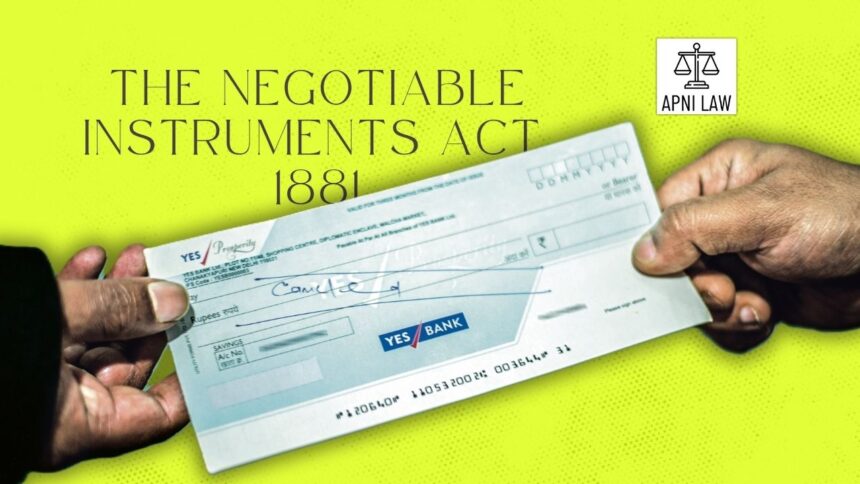
The Negotiable Instruments Act, 1881 (NI Act) is a crucial legislation in India that governs promissory notes, bills of exchange, and cheques. Enacted to facilitate the smooth functioning of commercial transactions, this Act provides a legal framework for the transfer and settlement of financial instruments. Over the years, landmark judgments in cheque bounce cases by Indian courts have significantly influenced the interpretation, application, and evolution of this Act.

Contents
IntroductionAjitsinh Chehuji Rathod v. State of Gujarat & Anr. (January 29, 2024)Sri Dattatraya v. Sharanappa (August 7, 2024)Dashrath Rupsingh Rathod v. State of Maharashtra & Anr. (August 1, 2014)What Are Other Clarifications on Evidentiary BurdenRangappa v. Sri Mohan (2010)Kishan Rao v. Shankargouda (2018/2019)Sunil Todi v. State of Gujarat (2021)Conclusion


Ajitsinh Chehuji Rathod v. State of Gujarat & Anr. (January 29, 2024)


The Supreme Court affirmed that under Section 118(e) of the Negotiable Instruments Act (NI Act), there is a statutory presumption that the cheque and its indorsements are genuine. The burden lies squarely on the accused to rebut that presumption through credible evidence (e.g. bank‐maintained specimen signatures). Rathod’s request for handwriting expert analysis and postal verification was rejected at the trial and appellate stages. The Supreme Court observed that such additional evidence via Section 391 CrPC is discretionary and should only be granted. This was when due diligence was shown and evidence wasn’t obtainable earlier. Since Rathod failed to question the bank official or timely challenge proceedings, the lower courts’ decisions were upheld.

Sri Dattatraya v. Sharanappa (August 7, 2024)


The Supreme Court affirmed acquittals rendered by both the Trial Court and Karnataka High Court and refused intervention. Thus, stressing that absent legal perversity or gross misappreciation of evidence, concurrent findings are binding. The Bench emphasized that Section 139 creates a presumption in favor of the payee. The accused’s burden of rebuttal is not at the standard of “beyond reasonable doubt”, it suffices to provide credible, preponderant evidence. Once rebuttal succeeds, the burden shifts back to the complainant.

Dashrath Rupsingh Rathod v. State of Maharashtra & Anr. (August 1, 2014)


In this foundational decision, the Court clarified territorial jurisdiction under Section 138. The “offence” is complete once the cheque is dishonoured, and cognizance may be taken by any Court in whose jurisdiction any one of the components (presentation, dishonour, notice, or non‑payment) occurred. This ruling overruled earlier broad interpretations and narrowed jurisdiction. Generally, the complaint should be filed where the drawee bank is located, preventing forum shopping while recognizing that constituent acts may occur in separate places.

What Are Other Clarifications on Evidentiary Burden


Courts have confirmed that the accused is not required to despose as witnesses. Thus, producing reliable documentary or expert evidence is sufficient to discharge the presumption under Section 118(e)/139. Although not addressed explicitly in the above cases, jurisprudence acknowledges that security cheques issued as collateral, not to discharge debt, and improperly used by non‑payees may lead to acquittal. This principle is well‑settled in related Section 138 case law.

ApniLaw AI

Need the case law behind this point?

Ask ApniLaw AI in plain words. Every point of the answer shows the judgment paragraph or Act section behind it, with its page and paragraph number.

Explore ApniLaw AI

Rangappa v. Sri Mohan (2010)


Once a cheque is issued and dishonoured, it is presumed to be issued for discharge of debt or liability, and the burden shifts to the accused to rebut this under Section 139. The standard required is “preponderance of probabilities”, not beyond reasonable doubt. This case is often regarded as the foundational authority for the evidentiary shift mechanism in cheque bounce matters.

Kishan Rao v. Shankargouda (2018/2019)


Mere denial of liability by the drawer is insufficient. To successfully rebut the presumption under Section 139, the accused must present documentary or oral evidence. This creates a reasonable doubt about the existence of debt. Reinforces that defendants must go beyond simple denials to discharge their burden, solidifying what constitutes adequate rebuttal.

Sunil Todi v. State of Gujarat (2021)


The Supreme Court held that a security cheque issued for securing a debt or loan, even if not intended for immediate payment, can still be subject to liability under Section 138 if a legally enforceable debt existed at the time of presentation. The Court distinguished prior rulings like Indus Airways and clarified that whether a cheque is “security” is a trial‑level question of fact, not a legal bar. Clarifies that “security cheques” do not intrinsically immunize the drawer from liability if there’s an underlying debt.

Conclusion


The Negotiable Instruments Act continues to evolve, largely due to judicial activism and progressive interpretations by the Supreme Court and High Courts. For anyone dealing with negotiable instruments, understanding these judicial precedents is essential for legal compliance and protection of rights.

Join Telegram Channel Join WhatsApp Channel

You Might Also Like

What Are The Legal Provisions for Freezing Bank Accounts in Cybercrime Cases in India

How Drugs Are Regulated in India: Central vs State Powers (Section 5 & 6 of Drugs and Cosmetics Act)

Public Wi-Fi Dangers: Why Is Using Banking Apps in Cafes Could Be Dangerous

Section 70 Of The IT Act, 2000: All About Critical Infrastructure Protection

Breach of Contract: Legal Remedies and Compensation (Section 73-75)

TAGGED:burden of proofLandmarkLandmark Casesnegotiable instrument actNegotiable InstumentNI Actsection 138
Share This Article
Facebook Whatsapp Whatsapp Telegram Print
Previous Article Cheque Bounce - Negotiable Instruments Act 1881 Compounding Of Cheque Bounce Offence: Section 147 of the Negotiable Instrument Act
Next Article Cheque Bounce - Negotiable Instruments Act 1881 Difference Between Civil Recovery and Criminal Action in Cheque Bounce Cases Under Negotiable Instruments Act
1 Comment
  • Pingback: Difference Between Civil Recovery and Criminal Action in Cheque Bounce Cases Under Negotiable Instruments Act - ApniLaw

Leave a Reply Cancel reply

You must be logged in to post a comment.

Follow US

Find US on Social Medias
FacebookLike
XFollow
InstagramFollow
YoutubeSubscribe
TelegramFollow
WhatsAppFollow

Weekly Newsletter

Subscribe to our newsletter to get our newest articles instantly!
Popular News
Rajasthan High Court
Land Dispute & WillRajasthan High Court

Adult Married Children Cannot Reside In Father’s Self-Acquired Property Without Consent: Rajasthan HC

Amna Kabeer
By Amna Kabeer
1 year ago
Refusing Rape-Victim’s Request For Termination Would Violate Personal Liberty: Chattisgarh HC
Minor Girl Has Domain Over Her Body, Can Choose To Terminate Pregnancy: Madras HC
Denial of Education Amounts to Mental Cruelty: MP High Court Grants Divorce
Child Must Not Become Pawn In Dispute To Prove Adultery By Mother: Madras HC
- Advertisement -
Ad imageAd image

Your one-stop destination for legal news, articles, queries, and a directory of lawyers in India – all under one roof at ApniLaw.

Stay Updated

  • BNSS
  • News
  • Documentation
  • Acts
  • Supreme Court
  • High Court
  • Judgments

Information

  • ApniLaw Services
  • About Us
  • Contact Us
  • Disclaimer
  • Privacy Policy
  • Terms of Service

Advertise

  • Advertise with us
  • Newsletters
  • Deal

Find Us on Socials

ApniLawApniLaw
Follow US
© ApniLaw 2026. All Rights Reserved.
login
Welcome Back!

Sign in to your account

Or
Username or Email Address
Password

Lost your password?

