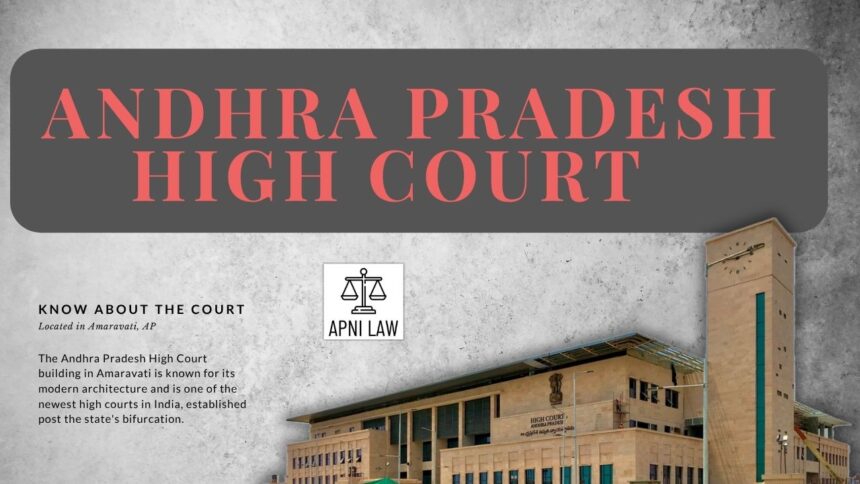
The Andhra Pradesh High Court has reiterated that complaints alleging deficiency in legal services rendered by advocates are not maintainable under the Consumer Protection Act, 2019. The Court held that legal services provided by advocates are rendered under a contract of personal service, which is specifically excluded from the definition of “service” under Section 2(42) of the Act.
A Division Bench of and dismissed a writ petition challenging the concurrent decisions of the District, State and National Consumer Commissions rejecting a consumer complaint filed against an advocate.
Facts of the Case
The petitioner had engaged an advocate to represent him in a civil suit. Alleging deficiency in the legal services rendered, he filed a complaint before the District Consumer Disputes Redressal Commission seeking relief under the Consumer Protection Act.
The District Commission dismissed the complaint on merits. The decision was subsequently upheld by the State Consumer Disputes Redressal Commission in appeal and by the National Consumer Disputes Redressal Commission in revision. Aggrieved by these concurrent findings, the petitioner approached the High Court.
Court’s Observations
The High Court observed that it is now well settled that legal services rendered by advocates do not fall within the ambit of “service” under the Consumer Protection Act, as they arise out of a contract of personal service, which is expressly excluded by the statute.
The Court further noted that the petitioner was unable to establish how a consumer complaint against an advocate was maintainable under the Act. It also took note of the fact that the petitioner’s complaint before the State Bar Council had already been dismissed.
The Bench clarified that the earlier view of the National Consumer Disputes Redressal Commission, which had permitted such complaints, no longer holds the field in light of the Supreme Court’s authoritative ruling that advocates are not liable under the Consumer Protection Act for alleged deficiency in legal services.
Decision
Holding that the consumer complaint itself was not maintainable, the High Court found no illegality or infirmity in the orders passed by the District, State and National Consumer Commissions. Accordingly, it declined to interfere and dismissed the writ petition.
Case: A.S.S.K. Durga Prasad v. National Consumer Disputes Redressal Commission & Others