Court distinguishes between “misconduct” and “eligibility” under U.P. Government Servant Conduct Rules in case of government school teacher.
Court, Bench & Date of Judgment
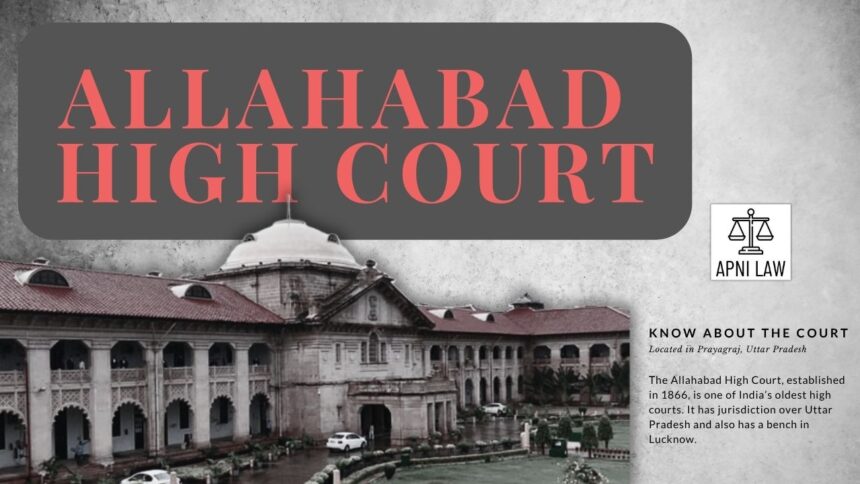
The Allahabad High Court delivered the judgment on 18 March 2026. The case was decided by Justice Manju Rani Chauhan.
Case Title
While the detailed cause title was not highlighted in the report, the matter concerned a government school teacher vs State of Uttar Pradesh, involving service law issues under the U.P. Government Servant Conduct Rules.
Legal Issue
The central issue before the Court was:
- Whether a bigamous marriage entered into before appointment as a government servant constitutes misconduct under service rules, and
- Whether such conduct can still impact the validity of employment or eligibility for appointment.
Case Background
The case involved a woman who had entered into a second marriage in 2009, at a time when her spouse’s earlier marriage was still subsisting. She was subsequently appointed as a government school teacher. Later, disciplinary proceedings were initiated against her on the ground that the marriage violated provisions of the U.P. Government Servant Conduct Rules, 1956, which regulate conduct such as bigamy among government employees. Authorities treated the act as misconduct, potentially attracting disciplinary action under the U.P. Government Servants (Discipline and Appeal) Rules.
Court’s Analysis
Not Misconduct Under Conduct Rules
The High Court held that the alleged act could not be treated as misconduct under the Conduct Rules.
The Court reasoned that the service rules primarily regulate the conduct of a person after entering government service, not actions undertaken prior to appointment. Since the marriage occurred before the individual joined service, it fell outside the scope of disciplinary misconduct under the rules.
However, Impacts Eligibility
Despite ruling out misconduct, the Court drew a crucial distinction. It held that such an act may still strike at the root of eligibility for appointment.
The Bench observed that entering into a bigamous marriage, particularly where the legal validity of the marriage itself is questionable, could affect whether a candidate satisfies the basic legal and moral requirements for public employment. Thus, while disciplinary punishment may not be justified, the employer can still examine whether the appointment itself was validly granted.
Final Ruling
The High Court ruled that:
- A bigamous marriage prior to appointment cannot be punished as misconduct under the U.P. Government Servant Conduct Rules.
- However, such conduct may invalidate or undermine eligibility for government employment.
Accordingly, the Court clarified that the case must be viewed from the standpoint of eligibility rather than disciplinary liability.
Legal Reasoning in Brief
- Conduct rules govern behaviour during service, not prior personal actions.
- Disciplinary jurisdiction cannot extend to pre-employment conduct unless expressly provided.
- However, public employment requires legal and moral eligibility, which can be independently assessed.
- Bigamy, though not actionable as misconduct in this context, may still affect the legitimacy of appointment.
Practical Implications
- Government authorities must distinguish between misconduct proceedings and eligibility scrutiny.
- Acts committed before entering service may not always invite disciplinary penalties, but can still affect appointment validity.
- The ruling clarifies the limited scope of service conduct rules, preventing their retrospective application.
- It may influence future disputes involving pre-employment conduct, particularly in cases concerning marriage, integrity, and personal status.
Conclusion
The decision draws a clear line between disciplinary misconduct and eligibility criteria in public employment. While protecting employees from retrospective punishment, it preserves the State’s power to ensure that only legally qualified individuals enter service. The judgment adds clarity on the distinction between pre-appointment conduct and post-appointment misconduct under service jurisprudence, particularly in the context of eligibility versus disciplinary action.