Introduction
Section 9 of the Indian Evidence Act, 1872 and Section 7 of the Bharatiya Sakshya Adhiniyam, 2023 serve the same legal purpose. They allow courts to admit facts that help explain, introduce, or clarify facts in issue or relevant facts. These provisions ensure that judges do not examine facts in isolation. They promote contextual understanding so that evidence makes logical and practical sense during adjudication.
Why Are Explanatory Facts Important in Evidence Law?
Explanatory facts help courts understand the background, setting, and circumstances of a dispute. A fact may be relevant only because it explains another fact that is already relevant. Without such supporting facts, the main evidence may appear incomplete or misleading. These sections ensure that the narrative before the court is coherent and legally meaningful.
What Does Section 9 of the Indian Evidence Act Provide?
Section 9 of the Indian Evidence Act states that facts are relevant if they are necessary to explain or introduce a fact in issue or a relevant fact. It also covers facts that support or rebut inferences drawn from such facts. Further, it includes facts that establish identity, fix time or place, or show the relationship between parties involved in a transaction. Relevance exists only to the extent of necessity.
What Does Section 7 of the Bharatiya Sakshya Adhiniyam, 2023 State?
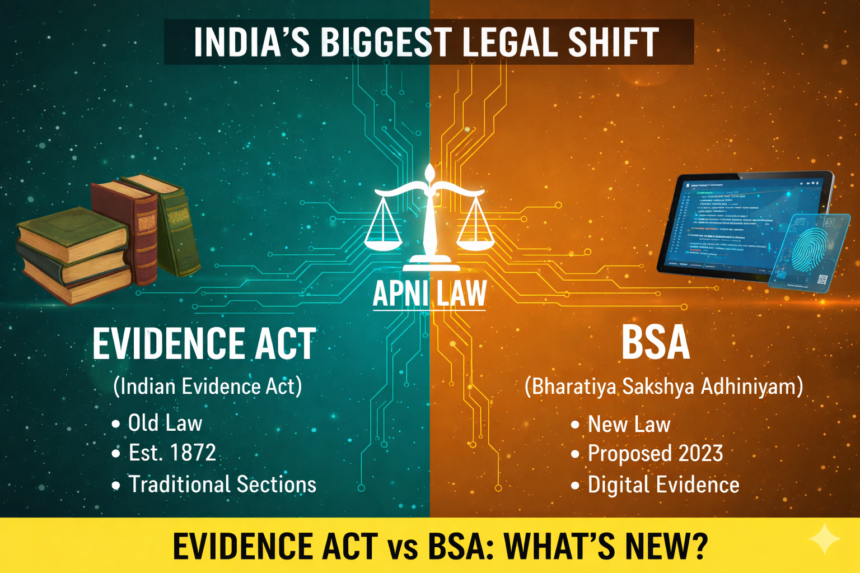
Section 7 of the Bharatiya Sakshya Adhiniyam, 2023 reproduces the language of Section 9 of the Evidence Act almost word for word. It retains the same categories of admissible explanatory facts. The provision confirms legislative continuity while transitioning from the colonial-era statute to a modern Indian framework.
Is There Any Difference Between Section 9 and Section 7?
There is no substantive or textual difference between Section 9 of the Evidence Act and Section 7 of the BSA. The wording, scope, and legal effect remain identical. The legislature intentionally preserved this provision because of its settled interpretation and practical importance in evidence law.
What Types of Facts Are Covered Under These Sections?
These sections cover facts that explain or introduce facts in issue, support or rebut inferences, establish identity of persons or things, fix time or place of occurrence, and show relationships between parties. Such facts do not need independent relevance. Their admissibility depends entirely on their necessity to understand another relevant fact.
How Do Courts Apply the Test of Necessity?
Courts apply these provisions narrowly. A fact is admissible only if it is necessary, not merely helpful or interesting. Judges exclude excessive background details that do not directly aid understanding of the fact in issue. This prevents trials from being cluttered with irrelevant or prejudicial information.
How Do These Sections Help in Identification of Persons or Things?
Facts that establish identity are crucial in criminal and civil trials. Identification parades, prior acquaintance, or distinctive features become relevant under these sections when identity itself is in issue. Such facts explain how a witness connects the accused or object to the alleged event.
What Role Do Time and Place Play Under These Provisions?
Facts fixing time and place help verify or disprove claims made by parties. They may show whether a person could realistically be present at a location or whether events occurred in a particular sequence. These facts support logical inferences and strengthen or weaken the prosecution or defence case.
How Do These Sections Apply to Relationships Between Parties?
Facts showing relationships explain motives, intentions, or credibility. In cases involving wills, contracts, or defamation, the relationship between parties often explains why an act occurred. These facts become relevant only because they clarify the main transaction or allegation.
Can These Sections Be Used to Introduce Background Facts?
Yes, but only to a limited extent. Background facts are admissible when they are essential to understand the fact in issue. Courts reject remote or unnecessary historical details. The focus remains on relevance through necessity, not narrative convenience.
Do the Illustrations Under the Evidence Act Still Apply?
Yes. Since Section 7 of the BSA mirrors Section 9 of the Evidence Act, the judicial understanding developed through illustrations and case law remains applicable. Courts are likely to rely on existing precedents while interpreting Section 7.
How Do These Sections Prevent Misuse of Evidence?
The requirement of necessity acts as a safeguard. Parties cannot introduce irrelevant facts under the guise of explanation. Courts actively filter evidence to ensure that only facts directly connected to the issue are admitted.
Why Are These Provisions Still Relevant in Modern Evidence Law?
Despite technological and procedural changes, trials still depend on logical presentation of facts. Context remains essential for justice. Section 7 of the BSA continues the role played by Section 9 of the Evidence Act in ensuring clarity, fairness, and rational decision-making.
Conclusion
Section 7 of the Bharatiya Sakshya Adhiniyam, 2023 is a direct continuation of Section 9 of the Indian Evidence Act, 1872. There is no change in substance, scope, or application. Both provisions emphasize that explanatory facts are relevant only when they are necessary to understand facts in issue or relevant facts. This continuity preserves the core principles of Indian evidence law while updating its statutory framework.