Introduction
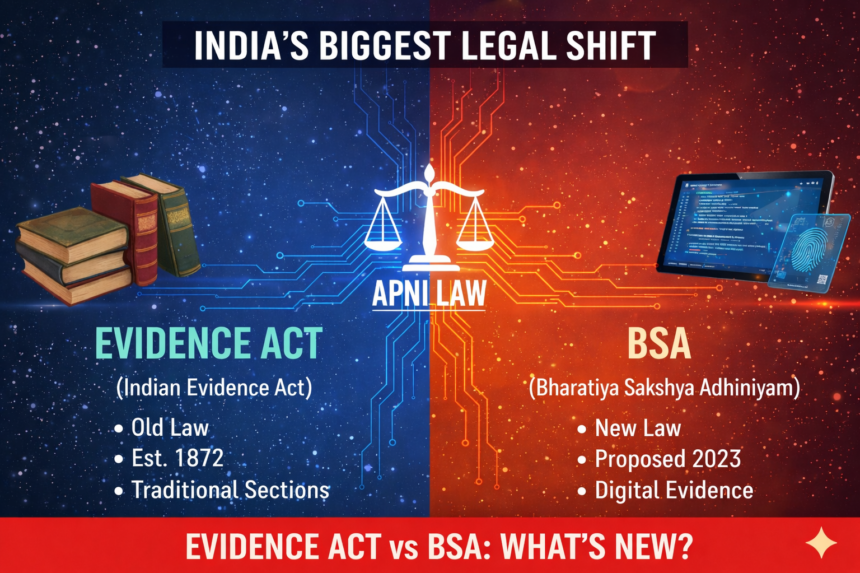
Section 114 of the Indian Evidence Act, 1872 and Section 119 of the Bharatiya Sakshya Adhiniyam, 2023 give courts the power to draw presumptions of fact. Both provisions allow judges to presume the existence of a fact when it appears likely based on ordinary human experience. The wording of Section 119 BSA almost exactly reproduces Section 114 of the old Evidence Act. The legislature has not altered the substance of this power.
How Do These Provisions Empower Courts in Practice?
Both sections authorize courts to rely on common sense and judicial experience. Judges may look at the common course of natural events, human conduct, and the usual flow of public or private business. On this basis, they can infer facts even when direct proof is missing. This discretion helps courts reach practical and realistic conclusions from surrounding circumstances.
What Is the Core Principle Behind These Presumptions?
The central idea is probability. Courts do not speculate blindly. They assess what usually happens in similar situations. If a fact appears more likely than not, the court may presume it to exist. This approach reduces unnecessary rigidity and allows justice to reflect real-life behavior rather than strict formalism.
Do Section 114 and Section 119 Contain the Same Illustrations?
Yes, both provisions include identical illustrations. One illustration allows the court to presume that a person found in possession of recently stolen goods knew they were stolen. Another illustration reflects caution in relying on the uncorroborated testimony of an accomplice. A further illustration permits the presumption that official acts were performed regularly and lawfully. These examples guide courts in applying the rule consistently.
Are These Presumptions Mandatory or Discretionary?
These presumptions remain purely discretionary. The court may presume a fact, but it is never bound to do so. The judge evaluates the facts of each case before deciding whether a presumption is appropriate. This flexibility protects fairness and prevents mechanical application of legal rules.
Can Parties Rebut Presumptions Under These Sections?
Yes, all presumptions under Section 114 of the Evidence Act and Section 119 of the BSA are rebuttable. A party may produce evidence to disprove the presumed fact. Once rebutted, the presumption loses its effect. This ensures that presumptions do not override proof or distort the truth.
How Are These Presumptions Different From Conclusive Presumptions?
These sections differ significantly from provisions creating conclusive presumptions. Conclusive presumptions do not allow rebuttal once certain facts are established. In contrast, presumptions of fact under Section 114 and Section 119 merely assist the court. They do not compel a final conclusion and always remain open to challenge.
Why Are These Provisions Important for Judicial Efficiency?
These presumptions save time and simplify trials. Courts need not demand strict proof of facts that ordinarily follow from human behavior or common experience. This practical approach avoids unnecessary delay and helps courts focus on genuinely disputed issues.
Has the Bharatiya Sakshya Adhiniyam Changed the Law on Presumptions of Fact?
No substantive change has occurred. Section 119 of the BSA mirrors Section 114 of the Evidence Act in language and effect. The shift reflects legislative restructuring and modernization rather than a change in judicial philosophy. The discretion of courts remains intact.
Conclusion
The legal position remains stable. Courts continue to enjoy broad discretion to draw reasonable presumptions of fact. Section 119 of the Bharatiya Sakshya Adhiniyam carries forward the same principles, safeguards, and flexibility that existed under Section 114 of the Indian Evidence Act. The continuity ensures certainty, predictability, and practical justice in evidence law.