By using this site, you agree to the Privacy Policy and Terms of Use.
Accept
ApniLawApniLawApniLaw
  • Home
  • Find a Lawyer
  • Our Services
  • Law Forum
  • Legal News
  • Judgments
  • Knowledge Hub
    • Bare Acts
      • BNS
      • BNSS
      • BSA
      • CrPC
      • CPC
      • DPDP
      • Hindu Marriage Act
      • Hindu Succession Act
      • The Hindu Adoptions And Maintenance Act
      • The Hindu Minority and Guardianship Act
      • IPC
      • Juvenile Justice Act
      • POCSO
      • Special Marriage Act
      • The Specific Relief Act
    • Supreme Court
    • High Court
    • Legal Articles
    • UPSC
    • Job Updates
    • Marriage and Divorce
    • Land Dispute & Will
    • Civil
    • Criminal
  • About Us
Reading: Legal Consequences of Violating the E-Cigarettes Ban in India (Sections 5–10)
Share
Notification Show More
Font ResizerAa
ApniLawApniLaw
Font ResizerAa
  • Home
  • Find a Lawyer
  • Our Services
  • Law Forum
  • Legal News
  • Judgments
  • Knowledge Hub
  • About Us
  • Home
  • Find a Lawyer
  • Our Services
  • Law Forum
  • Legal News
  • Judgments
  • Knowledge Hub
    • Bare Acts
    • Supreme Court
    • High Court
    • Legal Articles
    • UPSC
    • Job Updates
    • Marriage and Divorce
    • Land Dispute & Will
    • Civil
    • Criminal
  • About Us
Have an existing account? Sign In
Follow US
  • Advertise
© 2022 Foxiz News Network. Ruby Design Company. All Rights Reserved.
ApniLaw > Blog > Legal Articles > Acts > Legal Consequences of Violating the E-Cigarettes Ban in India (Sections 5–10)
Acts

Legal Consequences of Violating the E-Cigarettes Ban in India (Sections 5–10)

Amna Kabeer
Last updated: August 24, 2025 11:56 pm
Amna Kabeer
1 year ago
Share
Law on E-Cigarettes in India
SHARE

Introduction

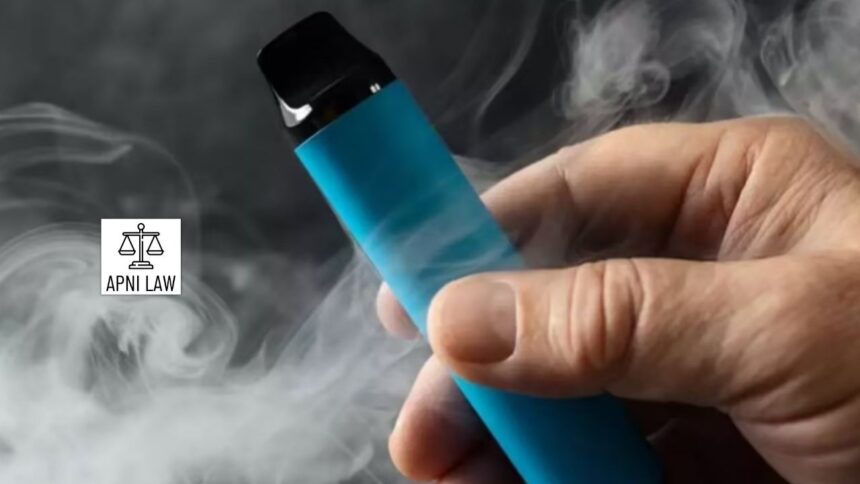
India banned e-cigarettes in 2019 to protect public health. The Prohibition of Electronic Cigarettes Act, 2019 stops the production, sale, import, export, transport, storage, and advertisement of e-cigarettes. Sections 5 to 10 of this law explain the punishments and enforcement rules. Anyone breaking these rules can face jail time and heavy fines.

Contents
IntroductionIs Storage of E-Cigarettes BannedWho Has The Power to Search and Seize E-cigarettesWhat Is The Punishment for Sale, Production, and ImportWas There Disposal of Seized Stock In 2019Nature of OffencesWho Does This Law AffectConclusion

Is Storage of E-Cigarettes Banned

Keeping e-cigarettes in any place is against the law. If a person allows their house, shop, or warehouse to be used for storing e-cigarettes, they can be punished. The penalty is up to six months in jail, a fine up to ₹50,000, or both.

Who Has The Power to Search and Seize E-cigarettes

Police officers and other authorised officials can search places and take away e-cigarettes without a warrant. This power helps stop illegal trade quickly and ensures violators are caught on time.

What Is The Punishment for Sale, Production, and Import

Making, selling, or importing e-cigarettes is a serious offence. For the first offence, punishment is up to one year in jail, a fine of ₹1 lakh, or both. Moreover, for repeat offences, punishment increases to up to three years in jail, a fine of ₹5 lakh, or both. This strict rule actually discourages people from breaking the law again.
If someone stores e-cigarettes illegally, they face the same punishment as Section 5, six months in jail, a fine up to ₹50,000, or both.

ApniLaw AI

Need the case law behind this point?

Ask ApniLaw AI in plain words. Every point of the answer shows the judgment paragraph or Act section behind it, with its page and paragraph number.

Explore ApniLaw AI

Was There Disposal of Seized Stock In 2019

People who had e-cigarettes before the ban came into force (September 19, 2019) had to declare them and hand them over to the authorities. The law makes sure that seized products are properly destroyed so they do not come back into the market.

Nature of Offences

Breaking this law is a cognizable offence, which means the police can arrest without a warrant. However, only authorised officers can file a case under this Act. The cases are heard by a Judicial Magistrate of the First Class.

Who Does This Law Affect

This law affects both individuals and businesses. Shops, online sellers, and even airports are under strict checks. Authorities regularly seize shipments of e-cigarettes at borders and airports. Even carrying e-cigarettes for personal use can be risky, as it may be seen as illegal storage or transport. For any specific query call at ‪+91 – 8569843472‬

Conclusion

The Prohibition of Electronic Cigarettes Act, 2019 makes it clear that e-cigarettes are banned in India. Sections 5 to 10 provide punishments ranging from six months to three years in jail and fines between ₹50,000 and ₹5 lakh. Repeat offenders face stricter action. The law gives strong powers to officers to seize products and punish violators. For ordinary people, this means storing, selling, or carrying e-cigarettes can lead to serious legal trouble.

Join Telegram Channel Join WhatsApp Channel

You Might Also Like

Section 102 Evidence Act vs Section 105 Bharatiya Sakshya Adhiniyam: On Whom the Burden of Proof Lie?

Drugs and Cosmetics Act: Key Definitions You Must Know (Section 3)

Section 138 Of Negotiable Instrument Act : Law On Cheque Dishonour

How to File a Complaint on the National Cyber Crime Reporting Portal (NCRP) – Step-by-Step Guide

Compensation Rules for Landowners Under the 2013 Act: Sections 26–30 Explained

TAGGED:ActbanE-cigarettesProductionProhibition of E-cigarettes ActSaleStorageTransportVapeviolation
Share This Article
Facebook Whatsapp Whatsapp Telegram Print
Previous Article Law on E-Cigarettes in India Are There Exceptions to the Vape Ban? What Businesses Must Know
Next Article Goods And Service Tax - GST in India UTGST Act Explained: What Is Union Territory GST and When It Applies
5 Comments
  • Pingback: UTGST vs SGST vs IGST: What’s the Difference and Who Pays What? - ApniLaw
  • Pingback: How to Claim Refund of IGST Paid on Export of Goods (Practical Guide 2025) - ApniLaw
  • Pingback: IGST vs CGST vs SGST: What’s the Difference and When They Apply? - ApniLaw
  • Pingback: UTGST Act: Provisions Every Business in Union Territories Should Know - ApniLaw
  • Pingback: UTGST Act Explained: What Is Union Territory GST and When It Applies - ApniLaw

Leave a Reply Cancel reply

You must be logged in to post a comment.

Follow US

Find US on Social Medias
FacebookLike
XFollow
InstagramFollow
YoutubeSubscribe
TelegramFollow
WhatsAppFollow

Weekly Newsletter

Subscribe to our newsletter to get our newest articles instantly!
Popular News
Allahabad High Court
Allahabad High CourtEmployment & Business

Bigamous Marriage Before Appointment Not Misconduct Under Service Rules, But Affects Eligibility: Allahabad HC

Amna Kabeer
By Amna Kabeer
8 months ago
Harassment Must Be Severe Enough With No Choice But To Take Their Own Life: Supreme Court
Accident Compensation Under the MV Act: What Victims and Families Should Know (Sections 166–168)
Censorship And Regulation Of OTT Platforms In India
Supreme Court Dismisses Plea By Bilkis Bano Rape Case Convicts Challenging Remission Revocation
- Advertisement -
Ad imageAd image

Your one-stop destination for legal news, articles, queries, and a directory of lawyers in India – all under one roof at ApniLaw.

Stay Updated

  • BNSS
  • News
  • Documentation
  • Acts
  • Supreme Court
  • High Court
  • Judgments

Information

  • ApniLaw Services
  • About Us
  • Contact Us
  • Disclaimer
  • Privacy Policy
  • Terms of Service

Advertise

  • Advertise with us
  • Newsletters
  • Deal

Find Us on Socials

ApniLawApniLaw
Follow US
© ApniLaw 2026. All Rights Reserved.
login
Welcome Back!

Sign in to your account

Or
Username or Email Address
Password

Lost your password?