Background
The Gujarat High Court has upheld the acquittal of a man accused of rape and offences under the Protection of Children from Sexual Offences Act, 2012 (POCSO Act), observing that the prosecution failed to properly prove the DNA profiling evidence relied upon against him.
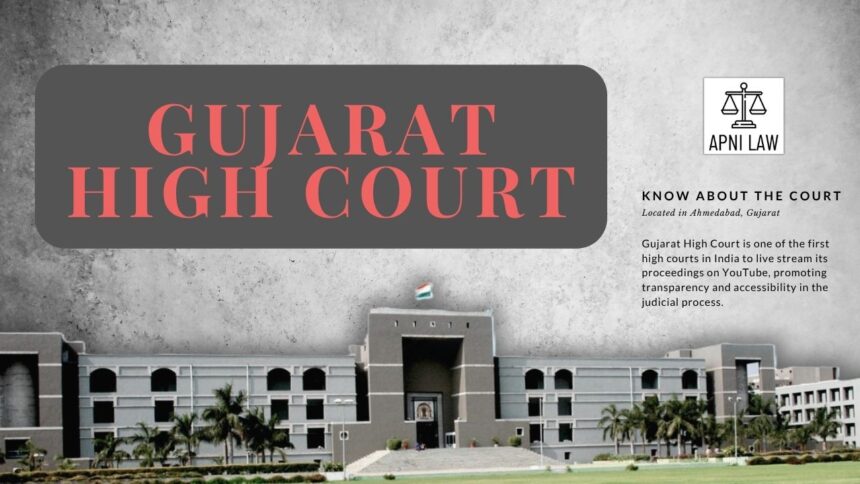
A Division Bench of Justice Ilesh J. Vora and Justice R.T. Vachhani was hearing an appeal filed by the State of Gujarat against the acquittal of the respondent, Rasikbhai @ Kaushikbhai Havsingbhai Garasiya.
The accused faced charges under Sections 64(2)(m) and 89 of the Bharatiya Nyaya Sanhita (BNS), along with Sections 4 and 6 of the POCSO Act. The prosecution alleged that the minor girl, aged around 17 years and 10 months, had been sexually abused by the accused repeatedly for more than two years.
According to the prosecution, the girl became pregnant and the accused allegedly gave her medicines to cause a miscarriage. When she suffered heavy bleeding on March 24, 2025, her parents took her to a health centre, where the alleged relationship came to light and an FIR was registered.
During the investigation, the police obtained medical samples from the accused and the girl and sent them for DNA analysis. The prosecution later relied upon the DNA profiling report as scientific evidence connecting the accused with the alleged offence.
Legal Issue
The principal issue before the High Court was whether the prosecution had produced sufficient admissible evidence to establish the accused’s involvement beyond reasonable doubt.
The Court examined the testimony of the minor girl and found that she had not supported the prosecution’s case during trial. Although she admitted being in a relationship with the accused for around two years, she denied having physical relations with him and also denied that she became pregnant because of him or that he caused the alleged miscarriage.
The girl was declared hostile and did not support the prosecution during her cross-examination.
The Court also considered the DNA profiling report relied upon by the prosecution. The prosecution had not examined the scientific expert who conducted the DNA profiling test. Instead, the report had been exhibited through the deposition of the Investigating Officer.
The Court considered whether such evidence, in the circumstances of the case, could establish the accused’s involvement when the scientific expert had not been examined.
Court Ruling
The High Court held that the prosecution had failed to properly establish the DNA evidence. Referring to the Supreme Court’s decision in Rahul v. State of Delhi, the Court observed that the scientific expert who conducted the DNA examination had not been examined and that merely exhibiting the report through the Investigating Officer was insufficient to establish the reliability of the scientific findings.
The Court noted that the reliability of the techniques applied and the integrity of the findings had to be established in accordance with the applicable rules of evidence.
The Bench therefore found that the DNA report, in the circumstances of the case, could not by itself establish the accused’s involvement.
The Court also observed that the existence of a relationship between the accused and the girl did not, by itself, establish that the girl became pregnant because of repeated sexual intercourse with the accused. The prosecution also failed to establish the allegation that the accused caused the miscarriage.
The Court noted that the girl had not admitted the contents of her statement recorded before the Magistrate under Section 183 of the Bharatiya Nagarik Suraksha Sanhita (BNSS).
Considering the evidence as a whole, the High Court found that apart from the DNA report, there was no sufficient admissible evidence connecting the accused with the alleged offences.
The Bench further held that the Trial Court’s view was a reasonable and possible view on the evidence. Since the prosecution had failed to establish the charges beyond reasonable doubt, the High Court found no perversity in the acquittal order. The State’s appeal was accordingly dismissed and the acquittal was upheld.
Implications
The judgment highlights the importance of properly proving scientific evidence in criminal trials. In the present case, the prosecution’s reliance on a DNA profiling report was not sufficient because the scientific expert who conducted the examination was not examined before the Court.
The ruling also demonstrates that a relationship between an accused and a minor, without further legally admissible evidence establishing the ingredients of the alleged offences, does not by itself prove the prosecution’s entire case.
At the same time, the decision turned on the evidentiary deficiencies in this particular case. The Court did not hold that the absence of expert testimony automatically defeats every prosecution relying on DNA evidence. Its finding concerned the manner in which the DNA report was sought to be proved and the absence of other reliable evidence connecting the accused with the alleged offences.
The judgment adds clarity on the need to properly establish scientific evidence and prove the prosecution case beyond reasonable doubt in cases involving DNA profiling.
Case: State of Gujarat v. Rasikbhai @ Kaushikbhai Havsingbhai Garasiya
Court: Gujarat High Court
Bench: Justice Ilesh J. Vora and Justice R.T. Vachhani