
By using this site, you agree to the Privacy Policy and Terms of Use.
Accept
ApniLawApniLawApniLaw
  • Home
  • Find a Lawyer
  • Our Services
  • Law Forum
  • Legal News
  • Judgments
  • Knowledge Hub
    • Bare Acts
      • BNS
      • BNSS
      • BSA
      • CrPC
      • CPC
      • DPDP
      • Hindu Marriage Act
      • Hindu Succession Act
      • The Hindu Adoptions And Maintenance Act
      • The Hindu Minority and Guardianship Act
      • IPC
      • Juvenile Justice Act
      • POCSO
      • Special Marriage Act
      • The Specific Relief Act
    • Supreme Court
    • High Court
    • Legal Articles
    • UPSC
    • Job Updates
    • Marriage and Divorce
    • Land Dispute & Will
    • Civil
    • Criminal
  • About Us
Reading: Allahabad HC: Offence Under Section 467 IPC Without Minimum 7-Year Sentence Cannot Be Treated As Heinous Under Juvenile Justice Act
Share
Notification Show More
Font ResizerAa
ApniLawApniLaw
Font ResizerAa
  • Home
  • Find a Lawyer
  • Our Services
  • Law Forum
  • Legal News
  • Judgments
  • Knowledge Hub
  • About Us
  • Home
  • Find a Lawyer
  • Our Services
  • Law Forum
  • Legal News
  • Judgments
  • Knowledge Hub
    • Bare Acts
    • Supreme Court
    • High Court
    • Legal Articles
    • UPSC
    • Job Updates
    • Marriage and Divorce
    • Land Dispute & Will
    • Civil
    • Criminal
  • About Us
Have an existing account? Sign In
Follow US
  • Advertise
© 2022 Foxiz News Network. Ruby Design Company. All Rights Reserved.
ApniLaw > Blog > High Court > Allahabad High Court > Allahabad HC: Offence Under Section 467 IPC Without Minimum 7-Year Sentence Cannot Be Treated As Heinous Under Juvenile Justice Act
Allahabad High CourtNews

Allahabad HC: Offence Under Section 467 IPC Without Minimum 7-Year Sentence Cannot Be Treated As Heinous Under Juvenile Justice Act

Amna Kabeer
Last updated: October 27, 2026 10:35 pm
Amna Kabeer
4 weeks ago
Share
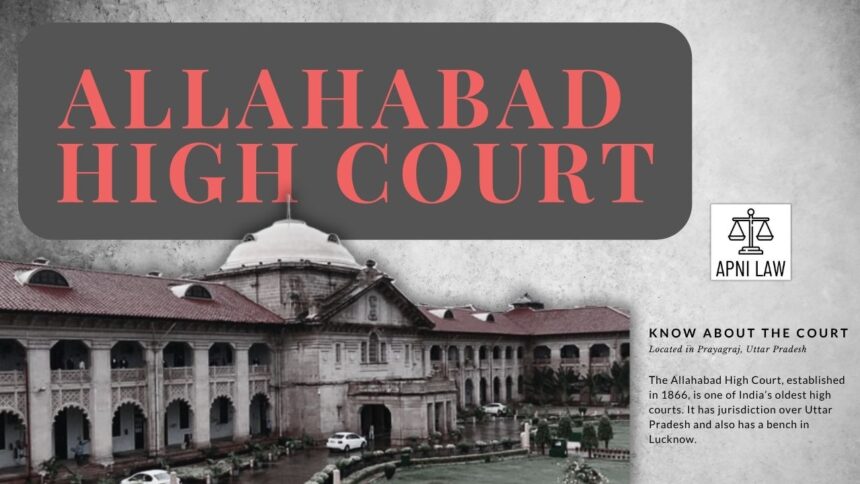
Allahabad High Court
SHARE

Introduction

The Court held that forgery under Section 467 IPC falls within the category of serious offences under the Juvenile Justice Act, 2015, and cannot justify transferring a juvenile’s case to the Children’s Court for trial as an adult.

Contents
IntroductionBackgroundLegal IssueCourt RulingImplications

Background

The Allahabad High Court held that an offence under Section 467 of the Indian Penal Code (IPC) cannot be classified as a “heinous offence” under the Juvenile Justice (Care and Protection of Children) Act, 2015 (JJ Act), merely because it carries a maximum sentence of life imprisonment or imprisonment extending to ten years. Justice Jai Prakash Tiwari ruled that the provision does not prescribe a minimum sentence of seven years, which is required for classification as a heinous offence under the Act.

The Court allowed a criminal revision filed by a juvenile accused in a forgery case and quashed the orders of the Juvenile Justice Board, Bulandshahr, and the Children’s Court that had upheld the transfer of the case for a possible adult trial.

The case arose from an FIR registered on June 30, 2016, following allegations of fraud and cheating involving ₹40 lakh. After investigation, a charge sheet was filed against multiple accused under Sections 419, 420, 467, 468, 471 and 120-B IPC.

The revisionist claimed that he was a juvenile when the alleged offence occurred. The Juvenile Justice Board assessed his age at 16 years, nine months and seven days at the relevant time and declared him a child in conflict with law.

On May 18, 2022, the Board conducted a preliminary assessment under Section 15 of the JJ Act and decided to transfer the case to the Children’s Court under Section 18(3), for consideration of trial as an adult. In July 2023, however, the Board classified the offence as serious rather than heinous. It later rejected the juvenile’s request for an inquiry before the Board, stating that it could not review its earlier transfer order. The Children’s Court upheld that decision on July 16, 2026.

Legal Issue

The principal issue was whether an offence under Section 467 IPC, punishable with life imprisonment or imprisonment extending to ten years and a fine but carrying no mandatory minimum sentence of seven years, could qualify as a heinous offence under Section 2(33) of the JJ Act.

The classification determines whether the Board can conduct a preliminary assessment under Section 15 and consider transferring the case to the Children’s Court under Section 18(3) for a possible adult trial.

Under Section 2(33), heinous offences are those for which the minimum punishment under the applicable law is imprisonment for seven years or more. Section 2(54) defines serious offences by reference to the prescribed punishment, including imprisonment between three and seven years.

ApniLaw AI

Need the case law behind this point?

Ask ApniLaw AI in plain words. Every point of the answer shows the judgment paragraph or Act section behind it, with its page and paragraph number.

Explore ApniLaw AI

Court Ruling

The High Court noted that Section 467 IPC concerns forgery of valuable security, a will and other specified documents. Although the provision allows life imprisonment or imprisonment for a term extending to ten years, it does not prescribe a minimum sentence of seven years.

The Bench relied on the Supreme Court’s decision in Shilpa Mittal v. State (NCT of Delhi) (2020). In that case, the Supreme Court held that offences carrying a maximum punishment exceeding seven years, but without a minimum sentence of seven years or more, cannot be classified as heinous offences under the JJ Act. Such offences are to be treated as serious offences until Parliament addresses the statutory gap.

Applying this principle, the High Court held that an offence under Section 467 IPC falls within the category of serious offences and cannot be treated as heinous under Section 2(33) of the JJ Act.

The Court also rejected the argument that the Board’s inability to review its earlier transfer order could justify continuing proceedings before the Children’s Court. It observed that procedural limitations could not validate an order made without the required statutory jurisdiction.

The Bench held that the Board lacked the authority to invoke Sections 15 and 18(3) to transfer the case for an adult trial when the alleged offence did not qualify as heinous. The Children’s Court had therefore erred in upholding the transfer.

Allowing the revision, the High Court quashed the orders passed by the Juvenile Justice Board and the Children’s Court. It remanded the matter to the Board for an inquiry under the procedure applicable to serious offences, without subjecting the revisionist to an adult trial.

Implications

The ruling clarifies that the maximum punishment prescribed for an offence does not, by itself, determine whether it qualifies as heinous under the JJ Act. The statutory requirement concerning the minimum punishment must also be satisfied.

The judgment reinforces the distinction between serious and heinous offences in juvenile justice proceedings. It also confirms that a procedural inability to recall an earlier order cannot confer jurisdiction where the statutory conditions for transferring a child’s case for an adult trial are not met.

The judgment adds clarity on the limits of the Juvenile Justice Board’s powers and the safeguards governing the treatment of children in conflict with law.


Join Telegram Channel Join WhatsApp Channel

You Might Also Like

How To File A Case In The National Consumer Disputes Redressal Commission (NCDRC)

CrPC Section 463: Non-compliance with Sections 164 & 281 – Legal Implications

Section 198B CrPC: Cognizance of Offence – Code of Criminal Procedure

Supreme Court Says Mandatory Menstrual Leave May Harm Women’s Careers, Asks Union to Consider Policy Framework

State Govt Establishments Not Bound by 80-Day Rule for Maternity Benefits: Madhya Pradesh HC

TAGGED:Allahabad High CourtChild in Conflict with LawChildren’s CourtCriminal LawCriminal RevisionForgery of Valuable Securityheinous offencesJuvenile JusticeJuvenile Justice Act 2015Juvenile Justice BoardLegal NewsSection 15 JJ ActSection 18(3) JJ ActSection 2(33) JJ ActSection 2(54) JJ ActSection 467 IPCSerious OffencesShilpa Mittal v State NCT of DelhiTrial of Juveniles as Adults
Share This Article
Facebook Whatsapp Whatsapp Telegram Print
Previous Article Jharkhand High Court Jharkhand HC: Single Knife Blow During Sudden Fight Without Premeditation Can Attract Exception 4 To Section 300 IPC
Next Article IMG_dc3fb617-f516-4846-b882-c958fda30de4 India to Introduce Mandatory Caller Name Display From November 1, 2026: Legal and Privacy Implications
2 Comments
  • Pingback: BNS Section 238: When Hiding Evidence Becomes a Criminal Offence - ApniLaw
  • Pingback: India to Introduce Mandatory Caller Name Display From November 1, 2026: Legal and Privacy Implications - ApniLaw

Leave a Reply Cancel reply

You must be logged in to post a comment.

Follow US

Find US on Social Medias
FacebookLike
XFollow
InstagramFollow
YoutubeSubscribe
TelegramFollow
WhatsAppFollow

Weekly Newsletter

Subscribe to our newsletter to get our newest articles instantly!
Popular News
Bilkis Bano
News

Supreme Court Dismisses Plea By Bilkis Bano Rape Case Convicts Challenging Remission Revocation

Amna Kabeer
By Amna Kabeer
2 years ago
Chhattisgarh Court Rules: Rape Can Amount To Abetment Of Suicide If Victim Takes Her Life Due To Trauma And Humiliation
Bipolar Disorder Not Qualified As Disability Under Transfer Policies Unless It Meets Prescribed Benchmark Criteria: Delhi HC
Meghalaya High Court Upholds 20-Year Sentence In Aggravated Sexual Assault Case
Madhya Pradesh High Court: Husband Cannot Refuse Maintenance to Wife Based Solely on Modern Lifestyle
- Advertisement -
Ad imageAd image

Your one-stop destination for legal news, articles, queries, and a directory of lawyers in India – all under one roof at ApniLaw.

Stay Updated

  • BNSS
  • News
  • Documentation
  • Acts
  • Supreme Court
  • High Court
  • Judgments

Information

  • ApniLaw Services
  • About Us
  • Contact Us
  • Disclaimer
  • Privacy Policy
  • Terms of Service

Advertise

  • Advertise with us
  • Newsletters
  • Deal

Find Us on Socials

ApniLawApniLaw
Follow US
© ApniLaw 2026. All Rights Reserved.
login
Welcome Back!

Sign in to your account

Or
Username or Email Address
Password

Lost your password?

