
By using this site, you agree to the Privacy Policy and Terms of Use.
Accept
ApniLawApniLawApniLaw
  • Home
  • Find a Lawyer
  • Our Services
  • Law Forum
  • Legal News
  • Judgments
  • Knowledge Hub
    • Bare Acts
      • BNS
      • BNSS
      • BSA
      • CrPC
      • CPC
      • DPDP
      • Hindu Marriage Act
      • Hindu Succession Act
      • The Hindu Adoptions And Maintenance Act
      • The Hindu Minority and Guardianship Act
      • IPC
      • Juvenile Justice Act
      • POCSO
      • Special Marriage Act
      • The Specific Relief Act
    • Supreme Court
    • High Court
    • Legal Articles
    • UPSC
    • Job Updates
    • Marriage and Divorce
    • Land Dispute & Will
    • Civil
    • Criminal
  • About Us
Reading: Abortion by Married Woman Due to Marital Discord Not an Offence Under IPC, Delhi HC
Share
Notification Show More
Font ResizerAa
ApniLawApniLaw
Font ResizerAa
  • Home
  • Find a Lawyer
  • Our Services
  • Law Forum
  • Legal News
  • Judgments
  • Knowledge Hub
  • About Us
  • Home
  • Find a Lawyer
  • Our Services
  • Law Forum
  • Legal News
  • Judgments
  • Knowledge Hub
    • Bare Acts
    • Supreme Court
    • High Court
    • Legal Articles
    • UPSC
    • Job Updates
    • Marriage and Divorce
    • Land Dispute & Will
    • Civil
    • Criminal
  • About Us
Have an existing account? Sign In
Follow US
  • Advertise
© 2022 Foxiz News Network. Ruby Design Company. All Rights Reserved.
ApniLaw > Blog > High Court > Delhi High Court > Abortion by Married Woman Due to Marital Discord Not an Offence Under IPC, Delhi HC
Delhi High CourtMarriage and Divorce

Abortion by Married Woman Due to Marital Discord Not an Offence Under IPC, Delhi HC

Amna Kabeer
Last updated: January 8, 2026 12:35 am
Amna Kabeer
11 months ago
Share
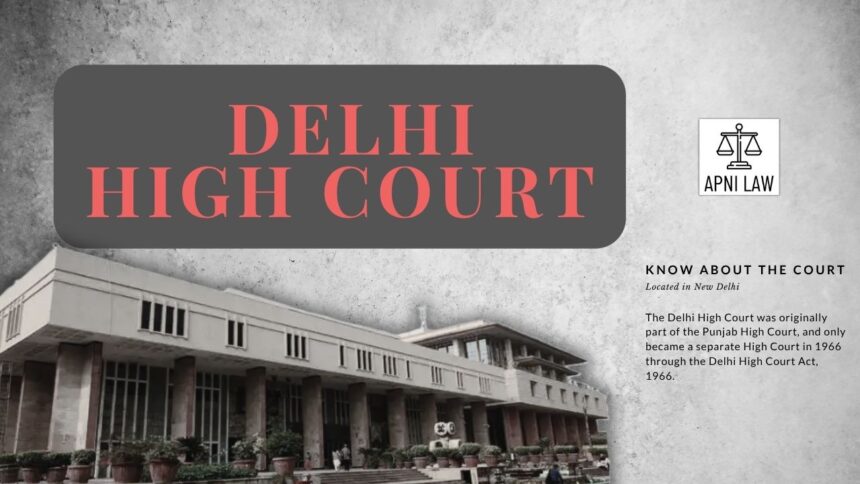
Delhi High Court
Delhi High Court
SHARE

Court affirms reproductive autonomy and interprets mental health under the Medical Termination of Pregnancy Act to include distress from marital discord.

Contents
Background and Key Legal IssueStatutory Framework and Court’s AnalysisFinal RulingCourt’s Reasoning (Brief)Practical Implications

New Delhi, January 6, 2026: The Delhi High Court has ruled that a married woman’s decision to undergo an abortion, taken within the statutory framework of the Medical Termination of Pregnancy (MTP) Act due to marital discord affecting her mental health, cannot be criminalised as an offence under Section 312 of the Indian Penal Code (IPC).

A Single-Judge Bench of Justice Neena Bansal Krishna delivered the judgment on January 6, 2026, in X v. State & Anr, arising from proceedings under IPC Section 312 (causing miscarriage). The order addresses the intersection of reproductive choice, mental health, and criminal liability.

Background and Key Legal Issue

The petitioner, a married woman, underwent an abortion at 14 weeks of pregnancy. The termination was sought on the ground that marital discord was adversely affecting her mental health. Subsequently, she was summoned under Section 312 IPC, which penalises causing miscarriage.

The central legal issue before the Court was whether a decision to terminate pregnancy, taken due to marital discord impacting mental well-being, could constitute an offence under IPC when the procedure was conducted in compliance with the MTP Act, 1971.

ApniLaw AI

Need the case law behind this point?

Ask ApniLaw AI in plain words. Every point of the answer shows the judgment paragraph or Act section behind it, with its page and paragraph number.

Explore ApniLaw AI

Statutory Framework and Court’s Analysis

The MTP Act permits abortion up to 20 weeks of gestation for specified grounds, including risk to the mental health of the pregnant woman. The Court observed that the Act recognises a woman’s reproductive autonomy while setting procedural safeguards.

Justice Krishna emphasised that:

  • The mental health of a woman cannot be narrowly construed, it must include the actual or reasonably foreseeable environment of the woman.
  • Marital discord, which causes mental trauma or severe stress, falls within the ambit of mental health considerations under the MTP Act’s provisions.
  • Restricting the interpretation of mental health to only physiological conditions would undermine the legislative intent.

The Court also referenced Rule 3B of the MTP Rules, 2021, related to termination between 20 and 24 weeks, and held that it should be interpreted purposively, recognising changes in a woman’s material circumstances that affect her mental health.

Rejecting the notion that marital discord must reach a certain legal threshold (e.g., separation or litigation) before being considered, the Court held that stress and mental anguish at any stage could legitimately justify seeking termination.

Final Ruling

The High Court quashed the summoning order under Section 312 IPC, holding that the petitioner’s actions, carried out within the statutory parameters of the MTP Act, do not constitute a criminal offence. The Court underscored that:

  • A woman’s bodily integrity and reproductive choice are constitutionally protected.
  • Forcing continuation of a pregnancy against the woman’s will, especially when mental health is at stake, violates her rights and could be deleterious to her well-being.
  • Criminalising lawful abortion undermines access to safe medical care and may push women towards unsafe procedures.

Court’s Reasoning (Brief)

The judgment elaborated that:

  • Mental health under the MTP Act must be interpreted broadly to include trauma related to marital discord.
  • Autonomy over reproductive decision-making is a fundamental aspect of a woman’s rights and cannot be subordinated to moralistic arguments that prioritise an unborn foetus over the lived experience of a woman.
  • The doctor’s assessment in forming an opinion on the necessity of the termination must account for the woman’s actual or reasonably foreseeable environment, including socio-familial stressors.

Practical Implications

  • The judgment reaffirms that reproductive autonomy and mental health considerations under the MTP Act cannot be converted into a criminal offence when lawful procedures are followed.
  • It underscores the broad interpretation of mental health within abortion jurisprudence, including stress arising from marital discord as a valid ground for termination.
  • By quashing the IPC summons, the Court reinforces that safe, legal abortion under the MTP Act takes precedence over imposition of criminal liability where statutory conditions are met.
  • The judgment aligns with evolving jurisprudence advocating women’s bodily autonomy and access to abortion services without unnecessary legal or procedural hurdles.

The judgment adds clarity on the scope of mental health under the MTP Act and affirms that lawful termination of pregnancy, even when sought on account of marital discord, does not attract criminal liability when conducted in compliance with statutory provisions.


Join Telegram Channel Join WhatsApp Channel

You Might Also Like

Telangana High Court Quashes Restraint Order Against Wife, Calls It Unprecedented

Madhya Pradesh HC: Woman Can Terminate 13-Week Pregnancy Without Husband’s Consent During Marital Dispute, Says MP High Court

Child Must Not Become Pawn In Dispute To Prove Adultery By Mother: Madras HC

POCSO Accused Woman Gets Bail After Giving Birth in Jail : Delhi HC Cites Child’s Welfare

Woman’s Right to Shared Household Remains Valid Even In Absence Of Domestic Violence: Delhi High Court

TAGGED:Abortion LawIPC Section 312Justice Neena Bansal KrishnaMental HealthMTP ActReproductive RightsSuggested tags: Delhi High Court
Share This Article
Facebook Whatsapp Whatsapp Telegram Print
Previous Article Indian Constitution Article 122: Courts Not To Inquire Into Proceedings Of Parliament
Next Article Cheque Bounce - Negotiable Instruments Act 1881 Court Cannot Take Cognizance of Time-Barred Section 138 NI Act Complaint Without Condoning Delay, SC
11 Comments
  • Pingback: Refusal to Marry Isn’t Sufficient for Suicide Abetment, Gauhati HC Upholds Rape and POCSO Charges - ApniLaw

Comments pagination

← Older Comments 1 2

Leave a Reply Cancel reply

You must be logged in to post a comment.

Follow US

Find US on Social Medias
FacebookLike
XFollow
InstagramFollow
YoutubeSubscribe
TelegramFollow
WhatsAppFollow

Weekly Newsletter

Subscribe to our newsletter to get our newest articles instantly!
Popular News
Women in Distress
ActsWomen Rights

Section 2 of Indecent Representation of Women Act: Key Definitions and Legal Meaning

Amna Kabeer
By Amna Kabeer
1 year ago
Tax Dept Cannot Indefinitely Attach Properties Without Action For Resolvement: Delhi HC
Romantic Relationship Cannot Override POCSO Protection For Minor, Says Uttarakhand High Court
Registered Hindu Marriage Is Void Without Essential Ceremonies Like Saptapadi, Says Gujarat High Court
Arbitral Award Is Void When Specific Dispute Alone Is Referred: Kerala HC
- Advertisement -
Ad imageAd image

Your one-stop destination for legal news, articles, queries, and a directory of lawyers in India – all under one roof at ApniLaw.

Stay Updated

  • BNSS
  • News
  • Documentation
  • Acts
  • Supreme Court
  • High Court
  • Judgments

Information

  • ApniLaw Services
  • About Us
  • Contact Us
  • Disclaimer
  • Privacy Policy
  • Terms of Service

Advertise

  • Advertise with us
  • Newsletters
  • Deal

Find Us on Socials

ApniLawApniLaw
Follow US
© ApniLaw 2026. All Rights Reserved.
login
Welcome Back!

Sign in to your account

Or
Username or Email Address
Password

Lost your password?

