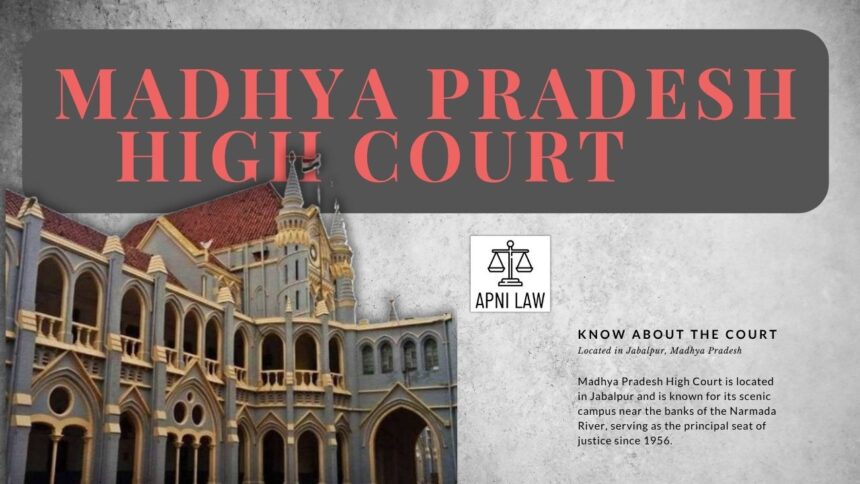
Introduction
The has taken a procedural stance in a privacy-related challenge against and its platform. The Court directed the petitioner to first approach the statutory authority under data protection law before seeking judicial intervention.
Case Title
Parth Sharma vs Union of India & Ors. (PIL before Madhya Pradesh High Court, Indore Bench)
Legal Issue
The central issue is whether Instagram’s decision to discontinue end-to-end encryption violates the fundamental right to privacy under Article 21 of the Constitution of India, and whether such a challenge can be directly entertained as a Public Interest Litigation.
Background of the Case
A PIL was filed by Advocate before the Indore bench of the High Court. The petition challenges Instagram’s notification stating that end-to-end encrypted messaging will no longer be supported after May 8, 2026.
The petitioner argued that removing encryption compromises user privacy and exposes personal communications. It was also contended that such a move could create a chilling effect on free speech, as users may hesitate to communicate freely due to fear of surveillance.
During the hearing, , appearing for the Union Government, submitted that the petition was not maintainable as a PIL. He argued that the petitioner had not approached the statutory remedy available under the .
Court’s Observations and Directions
The bench comprising and directed the petitioner to approach the within seven days.
The Court further instructed that once the representation is filed, the Board must pass a reasoned and speaking order within 15 days, after giving the petitioner an opportunity to be heard. The matter has been listed for further hearing on May 6, where the petitioner must inform the Court about the Board’s decision.
Implications of the Case
This development highlights the importance of exhausting statutory remedies before invoking writ jurisdiction in constitutional courts. It reinforces the role of the Data Protection Board as the primary authority for resolving digital privacy disputes under the DPDP Act.
The case also raises significant concerns about digital privacy and the future of encrypted communication. End-to-end encryption is widely regarded as a critical safeguard that ensures only users can access their messages, preventing unauthorized surveillance.
Conclusion
The Madhya Pradesh High Court has not yet ruled on the merits of the privacy challenge. Instead, it has emphasized procedural discipline by directing the petitioner to approach the appropriate statutory body. The outcome before the Data Protection Board will likely shape the future course of this important digital privacy dispute.