This article is written by Atishay Jain, a former UPSC aspirant and a core member of the ApniLaw team. For any personal queries or suggestions, feel free to reach out to us through our official channel
Introduction
Elections are built on a simple democratic idea. Every citizen should be able to make a free and informed choice about who represents them. But what happens when that choice is influenced by money, inducements or other forms of financial gratification? The recent intervention of the Supreme Court in a case concerning alleged use of unaccounted money during elections has brought this fundamental question back into focus.
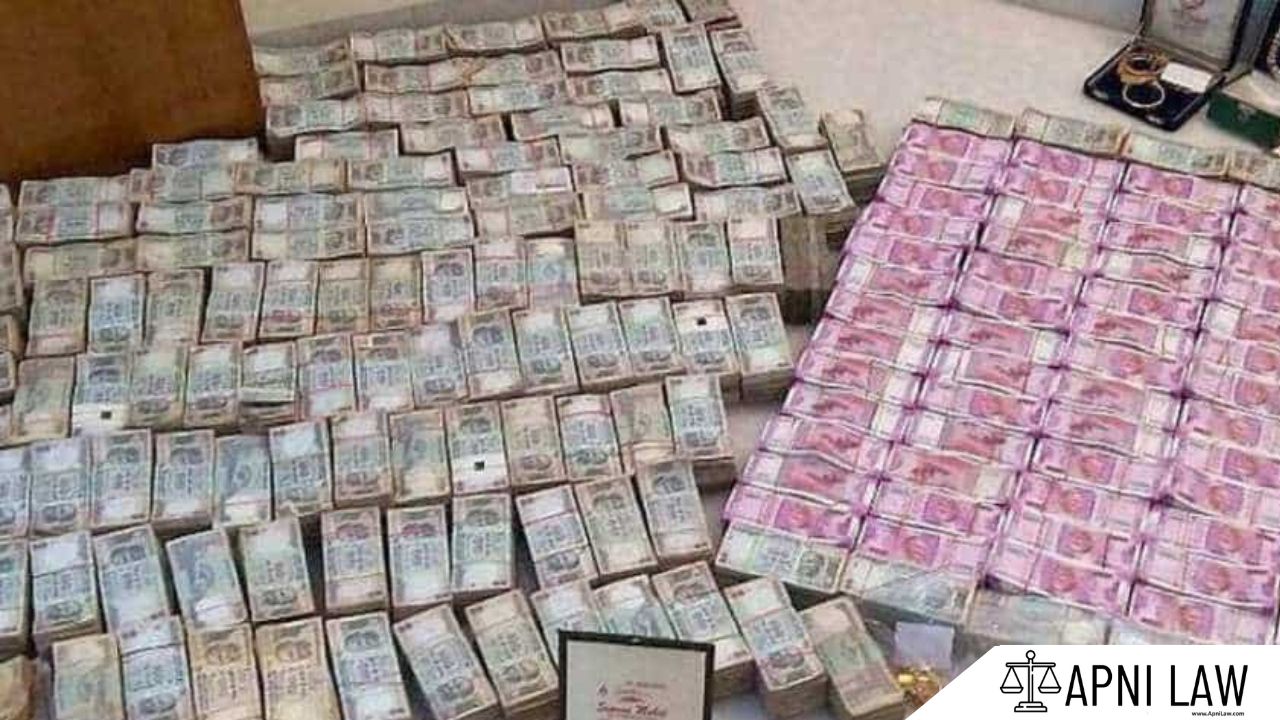
In its recent judgment in State of Karnataka & Anr. v. Prathik Parasrampuria, a Bench of Justices Sanjay Karol and Nongmeikapam Kotiswar Singh addressed the larger concern of black money entering the electoral process. The proceedings originated from allegations concerning cash allegedly intended to influence voters during the 2014 Lok Sabha bye-election in Bellary, Karnataka. The Court expanded the proceedings to examine the wider systemic problem of black money and electoral offences and issued directions aimed at strengthening investigation and prosecution.
Democracy: When Choice Is Influenced
The Supreme Court’s concern goes beyond the physical movement of cash. At the heart of the issue is the freedom of electoral choice. A voter is constitutionally entitled to participate in elections, and the legitimacy of representative government depends upon that choice being exercised without unlawful inducement or coercion.
When money is used to influence voters, the problem is not merely that an election candidate has spent more than permitted. The deeper concern is that financial gratification can interfere with the voter’s independent decision-making. The Supreme Court observed that when a person’s electoral choice is influenced by external factors, it can cease to represent a genuinely free choice. The Court linked the integrity of elections with democracy and the rule of law.
This is why money power is not simply an election expenditure issue. It is a democratic integrity issue.
Free Will: The Hidden Cost of Money Power
An election can formally take place with millions of votes being cast and still face questions about the quality of the choices being exercised. Cash, gifts or other inducements can create a situation where immediate financial benefit competes with long-term public interest. This becomes particularly concerning where voters facing economic hardship are targeted with monetary incentives. A payment made immediately before an election can influence a decision whose consequences last for years.
The legal concern, therefore, is not that voters are incapable of making their own decisions. It is that deliberate financial inducement can interfere with the conditions necessary for a genuinely free electoral choice. The Supreme Court’s reasoning places this concern within the larger constitutional value of free and fair elections.
Law: Money Power Is Not a Private Matter
Indian election law already contains provisions dealing with bribery and corrupt practices. The Representation of the People Act, 1951 treats bribery as a corrupt practice in election disputes, while the broader criminal-law framework can also become relevant depending on the conduct involved. The Election Commission operates enforcement mechanisms during elections, including Static Surveillance Teams and flying squads, to detect suspected illegal cash, liquor and other inducements. The recent Supreme Court directions seek to make the response to suspected election-related black money more systematic and time-bound. The Court directed that where cash or other assets are seized during the election process, the seizure authority must report it within 24 hours to the competent District Magistrate, Additional District Magistrate or court, along with reasons showing a prima facie nexus between the seized property and the suspected electoral offence.
Investigation: Delay Can Defeat Electoral Justice
One of the most significant concerns identified by the Court is delay. An alleged electoral offence investigated years after an election has a different practical significance from one investigated promptly. By then, the election has already taken place, political circumstances may have changed and evidence may become more difficult to preserve. The Court directed that where an FIR is registered in relation to such cases, the investigating officer should make every possible effort to complete the investigation within one year. If that period is exceeded, reasons must be recorded and communicated to the Election Commission. The investigating officer is also required to submit quarterly status reports to the ECI through the prescribed mechanism.
Enforcement: ₹10 Lakh and the Income-Tax Link
The Court also directed that when Static Surveillance Teams detect money exceeding ₹10 lakh during checks, the information should be forwarded to the Income Tax authorities. This reflects the fact that election-related money cannot always be examined only through the lens of electoral law. Questions concerning the source, possession, movement and use of money can potentially engage multiple legal and enforcement frameworks.
The objective is not to treat every large cash seizure as proof of an electoral offence. The Court specifically required authorities to establish a prima facie nexus between the seized cash or asset and the suspected electoral offence before treating it within that framework.
Foreign Influence: A Different but Related Risk
The question of money in elections also raises concerns about external influence. Modern electoral campaigns operate in a digital environment where money can potentially move across borders, information can be amplified through foreign-linked networks and online influence campaigns can attempt to shape public opinion. However, it is important to distinguish a legitimate concern about foreign interference from an allegation that a particular foreign actor is currently financing or attempting to destabilise an Indian election. Such claims require evidence.
The Supreme Court’s ongoing judgment is specifically concerned with black money and electoral offences, rather than making a finding that foreign actors are responsible for India’s election-related money problems. That distinction matters.
Technology: The New Battlefield for Influence
Money power also needs to be understood in the context of modern campaigning. Elections are no longer fought only through rallies, posters and door-to-door campaigns. Political communication now operates through social-media advertising, influencers, targeted messaging and large-scale digital campaigns.
This creates new questions about transparency: Who is funding a campaign? Who is paying for political advertising? Who is targeting particular groups of voters? Is a message genuine political speech, paid influence or coordinated manipulation?
Conclusion
It is about who gets to influence the democratic choice. A voter may accept a monetary inducement, a gift or another benefit, but the consequences of the election extend far beyond that immediate transaction. The elected government will make decisions on taxation, employment, education, healthcare, infrastructure, law and public resources.
The Supreme Court’s recent directions therefore carry a message that extends beyond the Bellary case: suspected electoral offences require prompt investigation, institutional accountability and speedy adjudication.