Introduction
Section 90 of the Indian Evidence Act, 1872 creates a practical rule of evidence for very old documents. It allows courts to presume authenticity when a document is at least thirty years old and comes from proper custody. The law addresses the difficulty of proving execution when original witnesses are no longer available. The court may presume that the signature, handwriting, execution, and attestation are genuine. This presumption focuses on how the document was made, not on whether its contents are true. The provision uses the words “may presume,” which makes the presumption discretionary and not mandatory. Courts apply it cautiously and only when the surrounding circumstances justify reliance on the document.
How Does Proper Custody Affect the Presumption Under Section 90?
Proper custody plays a central role in Section 90. The court must be satisfied that the document comes from a place where such documents are normally kept. This requirement reduces the risk of fabrication or manipulation. Proper custody does not mean perfect custody. It means reasonable and natural custody considering the document’s nature. If a document appears suspicious or its custody seems doubtful, the court can refuse the presumption. The age of the document is calculated from the date it is tendered in evidence, not from the date of the dispute.
Does Section 90 Presume the Truth of the Contents of a Document?
Section 90 does not presume the truth of the contents. It only presumes authenticity. Courts repeatedly clarify that the section does not validate the statements made in the document. Parties must still prove the truth of the contents through independent evidence when required. This distinction preserves fairness and prevents misuse of old documents to prove disputed facts automatically. Copies of documents also do not get the benefit of this presumption unless secondary evidence rules are satisfied separately.
How Has Section 90 Been Carried Forward Into the Bharatiya Sakshya Adhiniyam?
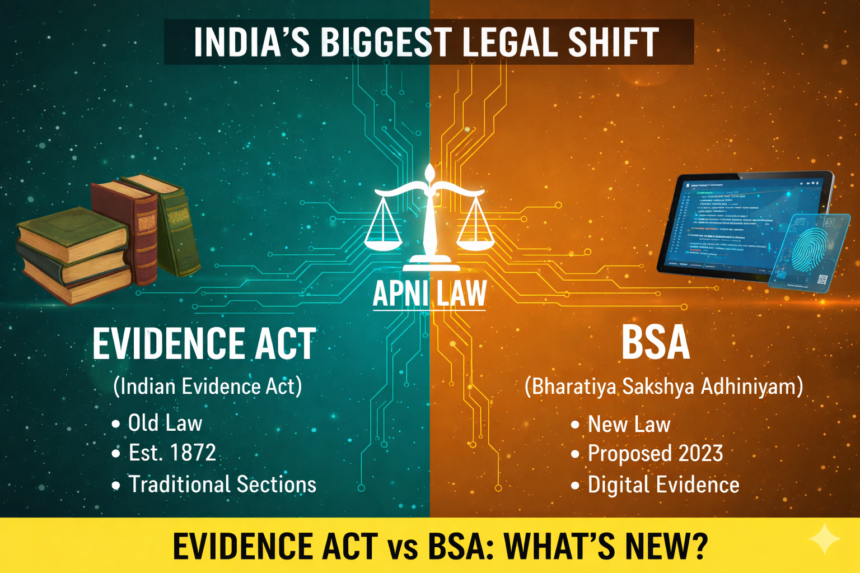
The Bharatiya Sakshya Adhiniyam, 2023 replaces the Indian Evidence Act but retains its core principles. Section 92 of the BSA corresponds directly to Section 90 of the IEA. It preserves the thirty-year rule for traditional documents. The language remains largely the same, ensuring continuity in judicial interpretation. Courts can still presume signatures, handwriting, execution, and attestation when the conditions are met. The discretionary nature of the presumption also remains intact.
What Are the Updates in BSA Section 92 Compared to Section 90 IEA?
Section 92 of the BSA introduces minor but important updates. It adds an explanation clarifying the meaning of proper custody. This explanation states that custody includes places where such documents are commonly kept. This aligns the provision with modern record-keeping practices. The illustration also replaces the word “is” with “shall be,” which improves linguistic clarity without changing legal effect. These changes modernize the provision while preserving its original intent.
Why Was a Separate Provision Needed for Electronic Records?
Electronic evidence raises different concerns from paper documents. Digital records rely on electronic signatures and system integrity rather than handwriting or physical attestation. Recognizing this difference, the BSA introduces Section 93 as a new and distinct provision. It deals exclusively with electronic records. This change reflects the growing importance of digital transactions and the need for tailored evidentiary rules.
What Does Section 93 of the BSA Presume About Electronic Records?
Section 93 of the Bharatiya Sakshya Adhiniyam creates a presumption for electronic records that are five years old. When such a record comes from proper custody, the court may presume that the electronic signature was affixed by the person it purports to belong to, or by someone authorized by that person. The presumption is narrow. It applies only to the electronic signature. It does not extend to the contents of the electronic record. The section again uses “may presume,” keeping judicial discretion intact.
How Is Proper Custody Defined for Electronic Records Under Section 93?
Section 93 links proper custody to the rules stated in Section 81 of the BSA. This reflects the realities of digital storage. Proper custody may include servers, devices, or systems where electronic records are ordinarily maintained. The court assesses custody based on technical and factual circumstances. This approach balances reliability with flexibility in handling digital evidence.
What Are the Main Differences Between Section 92 and Section 93 of the BSA?
Section 92 applies to traditional, non-electronic documents and requires an age of thirty years. Section 93 applies only to electronic records and lowers the age threshold to five years. Section 92 allows presumptions about handwriting, signatures, execution, and attestation. Section 93 limits the presumption strictly to electronic signatures. Both sections require proper custody and give courts discretionary power. Both exclude any presumption about the truth of contents.
How Have Courts Interpreted the Presumption for Old Documents?
Courts interpret these provisions with caution. Judicial decisions emphasize that the presumption exists out of necessity, not convenience. In cases like Union of India v. Ibrahim Uddin, courts clarified that Section 90 does not create an absolute presumption. Judges must examine surrounding circumstances, custody, and the document’s condition. Suspicious documents do not qualify merely because of age. This judicial approach continues under the BSA framework.
Why Are Sections 92 and 93 Important in Modern Evidence Law?
Sections 92 and 93 strike a balance between reliability and practicality. They reduce the burden of proof where direct evidence is unavailable due to time. At the same time, they protect against misuse by limiting the scope of presumptions. Section 92 preserves continuity for traditional documents. Section 93 addresses the realities of digital evidence. Together, they reflect a modern, technology-aware evidence regime while retaining core legal safeguards.
Conclusion
These presumptions support fairness by easing proof without sacrificing scrutiny. Courts retain full discretion to accept or reject the presumption. Parties opposing the document can rebut it with contrary evidence. The law does not allow age alone to decide disputes. This careful design ensures that justice depends on evaluation, not automation, even in cases involving very old or digital records.