What Does “Limitation Period” Mean in Criminal Law?
Criminal law does not encourage endless prosecution for minor offences. To ensure fairness and timely justice, the law fixes a limitation period within which a court must take cognizance of certain offences. Once this period ends, the court usually loses the power to proceed.
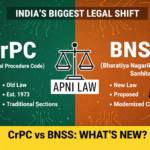
Under the old law, this rule appeared in Section 468 of the Code of Criminal Procedure, 1973 (CrPC). After the criminal law reforms, the same principle now operates under Section 514 of the Bharatiya Nagarik Suraksha Sanhita, 2023 (BNSS).
Why Does the Law Fix a Time Limit for Cognizance?
Time limits protect individuals from delayed and unfair prosecution. With the passage of time, evidence weakens and memories fade. Delay also increases the risk of misuse of criminal law.
Because of these concerns, the law insists on prompt action for less serious offences. At the same time, it keeps serious crimes outside limitation control.
What Was the Rule Under Section 468 CrPC?
Section 468 CrPC prevented courts from taking cognizance of certain offences after the expiry of the prescribed limitation period. The provision applied mainly to offences carrying lighter punishment.
If an offence was punishable with fine only, the limitation period was six months. For offences punishable with imprisonment up to one year, the limitation extended to one year. When the punishment could go up to three years, the limitation period became three years.
However, offences punishable with more than three years of imprisonment had no limitation period at all.
How Did Courts Apply Section 468 CrPC in Practice?
Courts treated limitation as a legal bar at the stage of taking cognizance. Once the limitation period expired, the court could not proceed unless it condoned the delay.
Judges also clarified that limitation applies when the court takes cognizance, not when the complaint or FIR is filed. As a result, even small delays sometimes decided the fate of criminal cases.
Why Did BNSS Retain the Limitation Rule?
The BNSS aims to modernize procedure without disturbing settled legal principles. Lawmakers retained the limitation framework because it promotes certainty and judicial discipline.
Instead of changing the substance, BNSS reorganized the provision within a faster and more time-bound criminal process.
What Does Section 514 BNSS Provide?
Section 514 BNSS continues the same limitation scheme for taking cognizance of offences. The classification of offences and the corresponding time limits remain unchanged.
Minor offences still attract limitation, while serious crimes remain outside its scope. In effect, the BNSS carries forward the CrPC approach with clarity.
Is There Any Major Change Between Section 468 CrPC and Section 514 BNSS?
No major substantive change exists. Section 514 BNSS mirrors Section 468 CrPC in purpose and structure.
However, BNSS places greater emphasis on speedy investigation and early judicial action. This shift encourages authorities to act within time rather than rely on condonation later.
From When Does the Limitation Period Start?
Generally, the limitation period starts from the date of the offence. In cases where the offence was not immediately known, the clock begins from the date of knowledge.
This approach protects victims while maintaining fairness for the accused. BNSS continues to follow this balanced rule.
Can Courts Condone Delay Under BNSS?
Yes. Just like the earlier law, BNSS allows courts to condone delay if sufficient cause exists or if justice demands it.
Therefore, limitation does not work mechanically. Courts retain discretion to prevent genuine cases from failing due to technical delay.
What Is the Practical Impact of Section 514 BNSS?
Section 514 BNSS ensures that criminal law remains fair, efficient, and predictable. It discourages stale prosecutions and encourages timely legal action.
By retaining limitation rules, BNSS strengthens procedural discipline while safeguarding individual liberty.
Conclusion
Section 468 CrPC ensured that minor criminal cases did not linger indefinitely. Section 514 BNSS continues this protection under India’s new criminal procedure framework. While the structure of the law has changed, the core idea remains the same. Justice must be prompt, fair, and reasonable. Section 514 BNSS reinforces this principle in modern criminal justice.