Introduction
Section 211 of the Indian Penal Code deals with the offence of making a false criminal charge with the intent to cause injury. It targets misuse of the criminal justice system where a person knowingly initiates criminal proceedings or falsely accuses someone despite having no just or lawful ground. The law recognises that false prosecutions can seriously harm reputation, liberty, and mental peace. To prevent such abuse, Section 211 IPC provides criminal punishment for malicious prosecution. The provision applies whether the false charge is made directly to a court or indirectly through the police or any authority empowered to act on it.
How Did the New Criminal Law Change Section 211 IPC?
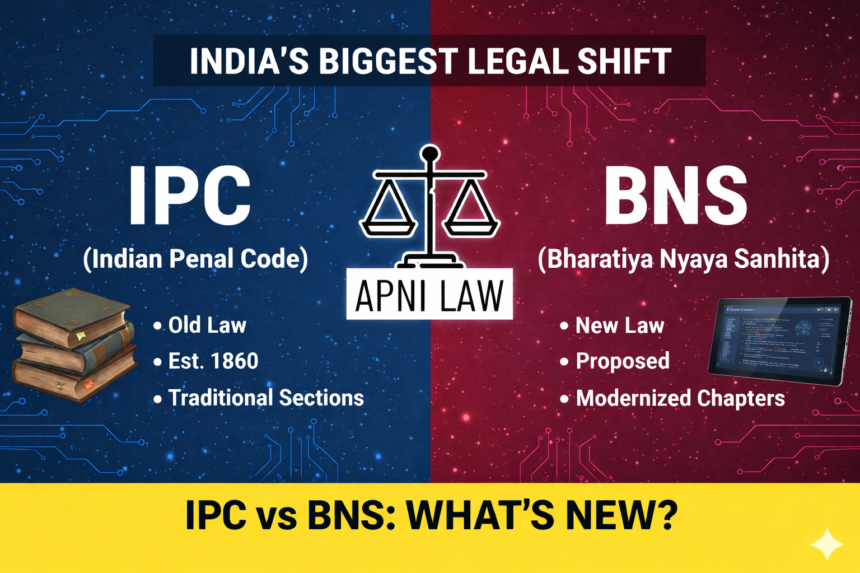
With the enactment of the Bharatiya Nyaya Sanhita, 2023, the Indian Penal Code has been repealed for offences committed after its commencement. Under this new framework, the offence earlier contained in Section 211 IPC now appears as Section 248 of the Bharatiya Nyaya Sanhita. The legislature has retained the substance of the offence while strengthening the punishment. This change reflects a policy decision to curb false and malicious prosecutions more effectively in modern times.
What Conduct Is Punished Under IPC Section 211?
Section 211 IPC punishes two closely related acts. The first is instituting or causing the institution of criminal proceedings against a person. The second is falsely charging a person with having committed an offence. In both cases, the prosecution must prove that the accused acted with intent to cause injury and with knowledge that there was no lawful ground for the charge. Mere failure of a case is not enough. The element of malice and knowledge is central to the offence.
What Was the Punishment Under Section 211 IPC?
Under the old IPC regime, Section 211 prescribed relatively moderate punishment. In ordinary cases, the offender could face imprisonment for up to two years, or fine, or both. Where the false charge related to an offence punishable with imprisonment for seven years or more, including life imprisonment, the punishment could extend to seven years along with fine. Courts often viewed this section as a safeguard against blatant abuse, though its deterrent impact was sometimes questioned.
What Is Section 248 of the Bharatiya Nyaya Sanhita?
Section 248 of the Bharatiya Nyaya Sanhita, 2023, is the direct successor to Section 211 IPC. It continues to criminalise false charges and malicious institution of proceedings made with intent to injure another person. The wording has been modernised, but the legal ingredients remain largely the same. The focus remains on protecting individuals from wrongful prosecution while maintaining the integrity of the criminal justice system.
How Has the Punishment Changed Under BNS Section 248?
The most significant change under Section 248 BNS lies in the enhancement of punishment. For general cases of false charge or malicious prosecution, the maximum imprisonment has been increased to five years. In addition, the court may impose a fine which may extend up to two lakh rupees. For aggravated cases, where the false charge relates to an offence punishable with ten years or more, life imprisonment, or death, the punishment may extend up to ten years along with fine. This marks a clear shift towards stronger deterrence.
Why Did the Legislature Increase the Penalty?
The increase in punishment reflects the legislature’s concern over the growing misuse of criminal law as a tool of harassment. False FIRs, vexatious complaints, and malicious prosecutions impose heavy costs on individuals and the justice system. By enhancing penalties under Section 248 BNS, the law aims to discourage such conduct and reinforce accountability. The change also aligns with constitutional values of personal liberty and fair procedure under Articles 20 and 21 of the Constitution.
Are the Legal Ingredients Under IPC 211 and BNS 248 the Same?
Yes, the core legal ingredients remain the same under both provisions. The prosecution must still establish intent to cause injury, absence of lawful ground, and knowledge of falsity. Courts are likely to rely on existing judicial precedents developed under Section 211 IPC while interpreting Section 248 BNS. Concepts such as malicious prosecution, abuse of process, and mens rea will continue to guide judicial interpretation.
Does Section 248 BNS Apply Retrospectively?
Section 248 BNS applies only to offences committed after the Bharatiya Nyaya Sanhita came into force. Acts committed before that date will continue to be governed by Section 211 IPC. This distinction is important in practice, especially when determining applicable punishment and procedural law. The mapping between the two sections is functional, not retrospective.
What Is the Practical Impact of This Change?
In practice, Section 248 BNS strengthens the hand of courts against frivolous and malicious prosecutions. Higher punishment and mandatory fines in serious cases increase the cost of abusing criminal law. At the same time, genuine complainants acting in good faith remain protected, as failure to prove a case does not by itself attract liability. The provision strikes a balance between deterrence and access to justice.
Conclusion
Section 211 IPC and Section 248 of the Bharatiya Nyaya Sanhita address the same core wrongdoing, namely false criminal charges made with intent to injure. While the offence remains substantively unchanged, the BNS significantly enhances punishment to reflect contemporary concerns about misuse of criminal law. The transition from IPC to BNS signals a stronger deterrent approach while preserving established legal principles.