Why Does the Law Allow Postponement of Process?
When a Magistrate receives a private complaint, issuing summons immediately is not always the best option. Some complaints need closer scrutiny before the court calls the accused to face proceedings. To address this concern, criminal procedure law allows the Magistrate to postpone the issue of process. During this pause, the court may conduct an inquiry or direct a limited investigation to verify the truth of the allegations.
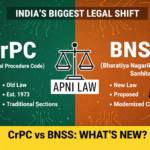
Earlier, this safeguard existed under Section 202 of the Criminal Procedure Code, 1973 (CrPC). Under the new framework, Section 225 of the Bharatiya Nagarik Suraksha Sanhita, 2023 (BNSS) governs this stage.
What Did Section 202 CrPC Provide?
Section 202 CrPC empowered the Magistrate to postpone issuing summons after examining the complainant under Section 200.
During this postponement, the Magistrate could either conduct an inquiry personally or direct the police to investigate the matter. The purpose was limited. The court only needed to determine whether sufficient grounds existed to proceed.
Importantly, this provision did not permit a full-fledged investigation. Its scope remained preliminary and focused.
Why Was Section 202 CrPC Considered Crucial?
Private complaints often involve disputes of a personal or civil nature. Without proper filtering, criminal courts risked becoming tools of harassment.
Section 202 CrPC acted as a protective barrier. It allowed the court to weed out weak or malicious complaints before issuing process.
At the same time, it protected genuine complainants by ensuring careful judicial attention.
How Did Courts Interpret Inquiry Powers Under Section 202 CrPC?
Courts clarified that the inquiry under Section 202 CrPC was not a trial. The Magistrate only had to assess whether a prima facie case existed.
Judges also emphasized that postponement should not become routine. The decision had to depend on the facts of each case.
This interpretation maintained a balance between caution and efficiency.
Why Was Section 225 BNSS Introduced?
One of the core goals of BNSS is procedural clarity. Under the CrPC, inconsistent practices sometimes emerged at the inquiry stage.
Section 225 BNSS was introduced to reinforce the Magistrate’s gatekeeping role. It aligns the inquiry process with BNSS’s broader focus on accountability and rights protection.
The legislature aimed to reduce arbitrary summoning while preserving judicial discretion.
What Does Section 225 BNSS Provide?
Section 225 BNSS allows the Magistrate to postpone the issue of process after examining the complainant.
The Magistrate may either conduct an inquiry or direct an investigation to determine whether sufficient grounds exist to proceed. The focus remains narrow and preliminary.
Thus, the basic structure remains familiar, but the intent is more structured.
What Is the Key Difference Between Section 202 CrPC and Section 225 BNSS?
The wording of both provisions is largely similar. However, their practical orientation differs.
Section 202 CrPC relied heavily on judicial prudence. Section 225 BNSS reinforces that prudence by placing greater emphasis on reasoned decision-making.
BNSS subtly shifts the approach from discretionary practice to accountable discretion.
How Does Section 225 BNSS Protect the Accused?
Summoning an accused person carries serious legal and social consequences. Therefore, unnecessary issuance of process must be avoided.
Section 225 BNSS strengthens early-stage scrutiny. Magistrates are encouraged to ensure that allegations have substance before compelling an accused to appear.
As a result, personal liberty receives stronger procedural protection.
How Does This Provision Help Genuine Complainants?
While the provision protects the accused, it also helps complainants.
A complaint that survives inquiry carries greater credibility. Courts treat such cases with seriousness, reducing the risk of later dismissal.
Thus, Section 225 BNSS enhances trust in the criminal process.
What Is the Role of Police During Inquiry Under BNSS?
Police involvement under Section 225 BNSS remains limited. The investigation focuses only on verification, not evidence collection for trial.
This limitation ensures that police power is not misused at a preliminary stage.
Judicial supervision continues to guide the process.
What Is the Practical Impact on Courts and Lawyers?
Magistrates must now apply their minds more carefully while deciding whether to postpone process.
Lawyers, on the other hand, must draft private complaints with clarity and factual support. Vague allegations are less likely to survive inquiry.
Overall, the system moves toward efficiency and fairness.
Conclusion
Section 202 CrPC created an important safeguard by allowing Magistrates to postpone the issue of process and conduct inquiries. Section 225 BNSS preserves this safeguard while strengthening accountability and structured discretion. Although the powers remain largely unchanged, their exercise now demands greater judicial responsibility. Postponement of process under BNSS is not a delay tactic; it is a vital filter that protects both justice and liberty in India’s reformed criminal procedure system.