Introduction
Former Kerala High Court Judge Justice K. Babu has emphasised that peaceful student protests are an integral part of constitutional democracy. Speaking at an international conference in Thiruvananthapuram, he argued that peaceful demonstrations cannot be equated with anarchy and that students cannot be denied the right to dissent merely because they belong to an educational institution.
Background
Justice K. Babu, presently a Senior Advocate at the Supreme Court, made these observations while delivering an address at the International Conference on Digital Threats and Gender Justice, organised by Mar Gregorios College of Law, Thiruvananthapuram, on November 11.
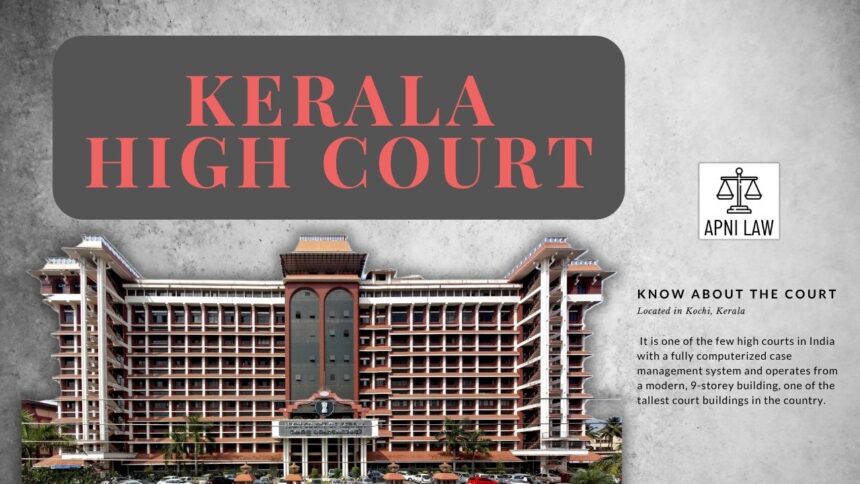
His address referred to a recent Kerala High Court Division Bench judgment concerning suspended students of Sree Sankaracharya University of Sanskrit, Kalady. The Bench had reiterated an earlier observation that political activities such as dharna, hunger strikes and satyagraha have no place in constitutional democracy, particularly in academic institutions.
The observation originated in the 2017 judgment in Dr. Antony Thomas v. V.M. Muhammed Rafique.
Since the Kalady University matter remains sub judice, Justice Babu refrained from commenting on its factual merits. Instead, he examined the broader constitutional principles governing peaceful protest and student dissent.
Constitutional Protection of Peaceful Protest
Justice Babu referred to Dr. B.R. Ambedkar’s concluding speech in the Constituent Assembly on November 25, 1949, particularly his warning against the use of unconstitutional methods when constitutional avenues were available.
He explained that peaceful assembly, petitions and demonstrations are themselves constitutional methods of expressing disagreement. Therefore, they cannot automatically be equated with unconstitutional agitation or anarchy.
He referred to Article 19(1)(a) of the Constitution, which guarantees freedom of speech and expression, and Article 19(1)(b), which protects the right to assemble peaceably and without arms.
He also cited several Supreme Court decisions recognising the right to peaceful protest, including Kameshwar Prasad v. State of Bihar (1962), Ramlila Maidan Incident (2012), Mazdoor Kisan Shakti Sangathan v. Union of India (2018) and Amit Sahni v. Commissioner of Police (2020).
Justice Babu acknowledged that authorities can regulate the manner and location of protests to protect public order and the rights of others. However, such regulation cannot become a complete prohibition on peaceful dissent or exclude students as an entire category of citizens.
Six Philosophical Arguments Supporting Student Protests
Justice Babu outlined six philosophical arguments explaining why peaceful student protests have a place in democratic institutions.
First, he discussed the relationship between power and consent. Educational institutions must encourage independent thought rather than merely demand obedience. Peaceful questioning of institutional decisions forms part of the educational process.
Second, he addressed the relationship between history and inheritance. Students inherit institutional rules, fee structures and administrative arrangements that they may not have participated in creating. Peaceful protest allows them to question and seek changes to those arrangements.
Third, he examined the meaning of freedom. Constitutional liberty must protect individuals who disagree with established authority. The ability to tolerate opposing views reflects the practical protection of freedom of expression.
Fourth, he discussed the risk of social complacency. A society that becomes comfortable with existing arrangements may gradually lose the ability to question injustice or imagine alternatives. Student participation can bring attention to issues that established institutions may overlook.
Fifth, he connected peaceful dissent with the legitimacy of the State. Constitutional democracy depends on public reasoning among citizens who enjoy equal rights. Non-violent disagreement allows citizens to question public authority through democratic methods.
Sixth, he explained that education itself depends on dialogue. Students cannot participate meaningfully in learning if disagreement is prohibited. Even an argument that may ultimately be rejected can contribute to discussion by requiring institutions to explain and defend their positions.
Role of Universities and Limits on Student Protests
Justice Babu also discussed the responsibility of universities in protecting the right to dissent. He referred to the Supreme Court’s decision in Bijoe Emmanuel v. State of Kerala (1986), which protected the rights of schoolchildren who respectfully declined to sing the National Anthem on religious grounds.
He highlighted the importance of tolerance and constitutional liberty in educational institutions. He also referred to the historical participation of students in India’s freedom struggle and during the Emergency.
While acknowledging that campus politics can involve excesses, he argued that the response must focus on misconduct rather than suppressing peaceful expression.
He identified certain limits that must govern student protests. Demonstrations must remain peaceful and non-violent. They must not prevent other students from attending classes or appearing for examinations. Threats, confinement and physical assaults against teachers or institutional officers cannot be justified in the name of protest.
At the same time, educational institutions must provide designated spaces and reasonable times for demonstrations, effective grievance-redressal mechanisms and elected student bodies. They must also create opportunities for students to communicate their concerns.
Disciplinary proceedings must follow the principles of natural justice. Any punishment must be proportionate to the misconduct established and cannot be based merely on a student’s ideology or the inconvenience caused by peaceful dissent.
Implications
Justice Babu’s address places the right to peaceful student protest within the broader constitutional framework of freedom of speech and peaceful assembly.
His observations distinguish between the protection of peaceful dissent and the regulation of conduct that affects public order or the rights of others. They also raise questions about the role of universities in balancing institutional discipline with students’ constitutional freedoms.
The address was not a judicial ruling and does not alter the legal position by itself. However, it contributes to the ongoing discussion about the constitutional status of student protests, particularly in light of the recent Kerala High Court proceedings concerning the Kalady University students.
The address adds to the debate on how educational institutions can maintain discipline while preserving the constitutional space for peaceful disagreement and democratic participation.