Introduction
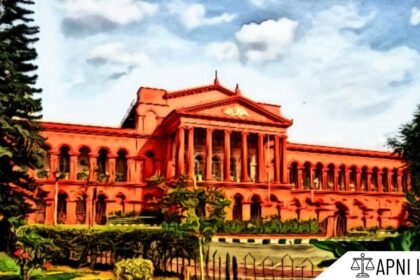
Article 226 of the Indian Constitution gives High Courts the power to issue writs, directions, and orders. This power exists to protect rights and control unlawful actions of authorities. Article 226 is extremely important because it allows High Courts to enforce not only fundamental rights but also other legal rights. This makes it broader than Article 32, which is limited only to fundamental rights. Through Article 226, High Courts act as guardians of legality and fairness in administration.
What Powers Does Article 226 Give to High Courts?
Article 226 authorizes every High Court to issue writs such as habeas corpus, mandamus, prohibition, quo warranto, and certiorari. These writs can be issued against any person, authority, or government within the Court’s territorial jurisdiction. The Constitution clearly states that this power exists “notwithstanding anything in Article 32,” which shows that High Courts have independent and strong remedial authority. The purpose of this power is to prevent abuse of power, correct administrative mistakes, and ensure justice.
Why Is Article 226 Considered Broader Than Article 32?
Article 226 is wider in scope because it is not restricted to fundamental rights. A person can approach a High Court under Article 226 for violation of statutory rights, constitutional rights outside Part III, and sometimes even contractual rights if they involve a public law element. This flexibility allows High Courts to address real-life administrative problems that do not always fit neatly into fundamental rights violations. Because of this wide reach, Article 226 plays a major role in public interest litigation and social justice cases.
What Does “For Any Other Purpose” Mean Under Article 226?
The phrase “for any other purpose” greatly expands the scope of Article 226. It allows High Courts to protect legal rights beyond fundamental rights. Courts use this power to control arbitrary government action, misuse of discretion, violation of natural justice, and actions taken without legal authority. Even when a petitioner does not directly claim a fundamental right, the High Court can still intervene if the action challenged is illegal or unfair. This makes Article 226 a powerful tool against administrative injustice.
How Does Territorial Jurisdiction Work Under Article 226?
Territorial jurisdiction under Article 226 depends on where the authority is located and where the cause of action arises. Normally, a High Court can issue writs to authorities within its territorial limits. However, Article 226(2) expands this rule. A High Court can exercise jurisdiction even if the authority is located outside the State, as long as the cause of action arises wholly or partly within its territory. This provision prevents injustice caused by rigid territorial limits and ensures access to justice.
Is Approaching the High Court Under Article 226 a Legal Right?
Unlike Article 32, Article 226 does not give a fundamental right to approach the High Court. It only grants discretionary power to the Court. This means the High Court may refuse to entertain a writ petition even when it has jurisdiction. Courts usually do so when an effective alternative remedy, such as an appeal or revision, is available under law. However, this discretion is not arbitrary. Courts follow well-settled principles while deciding whether to entertain a petition.
When Do High Courts Entertain Writs Despite Alternative Remedies?
High Courts often entertain writ petitions even when alternative remedies exist in certain situations. These include cases involving violation of fundamental rights, breach of natural justice, lack of jurisdiction, or challenge to the constitutionality of a law. In such cases, insisting on alternative remedies would defeat the purpose of justice. This balanced approach ensures that Article 226 remains flexible yet disciplined.
Against Whom Can Writs Be Issued Under Article 226?
Writs under Article 226 are usually issued against the State, government departments, statutory authorities, and tribunals performing public duties. High Courts can also issue writs against private bodies if they perform public functions or discharge public duties. The factor is not the nature of the body but the nature of the function it performs. This ensures that public accountability is maintained even when public duties are outsourced to private entities.
What Are the Common Grounds for Filing a Writ Petition?
Common grounds for invoking Article 226 include illegal administrative action, arbitrary decisions, mala fide exercise of power, violation of natural justice, and errors of law apparent on the face of the record. Courts also intervene when authorities act beyond their jurisdiction or fail to exercise jurisdiction vested in them. These grounds reflect the core purpose of Article 226, which is to uphold the rule of law.
How Is Article 226 Different From Article 32?
Article 32 empowers the Supreme Court to enforce fundamental rights and is itself a fundamental right. The Supreme Court generally cannot refuse relief when a fundamental right is violated. Article 226, on the other hand, is discretionary and broader in scope. While Article 32 applies across India, Article 226 operates within territorial limits, subject to the cause of action rule. In practice, the Supreme Court often encourages litigants to approach High Courts first because of their wide powers under Article 226.
Why Is Article 226 Crucial for Judicial Review?
Article 226 plays a vital role in judicial review, which is part of the basic structure of the Constitution. High Courts use this power to review legislative and administrative actions and ensure that authorities act within the limits of law. By doing so, Article 226 strengthens constitutional governance and protects citizens from arbitrary state action.
For any specific query call at +91 – 8569843472
Conclusion
This article combines theory with practical application and frequently appears in exams. Understanding Article 226 helps students grasp how constitutional remedies work beyond textbooks. It shows how courts actively protect rights, ensure fairness, and maintain the rule of law in everyday governance.