Introduction
The Supreme Court has directed the Delhi Police to produce prohibitory orders issued under Section 163 of the Bharatiya Nagarik Suraksha Sanhita (BNSS), 2023, restricting public gatherings and demonstrations in Delhi. The Court also directed law enforcement agencies to preserve CCTV footage and other digital material relating to the protests against Chief Election Commissioner Gyanesh Kumar and the Election Commission’s Special Intensive Revision (SIR) of electoral rolls.
Background
The Supreme Court was hearing a group of petitions concerning police action during protests held in Delhi against Chief Election Commissioner Gyanesh Kumar and the Election Commission’s Special Intensive Revision (SIR) of electoral rolls.
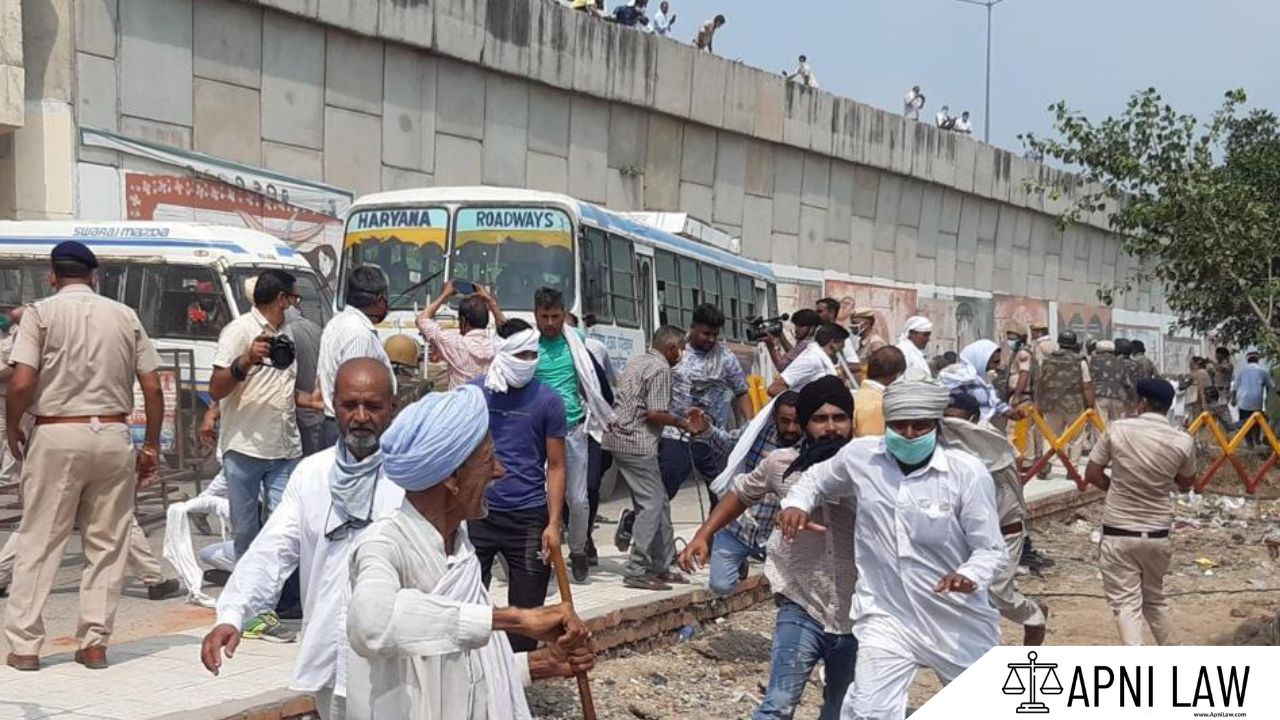
The petitions raised allegations of police excesses against protesters, journalists and lawyers, as well as concerns about restrictions on public gatherings and access to the protest site. The proceedings also included a challenge to the constitutional validity of Section 172 of the BNSS, which deals with compliance with lawful police directions and the detention or removal of persons who disregard them.
A Bench comprising Chief Justice of India Surya Kant and Justice Joymalya Bagchi heard the matters.
Section 163 of the BNSS, 2023, empowers an Executive Magistrate or another authorised Magistrate to issue urgent preventive orders where immediate action is necessary to prevent danger, obstruction, injury or a disturbance of public tranquillity. It replaced Section 144 of the Code of Criminal Procedure, 1973.
Prohibitory orders were imposed across parts of the New Delhi district ahead of a proposed protest at Jantar Mantar on October 10. The restrictions prohibited assemblies of five or more people, processions, demonstrations, picketing and dharnas without prior written permission.
The Delhi Police had denied permission for the proposed protest organised by the Cockroach Janta Party (CJP), citing the late submission of the application and alleged violations during an earlier demonstration.
In its affidavit before the Supreme Court, the police defended the restrictions by referring to the organisers’ previous conduct and the potential for disruption to public order. It also cited security requirements associated with high-profile diplomatic visits and international conferences, including the 18th BRICS Summit.
Legal Issue
The principal issue before the Supreme Court was whether the Delhi Police had placed the relevant Section 163 BNSS orders on record to justify the restrictions imposed on public gatherings and demonstrations.
The Court also considered the preservation of CCTV footage and other digital evidence relating to the protests, which could be relevant to the allegations of unlawful detention and police excesses.
A separate issue concerned the constitutional validity of Section 172 of the BNSS. The petitioners challenged whether the provision gave police officers excessively broad powers to detain or remove individuals for disregarding their directions, without sufficient safeguards against arbitrary action.
Court Ruling
During the hearing, Senior Advocate Menaka Guruswamy pointed out that the affidavit filed by the Delhi Police Commissioner did not contain the relevant Section 163 orders. She also submitted that the affidavit did not disclose the number of people detained during the protests.
Justice Joymalya Bagchi observed that the lawyers were “arguing against a ghost”, referring to the complaint that the prohibitory orders themselves had not been placed before the Court.
Senior Advocate Kapil Sibal submitted that the lawyers had not seen the orders. The Court then asked Solicitor General Tushar Mehta to ensure that the promulgated orders were placed on record through further affidavits filed by the authorities.
The Supreme Court also directed law enforcement agencies to preserve CCTV footage and other digital material relating to the protests. The preservation of this material is significant because the petitions raise questions about the manner in which protesters were intercepted, detained or prevented from reaching the demonstration site.
The Delhi Police had stated that several police stations issued Section 163 orders extending beyond the immediate protest area because of security concerns. It also informed the Court that directions had subsequently been issued to remove certain orders in compliance with the Supreme Court’s directions dated October 11.
The Court further issued notice on a writ petition challenging the constitutional validity of Section 172 of the BNSS.
Section 172(1) requires individuals to comply with lawful directions issued by police officers while performing their duties under Chapter XII of the BNSS. Section 172(2) empowers police officers to detain or remove individuals who resist, refuse, ignore or disregard such directions. Depending on the circumstances, the officer may take the person before a Magistrate or release them as soon as possible, subject to the provision’s conditions and the 24-hour limit applicable to petty cases.
The petitioners contend that the provision permits detention based on a police officer’s subjective assessment without adequate safeguards, such as a requirement to record reasons or establish a reasonable apprehension of a cognizable offence. They argue that the provision violates Articles 14, 19 and 21 of the Constitution, which protect equality before the law, fundamental freedoms and life and personal liberty.
The issuance of notice means that the constitutional challenge will be examined further. It does not amount to a finding that Section 172 is unconstitutional.
The proceedings also involved other petitions concerning the SIR exercise and alleged disruption at the Supreme Court premises on October 12. These matters formed part of the broader set of proceedings being heard by the Bench.
Implications
The Supreme Court’s directions highlight the importance of placing the legal basis for restrictions on public gatherings before the Court when such restrictions are challenged.
Section 163 of the BNSS provides a mechanism for urgent preventive action. However, when prohibitory orders are questioned in judicial proceedings, producing the relevant orders allows the Court to examine the restrictions and the circumstances in which they were imposed.
The direction to preserve CCTV footage and other digital material is also significant. Such evidence may assist in examining allegations concerning police conduct, detention and restrictions on access to protest sites.
The separate challenge to Section 172 raises questions about the limits of police authority and the safeguards required when individuals are detained or removed for failing to comply with police directions. The final determination will depend on the Court’s examination of the statutory provision, the constitutional arguments and the responses filed by the authorities.
The proceedings add to the legal discussion on preventive police powers, the right to protest, personal liberty and judicial scrutiny of restrictions imposed in the interest of public order and security.
The judgment adds clarity on the importance of judicial scrutiny of prohibitory orders and the preservation of evidence when police action during public demonstrations is challenged.