Introduction
Section 195 addresses aggravated forms of perjury where a person deliberately gives or fabricates false evidence with the intention of securing the conviction of an innocent person for a very serious offence. The law targets conduct that strikes at the heart of the justice system by misusing courts and investigations to cause extreme harm. Both the Indian Penal Code, 1860, and the Bharatiya Nyaya Sanhita, 2023, treat this offence as distinct from ordinary perjury because of the severity of the consequences it seeks to bring about.
How Did Section 195 Exist Under the Indian Penal Code, 1860?
Under the IPC, Section 195 punished anyone who intentionally gave or fabricated false evidence to procure conviction for an offence punishable with life imprisonment or imprisonment for seven years or more. The focus was not on minor inconsistencies or errors but on deliberate falsehoods designed to ensure conviction. The provision reflected the colonial legislature’s concern with protecting judicial integrity in serious criminal trials such as murder, rape, or dacoity.
What Does Section 195 of the Bharatiya Nyaya Sanhita, 2023, Provide?
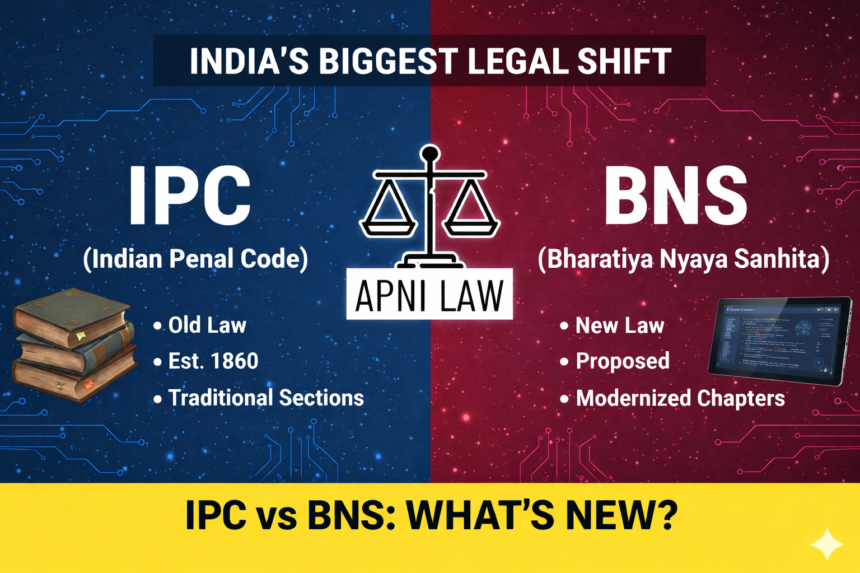
Section 195 of the BNS carries forward the same legal principle into India’s modern criminal code. It criminalises the intentional creation or presentation of false evidence with the objective of wrongfully convicting an innocent person for grave offences carrying life imprisonment or long-term imprisonment. The wording, scope, and structure remain substantially identical to the IPC provision, ensuring continuity rather than disruption in the law of perjury.
Is There Any Substantive Difference Between IPC 195 and BNS 195?
There is no substantive legal difference between Section 195 of the IPC and Section 195 of the BNS. The ingredients of the offence, the mental element of intent, and the nature of conduct punished remain unchanged. The BNS provision modernises the code administratively and linguistically but does not alter the offence’s substance. Courts interpreting IPC Section 195 jurisprudence can safely rely on earlier precedents while applying BNS Section 195.
What Mental Intent Must Be Proved Under Section 195?
The prosecution must establish a clear and deliberate intention to cause the conviction of an innocent person. Mere negligence, confusion, or contradiction in testimony does not attract liability. The accused must have acted with knowledge that the evidence was false and with the specific purpose of ensuring conviction for a serious offence. This high threshold protects witnesses from harassment while punishing truly malicious conduct.
Which Types of Cases Typically Attract Section 195?
Section 195 applies only to cases involving offences punishable with life imprisonment or imprisonment of seven years or more. Typical examples include false testimony in murder trials, fabricated forensic evidence in rape prosecutions, or planted recoveries in cases of armed robbery or dacoity. The provision does not apply to minor offences, even if false evidence is given, as those situations fall under general perjury provisions.
What Punishment Does Section 195 Prescribe?
The punishment under Section 195 mirrors the gravity of the harm intended. If an innocent person is convicted and sentenced based on the false evidence, the offender may receive the same punishment prescribed for the offence falsely alleged. In other cases, the punishment may extend up to seven years of rigorous imprisonment along with a fine. This severe penalty reflects the moral culpability of attempting to destroy an innocent life through judicial misuse.
Does Section 195 Apply When the Death Penalty Is Involved?
Section 195 excludes situations where the false evidence is intended to secure conviction for offences punishable with death alone. In such cases, other legal provisions and safeguards apply. The section specifically focuses on offences carrying life imprisonment or long-term imprisonment, maintaining consistency with historical legislative intent under the IPC.
Is the Offence Under Section 195 Cognizable or Bailable?
The offence under Section 195 remains non-cognizable and bailable. This means police cannot arrest without court permission, and the accused has a right to bail. These safeguards ensure that allegations of perjury under this section are not misused to intimidate witnesses or derail genuine prosecutions.
Which Court Has Jurisdiction to Try Section 195 Cases?
Cases under Section 195 are triable by a Court of Session. This reflects the seriousness of the offence and ensures that experienced judicial officers handle matters involving complex questions of intent, evidence, and judicial process abuse.
How Does Section 195 Differ From Ordinary Perjury Provisions?
Ordinary perjury provisions punish false statements made under oath without requiring proof of intent to cause a wrongful conviction for serious crimes. Section 195 is narrower and more severe. It applies only when false evidence is weaponised to secure conviction in grave offences, making it an aggravated form of perjury rather than a general one.
Why Does Section 195 Remain Crucial in Modern Criminal Law?
From 1 July 2024 onward, Section 195 of the BNS governs all new cases. Courts continue to apply established principles developed under the IPC. Judicial caution remains central, as courts require strong proof of deliberate falsity and malicious intent before allowing prosecution. This balance preserves witness confidence while deterring calculated abuse of the justice system.
Conclusion
Section 195 protects the credibility of criminal trials and the rights of the innocent. By retaining the same structure under the BNS, the legislature reaffirmed that perjury aimed at destroying lives through false convictions is among the gravest crimes against justice. Continuity between IPC and BNS ensures stability, predictability, and enduring respect for the rule of law.