By using this site, you agree to the Privacy Policy and Terms of Use.
Accept
ApniLawApniLawApniLaw
  • Home
  • Find a Lawyer
  • Our Services
  • Law Forum
  • Legal News
  • Judgments
  • Knowledge Hub
    • Bare Acts
      • BNS
      • BNSS
      • BSA
      • CrPC
      • CPC
      • DPDP
      • Hindu Marriage Act
      • Hindu Succession Act
      • The Hindu Adoptions And Maintenance Act
      • The Hindu Minority and Guardianship Act
      • IPC
      • Juvenile Justice Act
      • POCSO
      • Special Marriage Act
      • The Specific Relief Act
    • Supreme Court
    • High Court
    • Legal Articles
    • UPSC
    • Job Updates
    • Marriage and Divorce
    • Land Dispute & Will
    • Civil
    • Criminal
  • About Us
Reading: Patna HC: Religious Processions Are Subject to Public Order Restrictions
Share
Notification Show More
Font ResizerAa
ApniLawApniLaw
Font ResizerAa
  • Home
  • Find a Lawyer
  • Our Services
  • Law Forum
  • Legal News
  • Judgments
  • Knowledge Hub
  • About Us
  • Home
  • Find a Lawyer
  • Our Services
  • Law Forum
  • Legal News
  • Judgments
  • Knowledge Hub
    • Bare Acts
    • Supreme Court
    • High Court
    • Legal Articles
    • UPSC
    • Job Updates
    • Marriage and Divorce
    • Land Dispute & Will
    • Civil
    • Criminal
  • About Us
Have an existing account? Sign In
Follow US
  • Advertise
© 2022 Foxiz News Network. Ruby Design Company. All Rights Reserved.
ApniLaw > Blog > High Court > Patna High Court > Patna HC: Religious Processions Are Subject to Public Order Restrictions
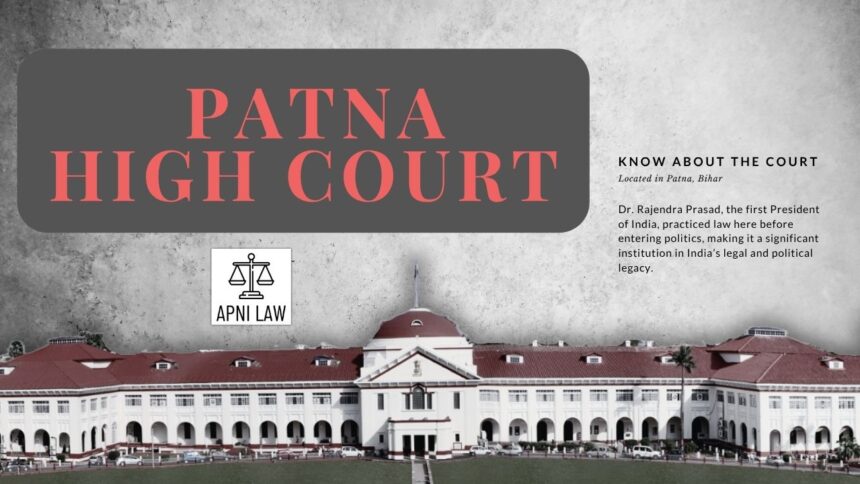
Patna High Court

Patna HC: Religious Processions Are Subject to Public Order Restrictions

Amna Kabeer
Last updated: August 24, 2026 12:21 pm
Amna Kabeer
3 months ago
Share
Patna High Court
Patna High Court
SHARE

Quick Read

The Patna High Court has held that the right to take out a religious procession is protected under Articles 19(1)(b) and 25 of the Constitution, but the right is not absolute. Authorities can impose reasonable restrictions to maintain public order and ensure public safety.

Contents
Quick ReadIntroductionLegal IssueCourt DecisionImplications

The Court refused to interfere with restrictions imposed on the ‘Mahabiri Julus’ in Siwan, observing that the number of participants permitted in future processions would depend on the law-and-order situation prevailing when permission is sought.

Introduction

The Patna High Court has reiterated that constitutional protection for religious practices does not give individuals an unrestricted right to conduct religious processions in any manner or with any number of participants. Justice Alok Kumar made the observation while hearing a petition seeking permission for devotees of an Akhara in Hathaura village, Siwan, to conduct the traditional Mahabiri Julus through its traditional route with at least 300 participants.
The petitioner claimed that the procession had been permitted annually since 1958 but that the number of participants had gradually been restricted, eventually allowing only five devotees from 2023 onwards.

Legal Issue

The primary issue before the Court was whether restrictions on the route and number of participants in a religious procession violated the constitutional rights guaranteed under Articles 19(1)(b) and 25.

Article 19(1)(b) protects the right to assemble peacefully and without arms, while Article 25 guarantees freedom of conscience and the right to freely profess, practise and propagate religion.
However, these rights are expressly subject to reasonable restrictions, including considerations of public order, morality and health.

The State argued that the restrictions were imposed because of law-and-order concerns. It alleged that large crowds had participated in the procession despite the sanctioned limit and that incidents involving stone-pelting and damage to a government vehicle had occurred.

ApniLaw AI

Need the case law behind this point?

Ask ApniLaw AI in plain words. Every point of the answer shows the judgment paragraph or Act section behind it, with its page and paragraph number.

Explore ApniLaw AI

Court Decision

The High Court held that the right to conduct a religious procession is a recognised constitutional right, but it cannot be exercised without restrictions where public order and safety are at stake. The Court observed that “no Constitutional right is absolute” and that reasonable restrictions can be imposed to balance individual freedoms with public welfare and social order.

Relying on the Supreme Court’s decision in Dr. M. Ismail Faruqui v. Union of India, the Court also emphasised that constitutional protection of religious freedom does not necessarily extend to every particular manner in which a religious practice is sought to be performed.

The Court therefore declined to interfere with the restrictions concerning the Mahabiri Julus.
Importantly, the Court did not hold that only five devotees could participate in all future processions. It observed that the number of participants would have to be determined according to the law-and-order situation existing at the time permission is sought.
The Court held that the petitioner’s concern regarding possible future restrictions was premature because the circumstances prevailing during a future procession could not be determined in advance. The writ petition was accordingly dismissed.

Implications

The judgment reinforces the principle that religious freedom and public order must operate together. Religious groups can exercise their constitutional rights, including conducting processions, but authorities can regulate the manner in which those processions are conducted where restrictions are reasonably connected with public safety and law and order.
The decision also indicates that restrictions should not automatically be treated as permanent. The number of participants and other conditions can depend on the circumstances prevailing when permission for a particular procession is sought.

For authorities, the judgment highlights the importance of considering the actual law-and-order situation before granting permission. For citizens and religious organisations, it makes clear that constitutional protection does not create an unrestricted right to demand a particular route, crowd size or manner of conducting a procession.

Case Title: Bhadai Chaudhary v. State of Bihar & Ors.

Join Telegram Channel Join WhatsApp Channel

You Might Also Like

Patna HC: Married Woman Cannot Be Denied SC Reservation Because Caste Certificate Mentions Husband’s Name Instead Of Father’s

Husband’s Father Not Automatically Liable For Widow’s Maintenance Under Hindu Adoptions and Maintenance Act: Patna HC

Patna High Court: Muslim Widow Entitled to Family Pension if Marriage Is Valid Under Personal Law

Patna High Court: Calling Wife ‘Bhoot’, ‘Pisach’ Not Cruelty under Section 498A IPC

Secularism As Core of India’s Nationalism: Indian National Congress Appeals To Supreme Court

TAGGED:Patna High CourtReligionReligious ProcessionRight to Religion
Share This Article
Facebook Whatsapp Whatsapp Telegram Print
Previous Article How To File A Complaint With The Motor Accident Claims Tribunal? Who Is Liable If a Food Delivery Rider Meets With an Accident?
Next Article adobestock-635481072 Digital Arrest Scam: What Can a Victim Do If Fraudsters Force a Money Transfer?
7 Comments
  • Pingback: Calcutta HC: Wife’s Demand to Separate Husband From Dependent Mother Amounted to Mental Cruelty - ApniLaw
  • Pingback: Can Someone Be Sued for Defamation Over a Social Media Post? Know the Law in India - ApniLaw
  • Pingback: Online Gaming Is Facing a New Legal Battle in India - ApniLaw
  • Pingback: Can the SHANTI Act Limit Compensation for a Nuclear Disaster? What the Supreme Court Is Examining - ApniLaw
  • Pingback: Black Money in Elections: When Money Starts Choosing the Voter - ApniLaw
  • Pingback: When Courtroom Words Go Viral: The Cost of Losing Context - ApniLaw
  • Pingback: Digital Arrest Scam: What Can a Victim Do If Fraudsters Force a Money Transfer? - ApniLaw

Leave a Reply Cancel reply

You must be logged in to post a comment.

Follow US

Find US on Social Medias
FacebookLike
XFollow
InstagramFollow
YoutubeSubscribe
TelegramFollow
WhatsAppFollow

Weekly Newsletter

Subscribe to our newsletter to get our newest articles instantly!
Popular News
Justice Surya Kant Stresses Ethical Balance In AI and Smart Transportation At International Legal Conference In Kerala
News

Justice Surya Kant Stresses Ethical Balance In AI and Smart Transportation At International Legal Conference In Kerala

Amna Kabeer
By Amna Kabeer
2 years ago
SC or ST Act: Caste Abuse Must Occur In Public View To Be An Offense, Rules Supreme Court
Bombay High Court Disqualifies Husband Convicted Of Dowry Death From Inheriting Wife’s Property
Co-accused Cannot be Convicted Based On Suspicion Or Assumption Without Proof: Telangana HC On NDPS Act
Baggage Rules Do Not Cover Jewellery Worn On Person: Madras High Court
- Advertisement -
Ad imageAd image

Your one-stop destination for legal news, articles, queries, and a directory of lawyers in India – all under one roof at ApniLaw.

Stay Updated

  • BNSS
  • News
  • Documentation
  • Acts
  • Supreme Court
  • High Court
  • Judgments

Information

  • ApniLaw Services
  • About Us
  • Contact Us
  • Disclaimer
  • Privacy Policy
  • Terms of Service

Advertise

  • Advertise with us
  • Newsletters
  • Deal

Find Us on Socials

ApniLawApniLaw
Follow US
© ApniLaw 2026. All Rights Reserved.
login
Welcome Back!

Sign in to your account

Or
Username or Email Address
Password

Lost your password?