Introduction
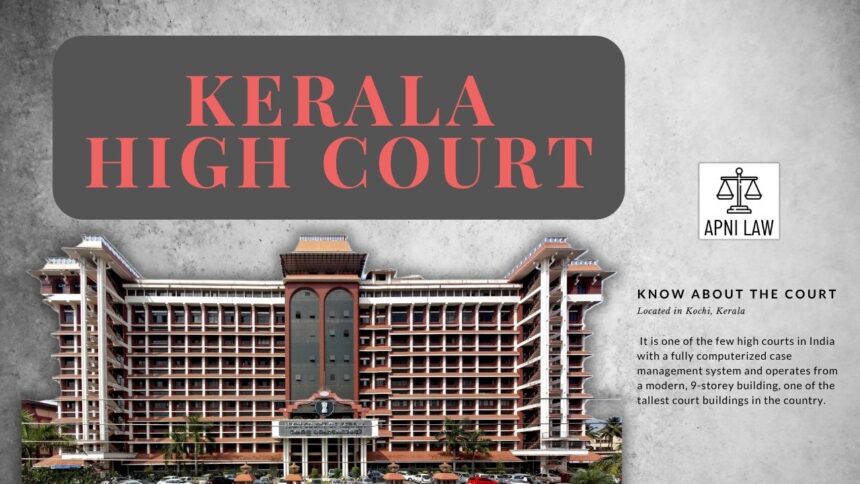
The Kerala High Court has directed the Transport Commissioner to ensure prompt and effective action against persons involved in drunken driving by invoking statutory powers to suspend or revoke driving licences.
Dr. Justice Kauser Edappagath clarified that the Licensing Authority need not wait for the conclusion of criminal proceedings to exercise its powers under Section 19(1) of the Motor Vehicles Act, 1988, to disqualify a person from holding or obtaining a driving licence or revoke an existing licence.
The Court held that the Licensing Authority can independently assess the available material and take action in accordance with law.
Background
The Court made these observations while considering a regular bail application filed by a man accused of causing the death of a motorcyclist. The prosecution alleged that he drove his car rashly and negligently while under the influence of alcohol, resulting in the fatal accident.
The Court granted him bail after considering that he had no criminal antecedents and that further custodial detention was unnecessary.
However, while considering the matter, the Court examined the enforcement of statutory provisions governing the suspension and revocation of driving licences in drunken driving cases.
It noted that despite the availability of statutory powers under Section 19 of the Motor Vehicles Act, authorities were invoking them only sparingly, even as incidents of drunken driving continued to cause fatalities.
Legal Issue
The principal issue was whether the Licensing Authority could independently initiate proceedings under Section 19(1) of the Motor Vehicles Act against a person accused of drunken driving without waiting for the conclusion of the criminal trial.
The Court also considered whether enforcement authorities were adequately exercising their statutory powers to disqualify drivers or revoke their licences in cases involving dangerous driving and alcohol consumption.
Court Ruling
The High Court relied on its earlier decisions in Peethambaran T.R. v. Additional Licensing Authority and Sijo Joseph v. Transport Commissioner and Others.
It clarified that the Licensing Authority need not await the outcome of criminal proceedings before exercising its powers under Section 19(1). The authority can independently examine the available material and determine whether disqualification or revocation is warranted.
The Bench expressed concern that the statutory power to suspend or revoke driving licences was being exercised only sparingly. It observed that such reluctance weakened the legislative intent behind Section 19 and reduced its deterrent effect.
The Court further considered the Supreme Court’s decision in S. Rajaseekaran v. Union of India (2014), which issued directions concerning the suspension of driving licences for at least three months in specified traffic violations, including overspeeding, red-light violations, overloading, drunken driving and the use of mobile phones while driving.
It also referred to Re: Phalodi Accident v. National Highways Authority of India and Others and the Kerala High Court’s decision in Anoop v. State of Kerala (2019). In Anoop, the High Court recognised that police officers and Motor Vehicles Department officials could forward the driving licence of an offending driver to initiate proceedings under Section 19(1).
Taking these decisions into account, the Court directed the Transport Commissioner to ensure that competent Motor Vehicles Department authorities take prompt and effective action under Section 19(1) of the Motor Vehicles Act read with Rule 21 of the Central Motor Vehicles Rules in appropriate drunken driving cases.
The Court further directed that where a road accident was prima facie attributable to a driver’s intoxication, the Licensing Authority must examine the matter without delay and consider initiating disqualification or revocation proceedings in accordance with law.
The Court also directed the Investigating Officer to transmit the accused’s driving licence to the concerned Licensing Authority for action under Section 19(1) of the Motor Vehicles Act. The regular bail application was disposed of after granting bail subject to conditions.
Implications
The ruling clarifies that criminal prosecution and administrative action against a driving licence operate independently. The Licensing Authority does not have to wait for a criminal court to deliver its verdict before considering disqualification or revocation under Section 19(1).
It also places responsibility on the Transport Department to ensure effective enforcement of existing road-safety provisions, particularly in cases where intoxication is prima facie connected to a road accident.
The judgment adds clarity on the independent powers of Licensing Authorities and the enforcement of driving licence restrictions in drunken driving cases.