By using this site, you agree to the Privacy Policy and Terms of Use.
Accept
ApniLawApniLawApniLaw
  • Home
  • Find a Lawyer
  • Our Services
  • Law Forum
  • Legal News
  • Judgments
  • Knowledge Hub
    • Bare Acts
      • BNS
      • BNSS
      • BSA
      • CrPC
      • CPC
      • DPDP
      • Hindu Marriage Act
      • Hindu Succession Act
      • The Hindu Adoptions And Maintenance Act
      • The Hindu Minority and Guardianship Act
      • IPC
      • Juvenile Justice Act
      • POCSO
      • Special Marriage Act
      • The Specific Relief Act
    • Supreme Court
    • High Court
    • Legal Articles
    • UPSC
    • Job Updates
    • Marriage and Divorce
    • Land Dispute & Will
    • Civil
    • Criminal
  • About Us
Reading: Karnataka HC: Son’s Death Alone Doesn’t Make Daughter-in-Law Liable to Maintain Mother-in-Law
Share
Notification Show More
Font ResizerAa
ApniLawApniLaw
Font ResizerAa
  • Home
  • Find a Lawyer
  • Our Services
  • Law Forum
  • Legal News
  • Judgments
  • Knowledge Hub
  • About Us
  • Home
  • Find a Lawyer
  • Our Services
  • Law Forum
  • Legal News
  • Judgments
  • Knowledge Hub
    • Bare Acts
    • Supreme Court
    • High Court
    • Legal Articles
    • UPSC
    • Job Updates
    • Marriage and Divorce
    • Land Dispute & Will
    • Civil
    • Criminal
  • About Us
Have an existing account? Sign In
Follow US
  • Advertise
© 2022 Foxiz News Network. Ruby Design Company. All Rights Reserved.
ApniLaw > Blog > High Court > Karnataka High Court > Karnataka HC: Son’s Death Alone Doesn’t Make Daughter-in-Law Liable to Maintain Mother-in-Law
Karnataka High CourtSenior Citizens

Karnataka HC: Son’s Death Alone Doesn’t Make Daughter-in-Law Liable to Maintain Mother-in-Law

Amna Kabeer
Last updated: September 2, 2026 7:37 pm
Amna Kabeer
3 months ago
Share
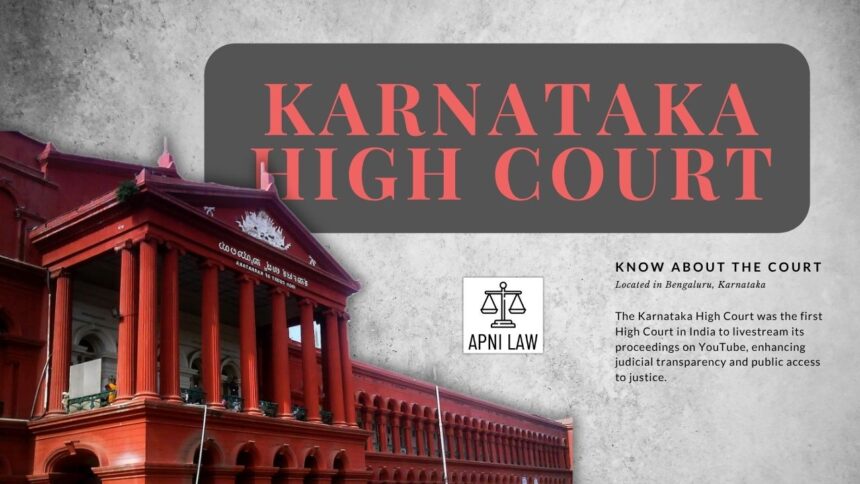
Karnataka High Court
SHARE

Introduction

The Karnataka High Court has held that the death of a son does not, by itself, create a statutory obligation on his widow to maintain her mother-in-law under Section 23 of the Maintenance and Welfare of Parents and Senior Citizens Act, 2007.

Contents
IntroductionLegal IssueCourt Ruling

Justice Suraj Govindraj set aside an order of the Maintenance and Welfare of Parents and Senior Citizens Tribunal, which had allowed an 81-year-old woman to remain in possession of property that she had transferred to her daughter-in-law.

The Court explained that Section 23 can be invoked when a senior citizen transfers property subject to a condition that the transferee will provide basic amenities and physical needs, but the transferee subsequently fails to do so. The existence of such a condition must therefore be established before the Tribunal can cancel or interfere with the transfer.

Legal Issue

In the present case, the mother-in-law had transferred the property to her daughter-in-law through a registered deed in 2010. She later challenged the transfer before a Civil Court, alleging fraud and misrepresentation. The Civil Court rejected her claim and upheld the validity of the deed.

She subsequently approached the Senior Citizens Tribunal under Section 23, claiming that the property had been transferred on the understanding that her daughter-in-law would maintain and care for her.

The High Court noted that these two versions were materially different. In the earlier civil proceedings, the senior citizen had claimed that the transfer was obtained through fraud. In the later proceedings, she claimed that she had voluntarily transferred the property subject to a maintenance condition.

ApniLaw AI

Need the case law behind this point?

Ask ApniLaw AI in plain words. Every point of the answer shows the judgment paragraph or Act section behind it, with its page and paragraph number.

Explore ApniLaw AI

Court Ruling

The Court held that the Tribunal could not disregard the findings already recorded by the competent Civil Court.

Importantly, the Court observed that the words “love and affection” in a property deed cannot automatically be treated as a statutory obligation to maintain the transferor. Since no express maintenance condition was found in the deed, the Tribunal could not create such an obligation retrospectively.

The Court also specifically addressed the death of the son. It held that his death could not independently impose a new statutory obligation on his wife.

The Court clarified that Section 23 and ordinary maintenance proceedings operate differently. Section 23 concerns property transfers made subject to a maintenance condition, while a claim for maintenance itself is governed by the relevant provisions of the Act, including Section 4.

Accordingly, the High Court found that the Tribunal had failed to establish the necessary ingredients of Section 23 before granting relief to the senior citizen. The Tribunal’s order was therefore set aside and the petition was allowed.

Case: Sheela S v. State of Karnataka

Join Telegram Channel Join WhatsApp Channel

You Might Also Like

Accused Cannot Be Forced to Seek Case Documents via RTI: Karnataka HC

Muslim Husband Who Has Second Wife Cannot Dodge Maintenance To First Wife: Kerala HC

Understanding Alimony And Maintenance Laws For NRI?

Nomination Does Not Override Legal Heirs’ Rights: Karnataka HC

Karnataka HC Reduces Permanent Alimony From ₹2 Crore To ₹50 Lakh, Says Alimony Cannot Equalise Wealth

TAGGED:Karnataka High courtMaintenanceSenior Citizen MaintenanceSenior Citizen Welfare
Share This Article
Facebook Whatsapp Whatsapp Telegram Print
Previous Article Telegram Cyber Scam Can an Employer Fire an Employee for a Social Media Post?
Next Article Empowering Mothers Through The Maternity Benefit Act, 1961 Can Maternity Leave Affect a Woman’s Career?
2 Comments
  • Pingback: Delhi HC: DNA Proves Sexual Intercourse, Not Whether It Was Consensual - ApniLaw
  • Pingback: Can Maternity Leave Affect a Woman’s Career? - ApniLaw

Leave a Reply Cancel reply

You must be logged in to post a comment.

Follow US

Find US on Social Medias
FacebookLike
XFollow
InstagramFollow
YoutubeSubscribe
TelegramFollow
WhatsAppFollow

Weekly Newsletter

Subscribe to our newsletter to get our newest articles instantly!
Popular News
Legal Steps For NRIs Facing Marital Disputes In India
DocumentationFamilyWomen Rights

How Can Indian Women Protect Themselves From Fraudulent Marriages To NRIs/PIOs?

Amna Kabeer
By Amna Kabeer
2 years ago
Toilets in Petrol Pumps on Highways Should Stay Open During Business Hours and not 24/7: Kerala High Court
Grabbing Breasts Of Minor And Dragging Not Attempt To Rape: SC Takes Cognizance of HC Order
Supreme Court Rules Legal Heirs Not Liable for Partnership Firm’s Debts After Partner’s Death
Caste-based Identities In School Names Leads To Division and Enmity: Madras HC
- Advertisement -
Ad imageAd image

Your one-stop destination for legal news, articles, queries, and a directory of lawyers in India – all under one roof at ApniLaw.

Stay Updated

  • BNSS
  • News
  • Documentation
  • Acts
  • Supreme Court
  • High Court
  • Judgments

Information

  • ApniLaw Services
  • About Us
  • Contact Us
  • Disclaimer
  • Privacy Policy
  • Terms of Service

Advertise

  • Advertise with us
  • Newsletters
  • Deal

Find Us on Socials

ApniLawApniLaw
Follow US
© ApniLaw 2026. All Rights Reserved.
login
Welcome Back!

Sign in to your account

Or
Username or Email Address
Password

Lost your password?