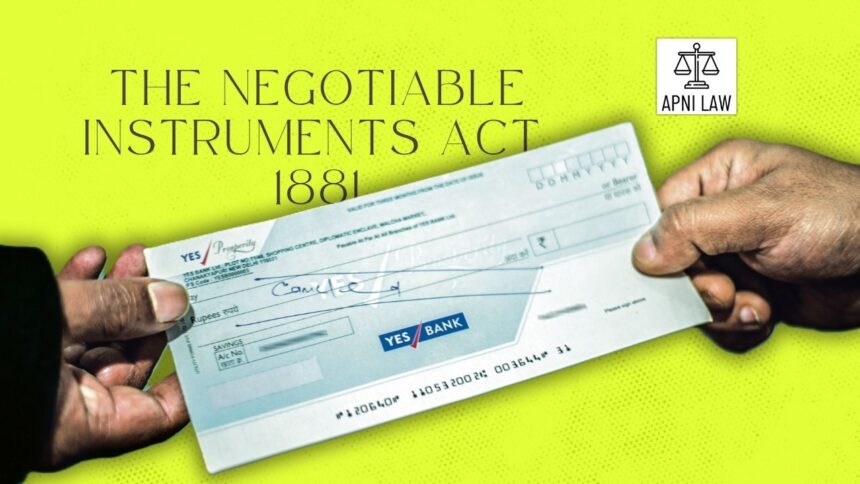
In S. Nagesh v. Shobha S. Aradhya, The Bench emphasizes mandatory condonation process before cognizance where cheque-dishonour complaint is filed beyond statutory limitation.
Introduction
New Delhi, January 6, 2026: The Supreme Court of India has ruled that a court cannot take cognizance of a complaint under Section 138 of the Negotiable Instruments Act, 1881 (NI Act) alleging dishonour of a cheque if the complaint is filed after the statutory limitation period without an application for condoning the delay.
A Bench comprising Justices Sanjay Kumar and Alok Aradhe delivered the judgment on January 6, 2026 while setting aside a Karnataka High Court order that had upheld a trial court’s order taking cognizance of a belated Section 138 complaint even though no formal condonation order was passed.
Background and Key Legal Issue
Section 138 of the NI Act criminalises the dishonour of cheques issued for discharge of a debt or liability. Section 142(b) of the Act mandates that a complaint must ordinarily be filed within one month from the date on which the cause of action arises, which is generally counted after the 15-day period following receipt of the statutory demand notice.
Where a complainant files the petition beyond this 30-day limitation period, the statute permits courts to take cognizance only if the complainant satisfies the court that there was sufficient cause for not filing the complaint in time, typically by filing a formal application for condonation of delay outlining reasons for the belated filing.
In the case before the Supreme Court, the complainant had filed the cheque-dishonour complaint after expiry of the limitation period and without an application for condoning the delay. Nonetheless, the trial court had taken cognizance and issued summons, and this was upheld by the Karnataka High Court.
Final Ruling
The Supreme Court set aside both the trial court’s order and the High Court’s affirmation, holding that cognizance cannot be taken unless and until the court condones the delay in filing the Section 138 complaint. The Bench emphasised that the statutory conditions of Section 142(b) are mandatory and not directory, and their strict compliance is essential before the commencement of prosecution.
The judgment highlights that condonation of delay cannot be presumed nor can it be inferrable from hearsay; a specific application invoking the plaint’s belated filing must be brought on record.
Court’s Reasoning (Brief)
In clarifying the procedure, the Court underscored that:
- Section 142(b) prescribes a threshold condition that a written complaint under Section 138 must ordinarily be filed within one month of the cause of action arising.
- If filed late, the complainant must seek condonation of delay by showing sufficient cause, after which the court may take cognizance.
- Without such a condonation application and judicial order thereon, summons and subsequent proceedings cannot legally commence.
- The power to condone delay is not automatic and must be exercised after examining the reasons on record.
Practical Implications
The Supreme Court’s decision reinforces procedural discipline in cheque-dishonour litigation:
- Strict adherence to limitation timeline: Complainants must ensure filing within the statutory period or promptly apply for condonation of delay with supporting reasons.
- Mandatory condonation application: Courts must ensure a specific application addressing delay is filed and decided before taking cognizance.
- Judicial uniformity: The ruling aligns procedural requirements across jurisdictions, restraining courts from assuming powers to condone delay without formal applications.
- Litigation strategy: Legal practitioners representing complainants should prioritise filing within time or prepare justified explanations for delay to avoid early dismissal of complaints.
The principle affirms that statutory procedures governing penal provisions of the NI Act must be strictly followed to maintain the integrity of criminal prosecution in commercial disputes.
The judgment adds clarity on the procedural prerequisites for taking cognizance in Section 138 NI Act cases, underscoring that courts cannot proceed with time-barred cheque-dishonour complaints unless the complainant first seeks and obtains condonation of delay.