Introduction
Special Intensive Revision, commonly known as SIR, is a large-scale voter list verification exercise conducted by the Election Commission of India to ensure that electoral rolls are accurate, inclusive, and free from errors. Unlike routine annual or summary revisions, SIR involves a complete and fresh verification of voters through physical field work. The exercise aims to protect the integrity of elections by ensuring that only eligible citizens are enrolled and that no genuine voter is left out.
The Election Commission launched the latest nationwide SIR in late 2025, with Kerala being one of the key focus states ahead of the 2026 Assembly elections. The revision responds to demographic changes such as migration, urban expansion, and population growth, which often make electoral rolls outdated if not thoroughly reviewed.
What Is the Constitutional and Legal Basis of SIR?
The legal authority for conducting SIR flows directly from Article 324 of the Constitution of India. This provision grants the Election Commission superintendence, direction, and control over the preparation of electoral rolls and the conduct of elections. This broad constitutional power allows the Commission to order special revisions whenever electoral integrity demands it.
In addition, Section 21(3) of the Representation of the People Act, 1950 specifically empowers the Election Commission to carry out special revisions of electoral rolls. This provision goes beyond routine updates and permits intensive verification exercises. Since 1952, India has conducted multiple SIRs, with more than thirteen such revisions recorded nationwide. Judicial oversight remains available, as citizens may approach constitutional courts if procedural fairness or voter rights are violated.
Why Does the Election Commission Conduct SIR?
The primary objective of SIR is to ensure that every eligible citizen aged eighteen years or above is included in the voter list while removing ineligible entries. This includes deleting the names of deceased persons, duplicate voters, individuals who have shifted residence permanently, and non-citizens.
SIR also aims to address errors that accumulate over time in electoral rolls maintained through incremental updates. By preparing rolls afresh, the Election Commission seeks to eliminate systemic inaccuracies and strengthen public confidence in the electoral process. In states like Kerala, where migration and overseas employment are common, SIR plays a critical role in maintaining an updated and credible voter database.
How Is the Special Intensive Revision Process Conducted?
The backbone of the SIR process is house-to-house verification carried out by Booth Level Officers. These officers visit every household within a polling area and verify voter details on the ground. During this process, they distribute pre-filled Enumeration Forms based on existing electoral rolls and seek confirmation, corrections, or deletions directly from residents.
Once the enumeration phase concludes, the Election Commission publishes draft electoral rolls. These draft rolls are made available online and offline to allow citizens to verify their names. A statutory period follows during which individuals can submit claims and objections. Electoral Registration Officers conduct hearings where required and decide on corrections, additions, or deletions. After resolving all objections, the final electoral rolls are published for use in upcoming elections.
What Was the SIR Timeline for Kerala Ahead of the 2026 Elections?
In Kerala, the Special Intensive Revision followed a structured timeline aligned with the 2026 Assembly elections. House-to-house enumeration was carried out between early November and early December 2025. Draft electoral rolls were published in December 2025, enabling public scrutiny. The claims and objections period extended until the end of January 2026, after which final electoral rolls were published in early February 2026.
The qualifying date for voter eligibility was fixed as January 1, 2026. This ensured that all citizens who attained the age of eighteen by that date could be included. The structured timeline allowed sufficient opportunity for verification while ensuring readiness for the electoral schedule.
What Makes Kerala’s SIR Different From Routine Revisions?
Kerala’s SIR revived the 2002 electoral roll as the base document. As a result, a significant majority of voters who were already listed in earlier rolls were included automatically without the need for fresh documentation. Only a limited segment of voters, mainly those added after 2003, were required to submit supporting documents for verification.
The state also adopted digital tools alongside physical verification. Online portals enabled absentee voters, migrant workers, and overseas residents to check their details and submit applications remotely. Election authorities clarified that the exercise would not disrupt local governance or ongoing administrative functions.
What Challenges and Controversies Surrounded the SIR?
The Special Intensive Revision triggered political and social debates across several states. Opposition parties raised concerns that the exercise could be misused to selectively exclude voters, particularly migrants and marginalized communities. In some regions, comparisons were drawn with citizenship verification exercises, leading to public anxiety.
Reports of large-scale deletions in certain states prompted legal scrutiny and interventions by constitutional courts. At the same time, several political leaders and civil society groups defended the SIR as a necessary step to prevent electoral fraud and duplication. The controversy highlighted the need to balance strict verification with safeguards against wrongful exclusion.
Why Is SIR Important for Indian Democracy?
SIR strengthens democracy by ensuring that elections are conducted on the basis of accurate and credible voter lists. Clean electoral rolls reduce the scope for impersonation, multiple voting, and manipulation. By combining field-level verification with digital transparency, the exercise enhances trust in the electoral system.
However, its democratic value depends on fair implementation. Authorities must ensure that genuine voters are not disenfranchised due to procedural lapses or lack of documentation. Judicial oversight and public participation play a crucial role in maintaining this balance.
How Can Citizens Check Their Voter Details During SIR?
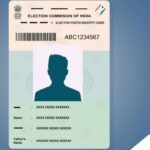
Citizens can verify their voter status during SIR through official Election Commission portals such as the National Voters’ Services Portal and state-specific Chief Electoral Officer websites. By entering details like EPIC number, name, or constituency, voters can confirm whether their names appear in the draft electoral rolls.
Offline verification remains available through polling stations and Booth Level Officers. Draft rolls are displayed locally, allowing residents without internet access to check their status. If a voter’s name is missing, immediate corrective action can be initiated during the claims period.
How Can Voters Update or Correct Their Details?
Voters can apply for inclusion, deletion, correction, or address change by submitting prescribed forms either online or through Booth Level Officers. These applications are examined by Electoral Registration Officers, who may conduct hearings before passing orders. Applicants can track the status of their requests online using reference numbers.
Once verification is complete and the final rolls are published, voters can download their digital voter identity cards and use the updated records for all electoral purposes. Timely participation in the SIR process ensures that no eligible citizen is excluded from exercising the right to vote.
Conclusion
Special Intensive Revision remains one of the most powerful tools available to the Election Commission for safeguarding electoral integrity. When conducted transparently and inclusively, it strengthens democratic participation and ensures fair representation. As India approaches major elections, SIR serves as both a corrective mechanism and a confidence-building measure for voters and institutions alike.