What Does “Discharge” Mean in a Sessions Trial?
In a sessions case, discharge marks an early exit from criminal proceedings. At this stage, the court examines whether the material placed by the prosecution discloses sufficient grounds to proceed against the accused.
If the court finds that the case lacks substance, it may discharge the accused without framing charges. This safeguard protects individuals from facing a full trial when the prosecution’s case is weak on its face.
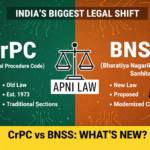
Earlier, Section 227 of the Criminal Procedure Code, 1973 (CrPC) governed discharge in sessions cases. Under the new criminal law framework, Section 250 of the Bharatiya Nagarik Suraksha Sanhita, 2023 (BNSS) now applies.
What Did Section 227 CrPC Provide?
Section 227 CrPC empowered the Sessions Judge to discharge the accused after considering the record of the case and the documents submitted by the prosecution.
At this stage, the court heard the submissions of both the prosecution and the accused. If the Judge concluded that there was no sufficient ground for proceeding, discharge followed.
The provision aimed to prevent unnecessary trials while preserving the prosecution’s right to proceed in genuine cases.
How Did Courts Apply Section 227 CrPC?
Courts consistently clarified that discharge does not require a detailed evaluation of evidence. The Judge only needed to assess whether the material disclosed a prima facie case.
If two views were possible and the prosecution’s version appeared plausible, courts generally preferred to frame charges rather than discharge. Therefore, Section 227 CrPC acted as a filter, not a mini-trial.
This interpretation balanced caution with judicial restraint.
Why Was Section 250 BNSS Introduced?
One of the goals of BNSS is to streamline criminal proceedings and reduce unnecessary trials. Under the CrPC regime, inconsistent application of discharge principles sometimes led to prolonged litigation.
Section 250 BNSS was introduced to reinforce clarity and accountability at the pre-trial stage. The legislature intended to strengthen judicial scrutiny without curtailing prosecutorial discretion.
What Does Section 250 BNSS Provide?
Section 250 BNSS substantially mirrors the structure of Section 227 CrPC. The Sessions Judge may discharge the accused after considering the prosecution record and hearing both sides.
However, BNSS places stronger emphasis on reasoned judicial assessment. Courts are expected to clearly record why the material fails to justify framing charges.
This approach promotes transparency and consistency.
What Is the Key Difference Between Section 227 CrPC and Section 250 BNSS?
The substantive power remains the same under both provisions. The Sessions Court can discharge the accused if the case lacks sufficient grounds.
The difference lies in emphasis. Section 227 CrPC relied heavily on judicial interpretation to shape practice. Section 250 BNSS integrates that practice into a reform-oriented framework that values clarity and discipline.
Thus, BNSS refines the process rather than redefining it.
How Does Section 250 BNSS Protect the Accused?
Facing a sessions trial involves serious consequences, including prolonged litigation and social stigma.
Section 250 BNSS strengthens early-stage scrutiny. If the prosecution’s case appears hollow, the accused can avoid the burden of trial altogether.
This safeguard reinforces the principle that criminal law should not operate as punishment by process.
How Does This Provision Affect the Prosecution?
While the provision protects the accused, it also encourages prosecutorial responsibility.
Prosecutors must ensure that case records and documents disclose a clear basis for trial. Weak or poorly investigated cases face a higher risk of discharge.
As a result, investigative and prosecutorial standards improve.
What Is the Difference Between Discharge and Acquittal?
Discharge occurs before charges are framed. The court does not evaluate evidence in depth.
Acquittal, on the other hand, follows a full trial where evidence is tested. Understanding this distinction is crucial.
Section 250 BNSS continues to respect this procedural separation.
What Is the Practical Impact of Section 250 BNSS on Sessions Courts?
Sessions Judges must now engage more carefully with case records at the pre-charge stage.
Defence lawyers can present focused arguments highlighting legal and factual gaps. Meanwhile, courts can reduce backlog by eliminating weak cases early.
Overall, judicial efficiency improves.
Why Is Discharge an Important Part of Criminal Justice Reform?
A fair system must protect both society and individual liberty. Allowing weak cases to proceed wastes judicial time and harms innocent persons.
By reinforcing discharge standards, BNSS promotes fairness, efficiency, and credibility. Courts appear more decisive and principled.
Therefore, Section 250 BNSS plays a vital role in pre-trial justice.
Conclusion
Section 227 CrPC provided the foundation for discharging accused persons in sessions cases where no sufficient ground existed. Section 250 BNSS carries this safeguard forward with greater emphasis on clarity, accountability, and structured judicial reasoning. While the power remains the same, its exercise now demands more conscious application of mind. Discharge under BNSS is not an escape route; it is a principled judicial safeguard that strengthens fairness in serious criminal trials.