Why Is Witness Examination Central to Criminal Investigation?
Witnesses form the backbone of criminal investigations. Their statements help the police reconstruct events, identify suspects, and gather evidence. A fair and lawful process for recording these statements is essential to ensure justice.
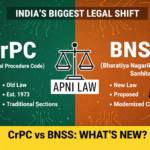
Under the earlier procedural law, Section 161 of the Criminal Procedure Code, 1973 (CrPC) governed the examination of witnesses during investigation. With the enactment of the Bharatiya Nagarik Suraksha Sanhita, 2023 (BNSS), this power now appears under Section 180 BNSS.
While the fundamental purpose remains unchanged, the new provision aims to strengthen procedural clarity and accountability.
What Did Section 161 CrPC Provide?
Section 161 CrPC empowered a police officer investigating a case to orally examine any person who appeared to be acquainted with the facts and circumstances of the case.
The provision required such persons to answer questions truthfully. However, it also protected individuals from self-incrimination. No person could be compelled to answer questions that exposed them to criminal liability.
Section 161 CrPC played a crucial role in balancing investigative needs with constitutional safeguards under Article 20(3).
How Did Courts Interpret Section 161 CrPC?
Courts consistently clarified that statements recorded under Section 161 CrPC were not substantive evidence. These statements could only be used for limited purposes, such as contradiction during trial.
Judicial decisions also stressed that police must not use coercion, threat, or inducement while recording statements. Courts viewed voluntary and truthful recording as essential for fair investigation.
Despite these safeguards, misuse and procedural irregularities occasionally weakened the credibility of investigations.
What Is Section 180 BNSS and Why Was It Introduced?
Section 180 BNSS replaces Section 161 CrPC. It continues to regulate the examination of witnesses during investigation by police officers.
The legislature introduced Section 180 BNSS as part of broader criminal justice reforms. The goal was to modernise procedure, improve transparency, and reinforce rights-based investigation practices.
By re-enacting this power within the BNSS framework, lawmakers aimed to reduce ambiguity and improve procedural compliance.
How Does Section 180 BNSS Regulate Witness Examination?
Section 180 BNSS authorises investigating officers to examine persons familiar with the facts of the case. The duty to answer questions truthfully continues, subject to protection against self-incrimination.
The provision aligns with BNSS’s emphasis on accountability. Police officers must conduct examinations lawfully and fairly.
The new framework also supports better documentation and judicial scrutiny of investigative conduct.
What Is the Key Difference Between Section 161 CrPC and Section 180 BNSS?
The core principle remains unchanged. Both provisions allow police to examine witnesses during investigation.
The difference lies in legislative context. Section 161 CrPC functioned within an older procedural framework where enforcement depended heavily on judicial interpretation. Section 180 BNSS operates within a reformed system that prioritises procedural discipline and rights protection.
BNSS strengthens clarity without expanding police power.
How Does Section 180 BNSS Protect Witness Rights?
Section 180 BNSS preserves the constitutional safeguard against self-incrimination. Witnesses cannot be compelled to provide answers that expose them to criminal liability.
The provision also discourages coercive practices. Courts retain the power to question the credibility of statements obtained through unlawful means.
These safeguards ensure that witness cooperation remains voluntary and fair.
Why Is This Provision Important in Modern Investigations?
Modern investigations often involve complex facts, financial transactions, and digital evidence. Witness statements help connect documentary and electronic evidence.
Section 180 BNSS supports efficient fact-finding while maintaining safeguards. Proper witness examination strengthens the overall quality of investigation and reduces wrongful prosecution.
The provision helps ensure that investigations rely on truth rather than pressure.
What Does Section 180 BNSS Mean for Legal Practice and Policing?
For police officers, Section 180 BNSS serves as a procedural guide for lawful examination of witnesses. It reinforces the importance of fairness and restraint.
For lawyers, the provision provides clear statutory grounds to challenge illegally obtained statements.
For citizens, it reassures that cooperation with police does not mean surrendering constitutional rights.
Conclusion
Section 161 CrPC laid the foundation for examining witnesses during criminal investigation. Section 180 BNSS carries this framework forward with greater clarity, accountability, and rights-based emphasis. While the substance remains consistent, the BNSS framework strengthens procedural safeguards and judicial oversight. Witness examination continues to be a vital investigative tool, now reinforced under a modernised criminal justice system.