Introduction
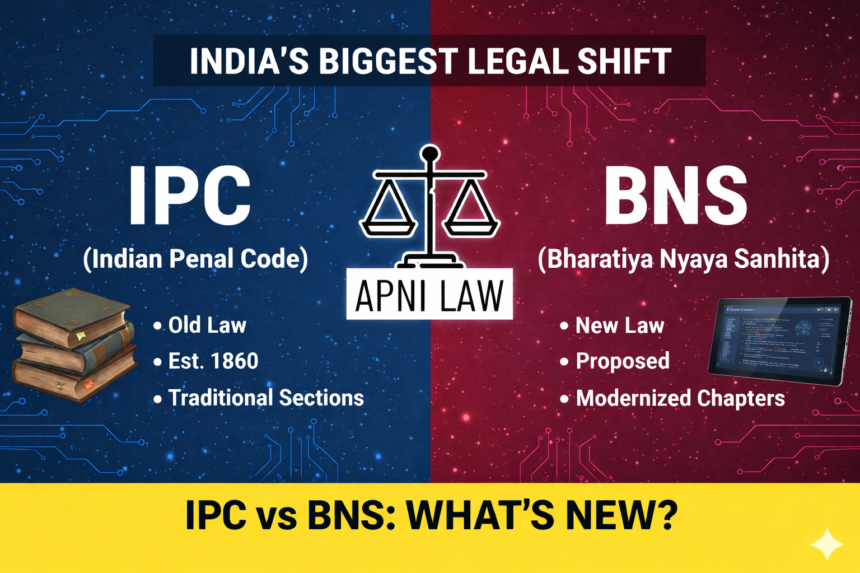
IPC Section 141 and BNS Section 189 deal with the same offence. Both define unlawful assembly. The Bharatiya Nyaya Sanhita, 2023 repealed the Indian Penal Code but retained its core principles. Section 189(1) BNS is the direct successor of Section 141 IPC. The offence remains substantively unchanged. Only structure and numbering have been modified for clarity and efficiency.
The purpose of both provisions is identical. They aim to prevent group actions that threaten public peace and lawful authority.
What Did IPC Section 141 Say About Unlawful Assembly?
Section 141 of the Indian Penal Code defined unlawful assembly as a gathering of five or more persons. The key requirement was a common object. The law listed five specific unlawful objects. These included using criminal force to overawe the government or public servants. They also included resisting legal processes and committing offences like mischief or criminal trespass.
The provision further covered forceful seizure of property or denial of legal rights. It also applied when force was used to compel someone to act or refrain from acting unlawfully. The section clarified that an assembly could become unlawful even after it was formed.
This definition formed the backbone of public tranquillity law for decades.
Why Was IPC Section 141 Important for Public Order?
IPC Section 141 recognised that group violence poses a greater danger than individual crimes. It focused on prevention rather than reaction. The law allowed authorities to intervene early when a group shared an unlawful objective.
Punishment for membership was prescribed under IPC Section 143. A person could face up to six months imprisonment, a fine, or both. Other related sections increased punishment when weapons were involved or when members disobeyed orders to disperse.
How Does BNS Section 189 Define Unlawful Assembly?
Section 189(1) of the Bharatiya Nyaya Sanhita retains the same definition as IPC Section 141. The wording is almost identical. It still requires five or more persons. It still depends on a shared unlawful object. It still focuses on force, illegality, and threats to lawful authority. The continuity is deliberate. The legislature ensured that existing judicial interpretations remain valid. Courts can rely on established precedents without confusion.
The offence continues to fall under the chapter dealing with offences against public tranquillity.
What Structural Changes Were Introduced Under BNS Section 189?
The biggest change lies in organisation. The IPC spread unlawful assembly offences across multiple sections. The BNS consolidates them under Section 189 with multiple sub-sections.
BNS Section 189(2) punishes simple membership of an unlawful assembly. The punishment remains the same as before. Section 189(3) applies to persons who join or continue after an order to disperse. Section 189(4) deals with armed members.
Further sub-sections address hiring, financing, or abetting unlawful assemblies. These acts now attract explicit penalties. This integration removes redundancy and improves readability.
Does BNS Section 189 Change the Substance of the Law?
There is no substantive change. The ingredients of the offence remain identical. The requirement of a common object remains central. Mere presence is still insufficient unless accompanied by shared intent.
The BNS strengthens clarity but does not expand criminal liability. It preserves the balance between public order and individual rights. The law continues to target conduct that threatens societal peace.
How Does Punishment Compare Between IPC and BNS?
Under the IPC, punishment was scattered across Sections 143 to 145 and beyond. Under the BNS, punishment is clearly mapped within Section 189 itself. Simple membership still attracts up to six months imprisonment or fine. Enhanced punishment applies for armed participation or defiance of dispersal orders. Organisers and recruiters now face defined penalties. This restructuring improves enforcement and understanding.
In Which Chapter Are These Offences Placed?
Under the IPC, unlawful assembly fell under Chapter VIII. Under the BNS, it appears in Chapter XI. Despite renumbering, the chapter continues to address offences against public tranquillity. The shift is administrative, not conceptual. The subject matter remains the same.
When Did BNS Section 189 Come Into Force?
The Bharatiya Nyaya Sanhita came into effect on July 1, 2024. From this date, IPC Section 141 ceased to operate. All new cases now invoke Section 189 BNS. Older cases continue under IPC due to the principle of non-retrospectivity.
What Is the Final Legal Position on IPC 141 vs BNS 189?
IPC Section 141 and BNS Section 189 define the same offence. Section 189(1) is the direct and complete replacement of Section 141. The BNS preserves continuity while improving structure. There is no dilution or expansion of criminal liability. The offence of unlawful assembly remains firmly grounded in Indian criminal jurisprudence.
This equivalence removes confusion created by renumbering. The law on unlawful assembly stands unchanged in substance, clearer in form, and stronger in enforcement.